

(ERGO) – Long-term Somali refugees living in Ethiopia have been given the chance to raise their own livestock as a means of making a sustainable livelihood and potentially settle their families outside the camp where they are living.
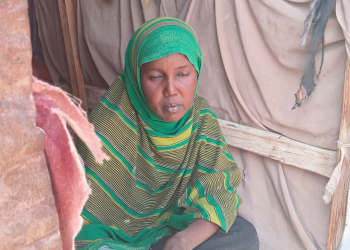
Diib Ahmed Farah is among 50 Somali women in Sheedheer camp in Fafan zone, Somali Region, gaining reliable income and business confidence after receiving 80 chickens and 40 goats in January.
She sells eggs daily within the camp, earning at least five dollars a day, that supports her eight children.
“I have young children. I manage our living expenses through the chickens and the eggs they lay. I use part of the money to buy food and reinvest the rest in my business. Some of my children are in school and need books, pens, uniforms, and shoes, all of which I manage through the chickens,” said Diib, aged 47 and a widow.
She no longer depends on charity or humanitarian assistance, which she relied on for many years. As a small businesswoman, she is proud to have saved $265 for the first time from her poultry earnings.
The UN’s World Food Programme (WFP) stopped providing aid in the camp a year ago.
Diib describes this as the most stable and fulfilling period in her 23 years as a refugee, having lived in Eritrea and then Ethiopia.
“There were times when I couldn’t cook for three or four consecutive days. Life was terrible, even when my husband was alive. Since we received the chickens, our lives have improved greatly. Now, I’m considered among the better-off families in the camp,” she said.
The worry of how to feed her children since her husband died in the camp last year is less now. Four of her children attend a government-run school in Sheedheer camp, which provides free primary, middle, and secondary education.
Diib left her homeland, Somalia, in 2002, when insecurity forced her to flee from the Juba region. She lived in Eritrea for 17 years hoping for resettlement to America, but left for Ethiopia when US policy changed and refugees from countries including Somalia were no longer accepted.
She moved to Sheedheer, where she and her children live in a small hut. Her main challenge is poor shelter, but she dreams of expanding her poultry business and eventually moving to Jigjiga city to live a better life.
The international agency DAI supported these women including Diib with livestock and basic training in animal rearing and marketing. It’s only a fraction of the 400 refugee households living in Sheedheer, most of whom came from Eritrea.
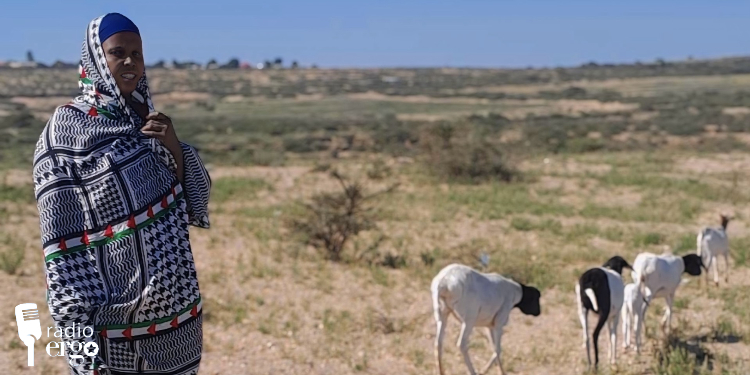
The goats and poultry given to refugee mother of nine, Shukri Ahmed Gurhan, have helped her to provide for her family.
“I manage my family’s needs with the little profit I get from the goats. If I buy one for $46, I sell it for $53. The small profit helps me buy food and vegetables for my children. Life has changed for the better,
having some income is better than having none. I hope one day I’ll be able to move to town, but otherwise I’ll stay here peacefully,” she said.
Her husband, who was a porter, has been unable to work for the past two years due to kidney problems. Shukri’s small livestock trade has become their only source of income.
Her journey as a refugee began in 1991, when she fled Mogadishu with her parents at the outbreak of Somalia’s civil war. Now 34, Shukri has spent nearly her entire life in displacement. Her eldest child is nearing adulthood, having never been to Somalia, but she admits that returning home is still a future hope.
“My mother fled Somalia with me when I was too young to remember,” she says. “We lived as refugees in Djibouti, where I grew up, got married, and had my first child. After separating from my first husband, I moved with my mother to Eritrea. If peace returns to Somalia, I’ll go back — there’s no place better than home.”
In Sheedheer camp, not far from the Somaliland border, essential services such as health care, education, and water are provided free of charge by the regional government in partnership with humanitarian agencies.
For Hinda Ali Abdi, who has lived in the camp since 2019, the livestock has transformed her family’s life. She recalls the years when she survived on a meagre income, earning one or two dollars a day walking 16 kilometres to Awbare town to do laundry jobs.
She received 150 chickens to rear in the camp, and has been making steady income that has allowed her to set up small grocery shop with $500 savings.
“With the money I saved from the chickens, I can now meet my family’s needs comfortably,” she said. “I plan to expand both my poultry and my shop to earn more. I used to be helpless and couldn’t even provide enough food or clothing for my children, but since I got the chickens, my life has improved, and my business is still growing.”
Hinda, a refugee since 2006, is the sole provider for her nine children. She has raised them while living in different refugee camps in Djibouti, Eritrea, and currently Ethiopia.