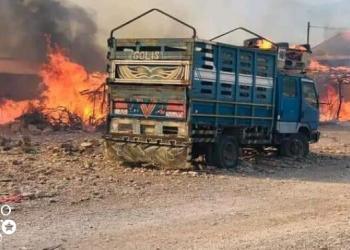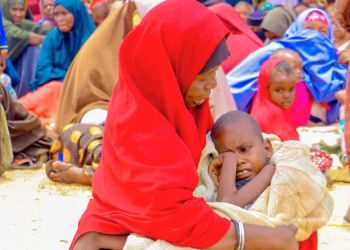


(ERGO) – Landowners in Baidoa have forcibly evicted more than 160 displaced families from a camp where they had initially invited them to settle, leaving them struggling without income or access to basic needs.
The families were given no notice to prepare to leave Iraroog camp and had to leave everything behind. The camp had been developed with access to free water, healthcare and education services.
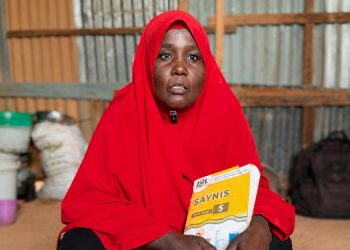
Abdirahman Ali Isaaq lost the small shop where he sold assorted goods and vegetables, which earned him $3 to $5 a day and supported his family of nine.
“The businesses we relied on have been destroyed. We used to have three meals a day, but now even one meal is difficult. We are facing hardship and distress,” he complained.
Abdirahman started the shop with $400 saved from funds given by Islamic Relief programme, which ended three years ago. The business had about $300 worth of stock and he can’t afford to reopen it.
Five of his children attended schools in the camp, but now they have no access to education.
“We had everything we needed, including food and education, but now we are facing many hardships. We do not even have the means to build shelter,” he said.
The family had to leave the two huts where they had lived for five years. Their utensils and bedding were lost or damaged, while the worn-out plastic sheets used for shelter were left behind because they couldn’t be carried.
They live now exposed to heat and cold and struggling to access water. Abdirahman said they sometimes beg for water as they can’t afford the $0.25 charged for 20 litres at a private well.
The family came to Baidoa after fleeing Berdale district in Bay region in 2022 after drought destroyed their six-hectare farm.
Another evicted resident, Aadan Abdi Ali, said his family of 10 felt hopeless and he couldn’t find any work. His children, the youngest aged two, often go to bed hungry. Neighbours and relatives sometimes give them up to a kilogram of food or $1 to prepare a meal.
“The biggest problems we are facing are shelter, water and food. We used to prepare three meals a day, but now even one meal is difficult. We have nothing here and no means to start anything. We have been living outside since July. Our situation is extremely difficult,” he said.
Aadan’s vegetable stall that had made up to $5 a day was destroyed. He started the stall with $150 in loans and support from relatives. It had grown to nearly $500 in value. He had restocked it with vegetables just one day before the eviction.
The vegetables later spoiled because he had nowhere to sell them and they were exposed to the sun. He still owes suppliers more than $200.
“I have many outstanding debts from the place we left. I have searched for work but have been unable to find any. These hardships are causing us immense distress,” he said.
Aadan, 44, said he had no other source of income or support. Assistance from aid agencies has stopped, while relatives in rural areas can’t help because poor rainfall has affected their livestock and farms.
He had lived in Iraroog camp for four years. Five of his children were attending the free primary school. He can’t pay the $5 charged per child at nearby private schools.
His family fled Qansahdheere district in Bay region in 2023 after the latest crops on his four-hectare farm dried up due to lack of water. Twenty-seven of their goats and cattle died from disease and drought.
The chairwoman of Iraroog camp, Salmo Hassan Mohamed, said the families had lived there free of charge for seven years and were given no prior warning as the land was being sold.
“More than 160 displaced families are staying in an open area with nothing and have no access to basic services,” she said. “We appeal to humanitarian organisations, the Somali government and the South West State administration to provide urgent assistance and help save their lives.”
The eviction led to the closure of a health centre that provided free maternal healthcare, vaccinations and medicines. More than 300 children from Iraroog and surrounding areas are now out of school, according to the camp chairwoman. The water reservoirs used by the families were also removed.