

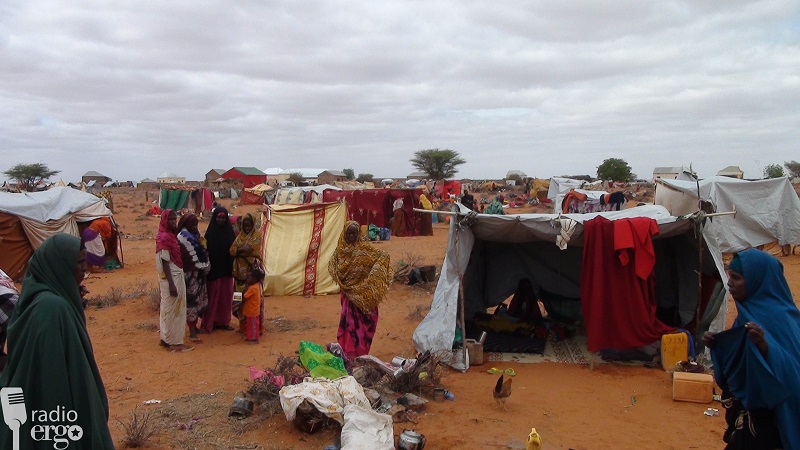
(ERGO) – The stoppage of free water supplies by an aid agency to three internal displacement camps in Galkayo has left many vulnerable families on the outskirts of Galkayo facing acute water shortage and deterioration of hygiene and sanitation conditions.
The free water service to the camps ended in June. Residents of Ifiye, Dayah and Yamani camps say the loss of water aid has added to existing difficulties caused by drought, generally declining aid, and a lack of income opportunities.
Fadumo, a mother of six living in Ifiye camp, said her family cannot afford to buy a 20-litre container for $0.50, so they walk for two to three hours to collect 10 litres elsewhere.
“There is no water. No one can live in a place without water,” she said.
Fadumo’s family survives on small amounts of food from relatives and neighbours. They sometimes receive no food for a day, leaving her children hungry. Her children are too young to work, while their father, from whom she separated, and his relatives provide no support.
She has lost access to credit from shops after accumulating more than $400 in debt for food and other necessities. Shopkeepers demand that she repays the debt before giving her more goods.
Fadumo was earning a living washing clothes and doing domestic cleaning, but those opportunities have almost disappeared as the people she worked for are also facing financial difficulties. She has worked only twice since April, earning $3 each time.
The family has lost 100 goats, which were their main source of livelihood, to lack of pasture and disease since the end of last year. Ten goats remain, but they provide no milk or income from sales.
The latrine shared by Fadumo’s family and five others became full earlier this month. Repairing it would cost between $150 and $200, so people use open areas as toilets, increasing risks of disease.
Fadumo’s family was displaced earlier this year from Saaxa-qurun in rural Mudug region, where they were pastoralists. Clan fighting and the effects of drought forced them to move to Ifiye camp, where they have found little improvement in their living conditions.
Dhuux Salad Abdi, whose family lives in Dayah camp, said the water shortage had been severe since 13 June. She also lost the casual domestic work she used to do in Galkayo.
Her household of 10 faces water and food shortages. She said the situation was the most difficult she had experienced in the five years she lived in Dayax camp. Her children, the eldest aged 14, go to bed hungry when she has nothing to cook for them. Her husband is not around to support them.
Dhuux walks nearly two hours a day to look for jobs in Galkayo, about 8 km from the camp. She often returns in the evening without finding work while her children wait for food.
Two of her children have been ill since early July, with frequent diarrhoea and vomiting. She has not taken them to hospital because the camp has no health facility and she cannot afford the cost of taking them to town.
Poor sanitation is worsening the health risks, with few functioning latrines forcing residents to use open areas. Some latrines are full, others have collapsed or been destroyed by strong winds.
Dhuux owes $377 for food and other basic necessities she obtained from creditors who have threatened to have her arrested if she fails to repay the money.
Her family lost all 200 goats they kept in rural Mudug to drought over the past several years. They were displaced from Hafodle, about 70 km from Galkayo, in 2020 after losing their livestock.
A member of the committee representing the three camps, Habibo Khalif Mahamed, said the tanker company that had been supplying water had its contract wound up by the International Medical Corps (IMC). Around 230 families are affected.
“The most serious problems are water and latrines,” Habibo said, appealing for support with food, water, latrines and sanitation.
She said about 500 school-age children in the three camps were currently out of school. Reduced humanitarian aid in recent years had led to the suspension of free services previously available to displaced families.
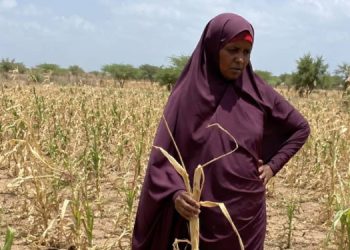
Drought and the country’s economic difficulties have further worsened the situation, leaving many families with limited means to support themselves or one another.