

(ERGO) – Women in Dollow, Somalia’s Gedo region, complain that job opportunities as house cleaners and laundry workers have largely disappeared this year as many local households cut costs because of financial hardship. A second factor, they claim, is competition from Ethiopian women willing to work for lower wages.
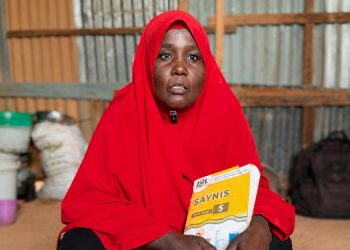
Shukri Arale Abdi, 42, says losing work in April has left her unable to provide regular meals for her seven children. Families who had employed her for daily cleaning told her they could no longer afford to pay her wages.
“I cooked beans this morning for my children. There is nothing else to give them. If they eat one meal today, they will sleep hungry tonight. We wanted to eat better, but we simply can’t afford it. Even the shop that used to give me food on credit has stopped. I have nowhere to work now and I just stay at home,” she told Radio Ergo.
Shukri said watching her children go hungry kept her awake at night. For two years she earned $3 to $5 a day washing clothes and cleaning. It covered food, water, and her children’s education. The food assistance her family received in Kabaso IDP camp in Dollow also ended in January, leaving them without income or aid.
“People used to call me because they had my phone number. Some paid me $5 and others up to $10 depending on how much washing there was.
Now nobody calls. Ethiopian women have taken over much of the work we used to do. We are sitting without jobs and life has become extremely difficult,” she complained.
A barrel of water in Kabaso camp costs about 300 Ethiopian birr (around $1.50). Shukri often sends her children to fetch untreated water from the Juba River a kilometre away, despite fears they could drown or be attacked by crocodiles:
“Water has to be bought. I already owe money at the water point, so now I borrow water from neighbours when they can help. If they can’t, we collect dirty river water instead.”
Shukri’s family fled drought in rural Dinsor, Bay region, in 2016 after losing 70 goats. Many other women living in displacement camps are also missing jobs and aid, and lack skills to find alternative sources of income.
Somali shillings have also been rejected as currency by traders in Dollow, where Ethiopian birr and mobile money have become the dominant means of payment.
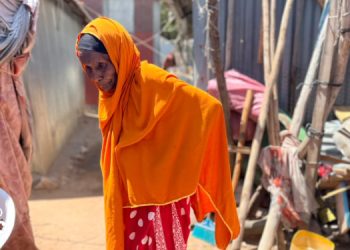
Shiniye Mohamed Abdi, 36, lost her cleaning job in February that used to make her $4 a day working in middle-income neighbourhoods. The monthly food package she had received from aid agencies since arriving in Dollow, of rice, flour, pasta, sugar, and cooking oil, ended in December 2025.
She survives by asking better-off families in the camp and nearby neighbourhoods for food:
“Hunger, hardship and unemployment have overwhelmed us. Before, I could earn two or three dollars every day. Now we have nothing. If we cook today, we may not cook tomorrow. Sometimes neighbours share a little of what they prepare.”
Four of her children have dropped out of Koranic school after unpaid fees of $36 accumulated over three months.
“I had to withdraw them because I couldn’t pay the teacher. Feeding them comes first. I simply told them to stay at home because I had no money,” she said.
Shiniye receives no support from the children’s father, from whom she separated years ago. Her family first lost their livestock during the 2011 drought in rural Dollow, when they moved to displacement settlements in Ethiopia’s Somali Region and finally settled in Kabaso camp in 2018.
Some women have to replace domestic work by starting small businesses, but weak demand has forced many to close.
Nasro Ahmed Nur, a mother of four, invested $200 borrowed from a relative to open a small stall selling sweets, roasted sesame snacks, and confectionery after losing her cleaning job in February. The business failed because customers had little money to spend.
“After I lost my cleaning job, I opened a small stall selling roasted sesame and sweets. The little capital was gradually spent on feeding the family instead of growing the business. Eventually the stall collapsed and I had to close it. Now we are left with nothing.”
Nasro’s family moved to Kabaso camp in 2020 after floods destroyed her husband’s agricultural work.
For many displaced women in Dollow, domestic work was a lifeline but the job market is shrinking and also crowded, and aid has also been cut, leaving them desperate.