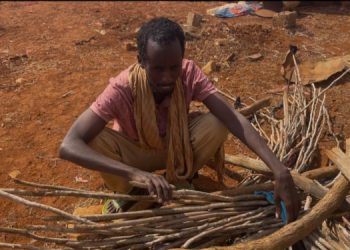


(ERGO) – Displaced and divorced mother of six, Maryan Mohamed Ali, has trebled her previous income after being trained in carpentry – traditionally men’s work – by volunteers in Baidoa.
Maryan, 45, is making $8 or $9 a day making and selling wooden home and office furniture items. She used to earn no more than $3 for the odd day’s work washing clothes for other families.
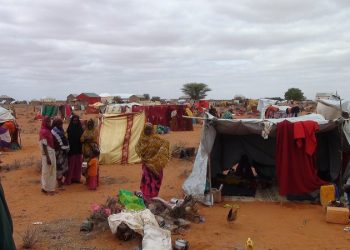
She is among 60 women from nine IDP camps, including Mogey Aarow, Mubaarak, Qaydar Adde and Idaale Hal, trained by male relatives and other displaced carpenters to make beds, chairs, tables and wardrobes.
The skills were taught voluntarily and the initiative has not had any support from aid organisations. Maryan says it’s brought a big change.
“I prepare breakfast in the morning, cook rice or whatever food is available for my children at lunchtime, and I can even buy meat,” she said. “We used to cook only once a day and often went without breakfast or dinner. Since I learned how to make these beds and tables, our lives have improved. We can now live the way we want.”
She moved out of Mogey Aarow camp in February to rent a two-room house with electricity and running water for $60 a month in a secure area. In March, she enrolled two of her children in Hilal Primary School, paying monthly fees of $24.
Maryan, who was displaced from Wajid district in Bakool region in 2019 after drought forced her to abandon cultivation on her four-hectare farm, aims to buy her own home and start a business:
“I’m putting money aside in case sales become slow. Some days no one comes to buy a bed or a table, so I need savings to get through those periods. I already have $150 saved. My dream is to build my own house and improve my family’s future.”
Many displaced families in Baidoa lost the farms and livestock they relied on due to drought and conflict. Limited education, training and employment opportunities have left them trapped in poverty.
Sadio Bashir Hassan is another woman whose circumstances have changed after learning carpentry under the same initiative. She moved out of Idaale Hal camp in April after three years living there without reliable food, clean water or decent shelter.
Today she earns $10 to $12 a day making chairs, tables and wardrobes, allowing her to rent a house costing $90 a month. The new income helped her clear long-standing debts:
“I paid off everything I owed. I cleared a debt of $130, repaid another $60 for food I had taken on credit, and settled an $8 pharmacy bill. Today I don’t owe anyone anything. Life is much better.”
Sadio has enrolled three of her four children in school for the first time, paying monthly fees of $20. She also left the camo to rent a house in town.
“My next goal is to leave rented accommodation altogether and buy a home of my own. We live in two rooms now, one for me and one for the children, but I hope to build a house with three or four rooms that belongs to us,” she said.
Sadio’s family was displaced from Awdiinle, near Baidoa, after prolonged drought destroyed production on their three-hectare farm.
The initiative began with local carpenter, Mohamed Nur Adan, bringing together volunteers to teach practical skills to women living in the camps.
“The idea came after we saw so many women struggling to survive. Most of those we trained were widows or women raising children alone without anyone to support them. We taught them how to make beds, chairs and other wooden furniture so they could earn a living and manage their own lives,” Mohamed told Radio Ergo.
He added that although some people were surprised to see women making furniture, attitudes have changed as the benefits of enabling women to support their households independently have become clear.
The volunteers are now teaching another 20 women to gain skills to earn a living and improve their families’ lives.