(ERGO) – Lack of fencing has stopped 150 farmers in villages in Sheikh, Somaliland’s Togdher region, from cultivating after monkeys, wild pigs and other animals entered their farmland and destroyed their crops.
The farmers have faced worsening food shortages since June, when they stopped farming after losing crops in two consecutive seasons. A lack of trees in Agarey, Himin and Bodhlay has left farmers without materials to build traditional fences to keep animals out. They can’t afford wire fencing, according to Ahmed Omar Ige, chairman of the farmers’ cooperative:
“Only fences can keep the animals out, but we cannot build them,” he said. “We can’t shoot or kill the animals because they come day and night. Poisoning them could also harm people and other animals. It has become very difficult to farm.”
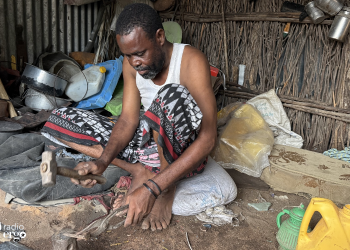
Mohamed Osman Warsame is among farmers who have lost their crops. Wildlife, mainly monkeys, destroyed vegetables, maize and beans on his two-hectare farm. He stopped planting early this year after repeated animal attacks on his farm on the outskirts of Agarey.
In April, he rented land in the middle of the farming area, hoping it would be safer, but the animals attacked again in June when the crops were nearing harvest, destroying the entire crop.
“About 500 monkeys surrounded me in three groups and entered the farm from one side. I was discouraged, but my circumstances forced me to keep farming. I have no other option, yet I can’t continue losing my crops,” he said.
He had invested $800 including $200 borrowed to pay the land rent and money for seeds. It was his third animal-related crop loss in two years. His farm supported his family of 12, but he could no longer afford to feed them all. He sent six children to be supported by relatives in Sheikh district.
The six children remaining with him eat cooked food once every 48 hours. He keeps 10 goats and sells their milk, earning about $3 every two days to buy food. He feeds the goats from diminishing stores of fodder, and gives them water from a drying well that he used to irrigate his farm. He fears the prolonged lack of rain could also lead to livestock losses.
After 22 years as a farmer, he said he has never experienced losses caused by animals on this scale.
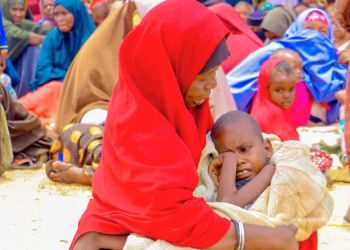
“We have lost what we used to eat and what we relied on to educate our children. I had to separate the children and send them to relatives. We do not have enough food, and we are barely surviving. Most of the time, we eat very little and remain hungry,” he said.
Seven of his children are among nearly 80 children out of school after a primary school in Agarey closed in July because families could no longer afford the fees. The school depended on fees paid by families, most of them farmers, who could no longer afford their children’s education.
Animal attacks have compounded the farmers’ problems as water sources have dried up following two years of low rainfall. Some farmers have no wells, while those with wells can’t afford the fuel needed to pump water and have stopped farming.
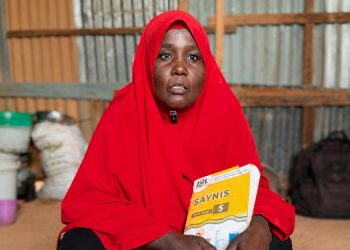
Abdirahman Abukar Ahmed, who has a two-hectare farm in Agarey, has not planted since May after animals destroyed his maize, beans and sorghum. His family of four depended on the farm for food and income. He now relies on relatives in Sheikh, Burao and Berbera for support.
When he calls, his relatives send money to his mobile phone to buy food, but the help is irregular and insufficient. He said the farmers needed help from Somaliland authorities to protect their farms and provide fencing.
“We are struggling because our farms have no fences to keep the animals out. Wild pigs, monkeys and deer enter the fields and eat the crops. The farms are open, and when we try to protect one side, the animals enter from another. Without fencing, it is very difficult to protect our crops,” he said.
He hopes sufficient rain will ease the food and water shortages that are driving animals into the farms.
Abdirahman has tried to find casual work to support his family but found no opportunities in the area. Other farmers are seeking alternative sources of income.
He is increasingly concerned about drying wells and worsening water shortages. His family depends on water stored in a plastic bag reservoir buried in the ground, which is filled by a relative who works as a transporter. Worsening water shortages could force the family to leave the area if there is not enough rain.
“Low rainfall has caused the water shortage, and the rains have decreased. Only God knows the suffering we are going through. We urgently need help from anyone who can support us,” he appealed.