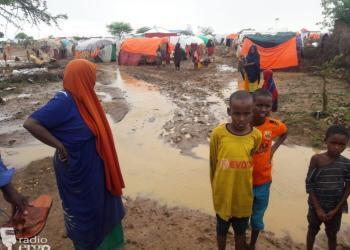


(ERGO) – Pastoralist families whose livestock have died in drought in Somaliland’s Togdher region are moving to Burao town in search of an alternative living.
Some have sold their remaining animals to finance the move and avoid displacement camps, but the money raised has proved insufficient for them to establish a new life.
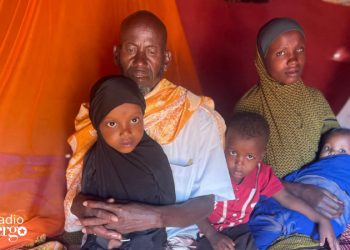
Awil Ali Mohamed moved his family to Burao in July after losing 120 goats to a prolonged shortage of pasture and water in Hayira, about 80 km east of the town, shrinking his herd from 150 goats to fewer than 30. His camel also died, leaving him unable to support his wife and seven children in the rural area.
“The drought reduced my livestock until they were close to disappearing altogether,” he said.
Awil sold his remaining goats for $1,370. He spent $700 on a plot of land on the outskirts of Burao and used the rest to buy corrugated iron sheets and materials for a small shelter and latrine.
He goes into town every morning to look for work, but hasn’t found a job. Initially he collected firewood from the surrounding bush to sell, but gave up as it brought in too little money. He later sought work on construction sites, also without success.
“I mostly look for casual labour and loading work. Whenever I see someone hiring, I rush to compete for the job because my children are going hungry. Sometimes we compete with other workers for the same work because eight people depend on me,” he said.
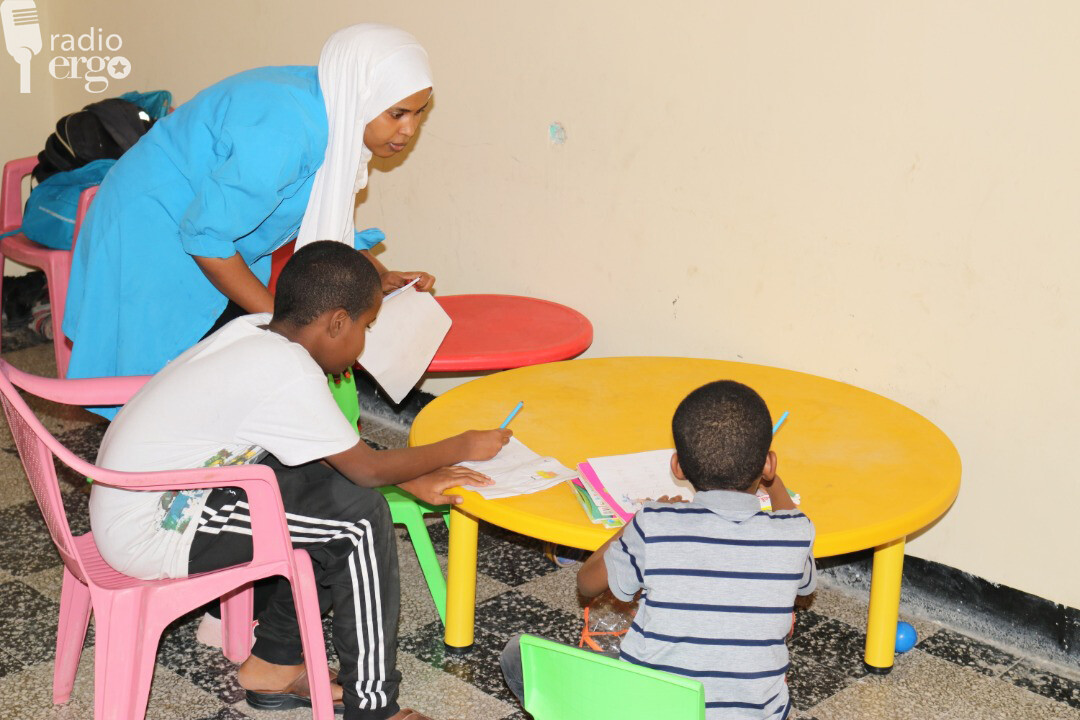
Awil said he had lost hope of building a better life for his family. His children, aged between five and 15, are not in school because he cannot afford the costs. They also go hungry on days when he returns home empty-handed.
They have no neighbours to turn to for help in their isolated home on the town’s peripheries.
Nur Ali Jama, 70, a pastoralist from Talabur village, about 90 km from Burao, also moved his wife and nine children to the town after losing most of his herd of 450 goats.
He arrived in July with only 25 animals left that could no longer provide enough milk or make sufficient income to support the family.
“Livestock were everything we depended on in the rural areas. They provided meat, milk and food, and we could sell them for money. When they dwindled until they could no longer sustain us, we had to leave,” he said.
Nur raised $1,100 by selling livestock, but the money has since run out.
“When I realised the goats could not provide enough milk or fetch much money if sold, I decided to move to town. I asked a woman for a place on the outskirts where I could keep them, and she allowed me to build a pen for my goats,” he said.
The family is living on land belonging to a female relative who agreed to accommodate them after he appealed to her for help.
Nur said adapting to town life had been difficult because he lacked vocational training and experience in urban employment.
“I grew up as a pastoralist and do not know how to drive or have any other trade. In town, people who have a trade are the ones who can earn a living,” he said.
He said his family was struggling to cope and had little hope of improving their circumstances without support.
The coordinator of the Ministry of Resettlement and Humanitarian Affairs (MORHA), Saed Farah Mohamed, told Radio Ergo that the government was planning vocational training and job opportunities for more than 250 affected families.
“We intend, for example, to train women in tailoring and henna application, while men could learn construction and solar equipment installation. If there are no different types of work available, everyone will compete for the same jobs,” the ministry official said.
“As a ministry, we are ready to support them and want to help them overcome these difficulties. The situation has become harder because organisations that used to assist displaced people have not been operating since 2024, while the number of people being displaced continues to increase.”
Without support to develop new sources of income, drought-affected pastoralists face a struggle to rebuild their lives after losing their livestock.