

(ERGO) – Children with autism in Jigjiga, Ethiopia’s Somali Region, are receiving free specialised education for the first time, giving families an opportunity to have their children learn and develop new skills.
Collaboration between the regional administration and Jigjiga Universiy has led to the opening of two Daryeel School centres in the city’s Seventh and Tenth sub-districts.
Anab Hassan’s 13-year-old eldest son, who had never attended school, started lessons at Daryeel 1 in late September. He is now in the first grade of primary school.
She said caring for him had required her constant attention, but attending school had brought positive changes in his behaviour and independence.
“I used to feel a great burden because I had to look after him around the clock. But now he prepares for school, understands that he is going somewhere, gets his uniform and belongings ready and leaves in the morning,” she said.
After a month at school, Anab noticed improvements in his reading, interest in learning and interaction with other people. His anger and occasional conflicts with neighbours also reduced.
“Previously, he would not leave me because he only knew his mother and family and did not interact with other people. Now he mixes with the community and can stay without me. I have also had some relief. I would like the centres to be strengthened and expanded,” she said.
Jigjiga University has trained 15 teachers to work with children with autism, including methods for adapting lessons to their learning needs and supporting their development.
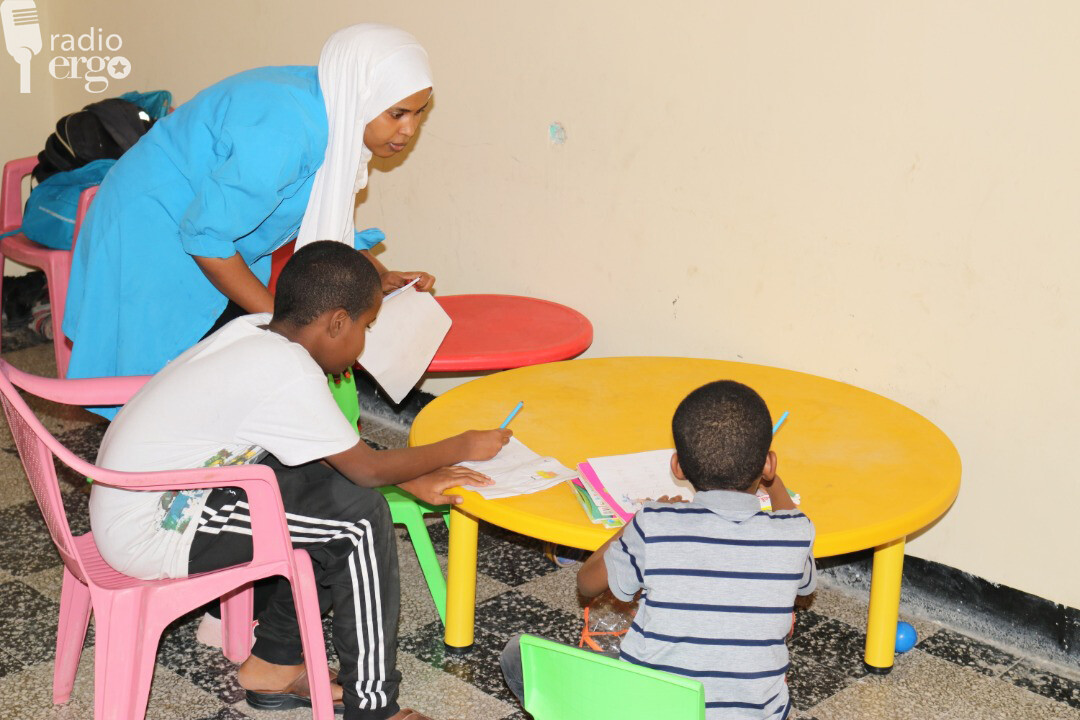
Each centre has five classrooms for children at different learning levels. They receive adapted academic lessons alongside conversations, art and play activities. They also receive physical and psychological support.
The two centres opened with 54 pupils, including four girls, aged between five and 14.
Hajir Farah Ali said he had approached several schools seeking a place for his son, Abdirahman Hajir, but had been unable to find a suitable facility. He was delighted to hear about Daryeel and brought his son when the centre opened.
“I had previously registered him with a teacher in the special needs section of a school, but I was told they did not have enough pupils. The teacher later told me that a specialised school was opening and advised me to bring my son,” he said.
Hajir and his wife first became concerned about their son’s development when he was young. By the age of two and a half, he had not started walking. After consulting a doctor, they were told he had autism. He also experienced difficulties with speech, communication, play and interacting with people outside his immediate family.
“He was very attached to me, his mother and his younger sister, who looks after him in the neighbourhood. He would not accept other people. Since bringing him to school, we have noticed that he is becoming comfortable with others,” he said.
Hajir, who works as a Koranic school teacher in Jigjiga’s Seventh sub-district, said caring for his son and managing his needs had kept him busy, while his seven-member family depended on his income.
The head teacher of Daryeel 1, Ahmed Ibrahim, said the centres were established to address parents’ difficulties in finding appropriate education for their children.
Since opening in April, the school has recorded improvements in pupils’ understanding, behaviour and social interaction. Teachers adapt lessons to children’s abilities, combining learning with physical exercises, games and practical activities to develop their motor skills and encourage mental engagement.
“Children with autism learn differently and cannot all follow ordinary lessons in the same way. We use teaching methods tailored to their needs and activities that help develop their physical abilities, including learning to stand and climb stairs. Games also help strengthen their muscles and keep them mentally active,” he said.
The headteacher said Jigjiga University, the regional administration and the federal government were planning to build a larger facility specifically for children with autism to provide them with a permanent place for learning and support.
Enrolment remains low compared with the estimated number of children with autism in Somali Region, with many still staying at home without access to education.
The school holds monthly meetings with parents and teachers to discuss children’s development and how families can support them at home. It also uses WhatsApp groups and awareness activities to share information and encourage families to bring other children who may benefit from the centres.
Ahmed said expanding the facilities and reaching more families would help provide educational opportunities to children previously unable to attend school.