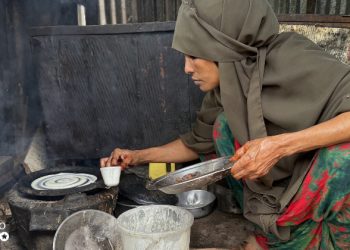


(ERGO) – Nimo Hashi Abdi, 28, graduated with a degree in human resources management in 2023 but has been unable to find work in her field despite searching since her final year at university. In August, she caved in and took a job as a domestic cleaner on $100 a month.
She is among many educated young people in Somaliland who have turned to manual and informal work after failing to secure jobs matching their qualifications. Some have given up looking for employment, while others work as domestic cleaners, restaurant attendants or street vendors. There are no figures on the number of graduates doing such work.
Nimo cleans and washes clothes in a five-room house, leaving occasionally to visit her family.
“I started looking for work while I was still at university. Even after completing my studies, I could not find a job. I had no choice but to clean houses despite holding a degree,” she said.
She eventually accepted the job because her family depends largely on her income as the eldest child and the only one to reach university. Her uncle, who lives in Hargeisa, paid her university fees of $200 per term and supported the family during her studies.
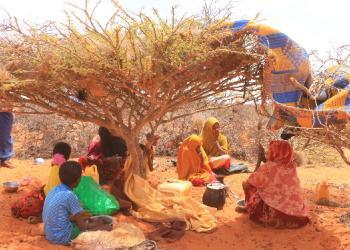
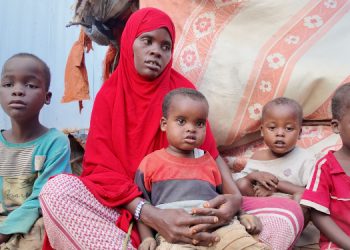
Her parents are pastoralists, whose herd was reduced by drought from 200 goats and 30 camels to just 10 animals, which her father still looks after in the rural area. After finding work, Nimo brought her mother and six siblings to Hargeisa to support them.
She is paying fees of $5 each for three of her siblings’ Koranic classes and hopes to earn enough to send them to formal school. She is determined to improve her family’s circumstances despite the disappointment of failing to find work related to her degree.
“Jobs are given through personal connections. Everyone favours people from their own clan,” she said. “Since we have studied, we are the country’s future, and opportunities should be created for us.”
Abdishakur Mohamed Muse, 29, has also taken manual work after failing to find employment with his law degree. He graduated from Golis University in Hargeisa in 2025 but has worked frying potatoes at a small business since May, earning $70 a month.
As a father of a one-year-old daughter, most of his salary goes towards rent, leaving little for other household needs.
“When I receive my salary, I pay $30 for rent for a room and veranda. The remaining $40 is not enough to cover our other living expenses,” he said.
Rising prices have made it harder to support his family. He is $400 in debt and depends on neighbours for food and water. His university fees of $230 per term were paid through contributions collected from relatives because his parents could not afford them.
“I am grateful to my neighbours for always helping us with food and water whenever we are in need. I hope the person I work for will increase my salary. I also hope the government will give us better jobs,” Abdishakur said.
For some young people, financial hardship has prevented them from progressing beyond middle school. Mustafe Omar Yasin, 26, had to stop his education in 2021 when his uncle, who was paying his fees, could no longer afford the $25 for him to join secondary education.
Nowadays he carries a portable weighing scale around Hargeisa, offering to measure people’s weight and height, making $100 to $150 a month. He had hoped education would improve his family’s circumstances. He sends most of his income to support his parents and seven siblings.
His family in Gubato, north of Hargeisa, keep 30 goats although prolonged drought has affected their livestock.
“What I earn is only enough to meet my basic needs and send something to my family. I can’t save anything,” he said. “I buy food in the city and send it to my family in the rural area.”
Mustafe said some of his friends mocked him for working as a street weighing-scale operator, while other people became angry when he approached them to offer his services.
“I stand by the roadside calling people to come and be weighed. Some spit at me, while others physically assault me. But I am struggling and in need, so I say nothing and don’t retaliate,” he said.
A study published in mid-2025 by researchers from Amoud University in Borama and the University of Manchester in the UK estimated youth unemployment in Somaliland at 96.08 per cent.
It attributed the high rate to limited job opportunities compared with the number of jobseekers, education that often fails to provide skills suited to the labour market, and limited private-sector investment.
The challenge is compounded by the growing number of graduates entering the job market. According to figures released in 2024 by the statistics and research department of Somaliland’s Ministry of Planning, more than 8,000 students graduate from universities each year.