

(ERGO) – Mohamed Mursal Ibrahim and his wife have been reduced to begging to feed their children, after floods destroyed their home and farm in Janale, southern Somalia’s Lower Shabelle region. Carrying a bowl, they go from house to house, while Mohamed sometimes walks 40 minutes to nearby villages to seek food from residents.
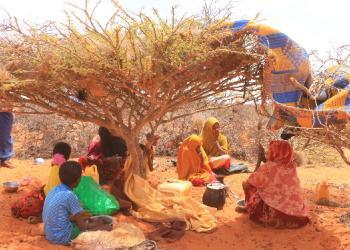
Mohamed’s family is staying with another poor household in the Jadiid neighbourhood after losing their home and belongings when rain poured continuously for more than 24 hours. Their house was in a low-lying area and was overwhelmed by floodwater.
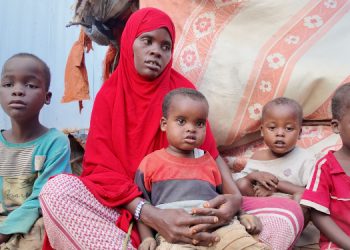
“I managed to save only the children. Even their clothes were swept away. They are now sick. One has malaria, while another has a cold and coughs day and night,” he said.
The floods swept away their food supplies, including flour, rice, sugar and cooking oil, which he had bought on $70 credit the previous week. His children sleep in a small shelter they’ve been offered, while Mohamed and his wife spend cold nights outside without blankets. Mosquitoes are a serious problem, frequently biting the children.
They take one of their children with them as they beg for food in the neighbourhood. Sometimes they receive some cooked food and other times uncooked supplies.
“We stand at people’s doorsteps asking for assistance, and that is how we manage to get one meal a day,” Mohamed told Radio Ergo.
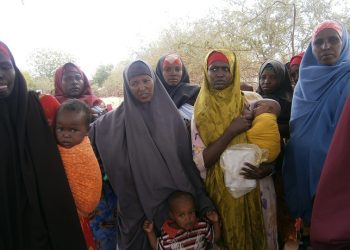
His family is among 675 families affected by flooding caused by heavy rain earlier this month, according to the local administration. Residents were displaced from Gumeysidiid, Qumboole and Siigaale, losing homes, livestock, businesses and crops. Many are now sheltering in parts of Janale that escaped the floods.
Floodwater has contaminated local water sources and buried some wells, forcing the family to collect discoloured, muddy water from shallow pools. Mohamed said his children had started experiencing stomach problems.
He also lost his rented farm, where he had borrowed money to grow sesame, maize and tomatoes. He had expected to harvest the crops within a month.
“I rented four hectares of land for the farm. The combined cost of renting the land and cultivating it was $550,” he said. The farm is now submerged under stagnant water, leaving him with little hope of returning to cultivation. He is also worried about repaying the debt.
“The person I owe money to is demanding repayment, but I have nowhere to get the money. The debt is weighing heavily on me, and I feel close to losing my mind,” he said, describing the losses as the worst setback his family had experienced.
Five of his children have stopped attending school. Some local schools were damaged, and he fears sending them to their former school because they would have to cross water channels that could sweep them away. He cannot afford to enroll them elsewhere. Their previous teachers had understood his financial difficulties and accepted whatever payments he could manage.
The floods have placed additional pressure on residents already struggling to support their families. Abdirizak Mohamed Farah, from the Jadiid neighbourhood, is hosting an 11-member displaced family, whilst he can hardly provide for his own household of nine.
His family depended on farming, but their fields were also flooded, and he has no regular employment.
“I am extremely worried because I was already struggling to support my own family, yet relatives have now been displaced and come to stay with us. We do not have enough food or water,” he said. “Even before this, I could barely provide for my family because our circumstances were difficult. The water destroyed the farms we depended on, and there is no other work in this area.”
The two families share a single cramped room in a house with a leaking roof. Abdirizak can’t afford repairs due to prioritising basic food. His children stopped attending school after his work dried up in September and he couldn’t pay the combined monthly fees of $15 for three children in Koranic classes and a language school.
Well water now costs 20 cents per jerrycan. The family uses it only for drinking, relying on river water and stagnant pools for cooking and washing.
Abdirizak travels to farms farther away that escaped the floods, earning $3 to $4 a week. When he cannot find work, he asks former farming clients for assistance, sometimes receiving about 60 cents a day. His family eats once daily and shares whatever food they obtain with the displaced relatives.
The displaced household includes elderly people and children whose home collapsed during the overnight rains. Residents hadn’t been able to protect their houses and couldn’t afford sandbags to keep floodwater out.
More than 1,500 hectares of farmland in and around Janale have been affected, including vegetable fields that had recently been irrigated, according to the local authorities.
Village chairman Abdirahman Yusuf Al Cadaala told Radio Ergo that the administration had recorded 70 destroyed houses. He said they lacked the resources to assist families but were sharing their needs with humanitarian organisations to seek emergency support.
“People need urgent assistance because floodwater has entered their homes. They need food, water and shelter first, followed by repairs to their houses to protect them from further flooding,” he said.
He warned of health risks after the floods destroyed toilets, allowing sewage to mix with water sources used for drinking.
On 21 October, the International Organisation for Migration (IOM) warned that nearly 874,000 people could be displaced in Somalia between October and December 2026. Projections by IOM and the Danish Refugee Council estimated that 874,319 people could be displaced during the period, with flooding accounting for 92 per cent of the projected displacement.
Many families in Janale had already struggled through years of poor rainfall and hoped to recover from their economic difficulties. The floods have instead left them facing further losses and an uncertain future.