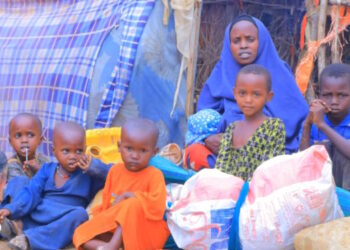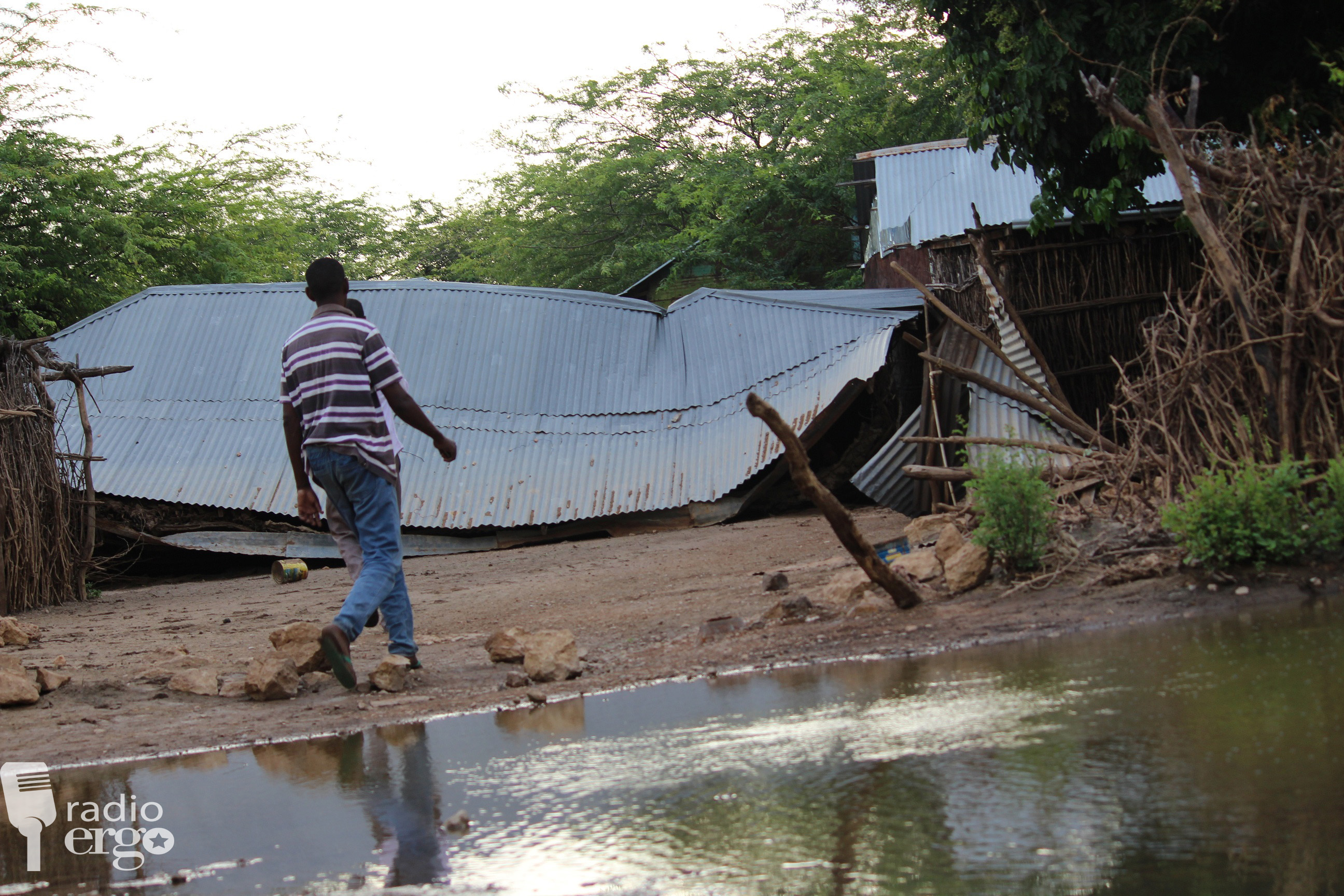


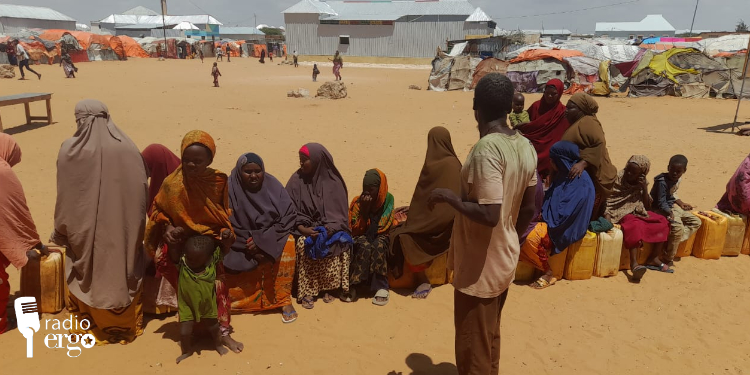
(ERGO) – Residents of Burhakaba in southern Somalia’s Bay region have been walking eight kilometres every day to collect water, after the shallow wells they relied on dried up.
Long queues form daily at a drilled well outside the town, with some people returning without water because of the high demand.
Nurta Hassan Ibrahim, a mother of 10, spends the first half of each day collecting about 15 litres of water for her family. Three times a week she doesn’t get any water as the well capacity can’t satisfy everyone’s needs
“I carry the container on my back. When I get there, I beg people for help while waiting in the queue,” she said. “When it is my turn, I collect as much water as I can and walk back. It takes an hour and a half to reach the water. People with donkey carts and motorbikes get ahead of me, so I have to wait for them to fill their containers. I sit on my own container while they collect their water.”
The search for water has affected Nurta’s income. She cleaned homes, offices and hospitals in the mornings – but now can only work in the afternoons after returning from the well. Some of her former employers have stopped giving her work because she arrives late.
Neighbours sometimes provide food on credit or as charity, while others call her for occasional laundry work.
“If someone asks me to clean their house, I do the work. If I am paid with a kilo of rice or a dollar, I use it to buy milk for my children. If I earn nothing, we go without food,” she said.
Nurta said her children are going hungry and the porridge flour given to her earlier this month by a health facility where she worked as a cleaner is running out.
Three of her children stopped attending school in July as she could no longer pay their fees. She had used part of her $6 daily earnings from cleaning to pay for their education.
Nurta says the well water is not clean, so she has to boil it before use.
The water shortage has affected communities across Burhakaba. Three wells serving about 20,000 families in the town and 40 surrounding settlements have dried up, according to a survey by the aid group, SOS Children’s Villages.
The organisation’s health and nutrition coordinator, Mohamed Ahmed Mohamed, said the shortage had contributed to an increase in infectious diseases as residents were forced to use untreated water.
“On average, we used to treat 35 to 40 people a month. From May through July, the number rose to more than 100. Diarrhoea cases increased significantly, partly because of contaminated water,” he said.
Mohamed said thousands of families had moved towards Baidoa because of the water shortage since the beginning of the year. Those who remain in Burhakaba and nearby areas continue to face difficult living conditions.
Women, including widows and divorced women, make up most of those carrying water on their backs. They often form groups to share the burden of collecting water.
Duniya Hassan Abdi, 45, carries a 20-litre plastic container tied to her back with a rope made from pieces of cloth. She calculated having walked nearly 500 kilometres over the past three months, based on her daily eight kilometre return journeys to the well.
“I leave after the morning prayer. Once you bring one container, you can’t immediately return to the well. You have to wait in line. The water is bitter and is only used by people who have no other choice,” she said.
Duniya, a mother of eight, including a two-year-old, lost her job at a restaurant because she now spends much of the day fetching water. She visits neighbourhoods and restaurants at night looking for cleaning work and sometimes receives food instead of payment.
Her children eat once every 24 hours, often without sauce. She is behind on rent payments for their two-room house.
“Today, we cooked beans at noon. The house we live in is rented, and I am four months behind on the rent,” she said. “I have been told to leave. The rent is $10 a month. We are facing very difficult circumstances.”
Duniya said she had developed back pain since starting the long journeys to collect water. She rarely sleeps at night and has not visited a health facility for an assessment.
The experiences of Nurta and Duniya highlight the wider difficulties facing low-income and displaced families in Burhakaba, where water shortages and loss of income are contributing to hunger and insecure living conditions.