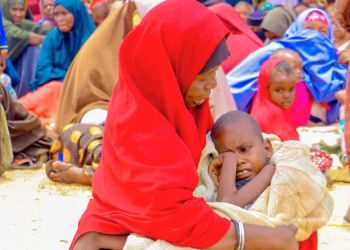


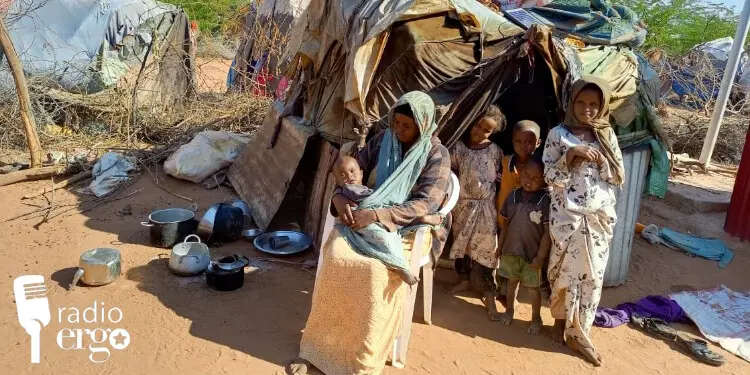
(ERGO) – More than 300 pastoralist families from central Somalia and Ethiopia are eking out a desperate living in displacement camps near Abudwak in Galmudug, after losing all their livestock due to prolonged drought.
The families came from Kora-goys, Jir and Shikhaley in Galgadud, and parts of Ethiopia’s Somali Region across the border.
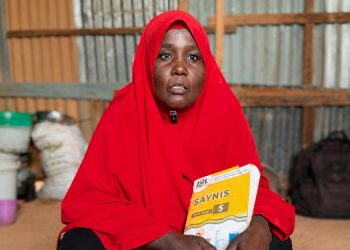
Among them is Fadumo Abdullahi Ali, 53, whose family of 11 came to Mubarak camp in Abudwak in July. They are staying with relatives who are also struggling and can’t support her large family. They cook whatever they can get, or begging for cooked food in nearby neighbourhoods.
“We have no source of support. Sometimes we get something from people, but I have young children and we only manage one meal a day,” she said. “We keep whatever we find in the morning and use it to settle the children at lunchtime.
You can imagine our situation losing all the livestock we depended on and becoming a guest in someone else’s home.”
Fadumo and her family walked from Bullaley, on the Somalia-Ethiopia border about 70 kilometres northeast of Abudwak. They put their children in a vehicle belonging to people they knew travelling to Abudwak, while the adults walked for two nights and a day to the camp.
Water shortages, lack of pasture and disease killed their 200 goats and 30 camels gradually over three years, with the last animals dying in June.
There are not enough basic, even water, to go round in the crowded camp.
“The little water brought to us is finished within minutes, especially when you have children. Sometimes when you need water to wash yourself before praying, it runs out before everyone has had enough,” Fadumo said. “Then you have to walk several kilometres to fetch more, carrying it back while you are already thirsty.”
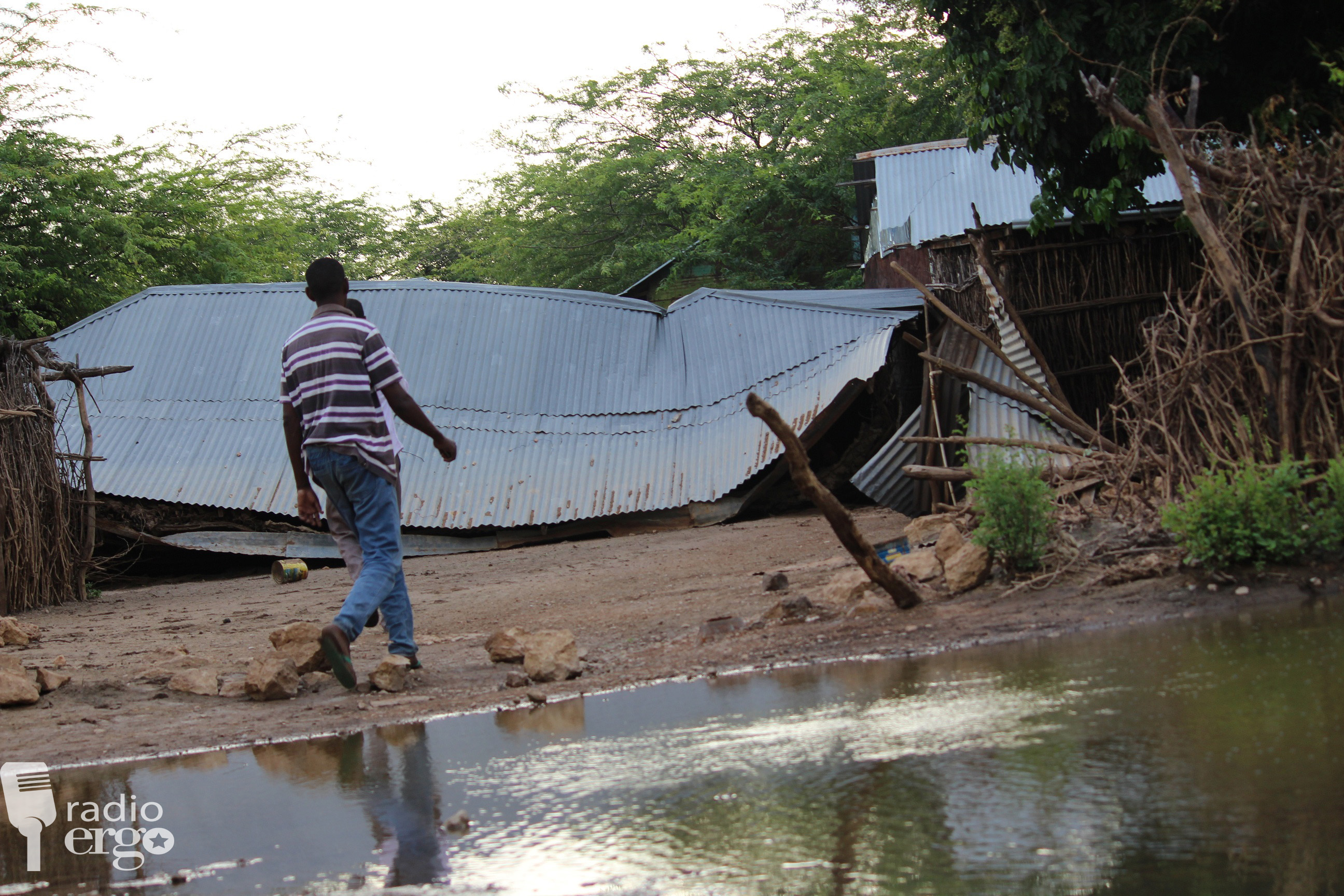
Her family is living in a tattered makeshift shelter provided by relatives, where they are exposed to the sun and cold, and fear thieves at night. She is particularly worried about the safety of her children, most of whom are girls, as the shelter is so flimsy.
Six of her children have stopped attending Koranic school. The camp lacks basic services including education and she can’t afford fee-paying schools in town.
The family has a $330 debt at shops in their village, where Fadumo had bought food and clothes for her children. She is unable to repay it, while the children’s elderly father can’t contribute to any income earning.
Another in the camp, Mohamed Adan Jama, 62, a father of eight, spent his life herding livestock and is experiencing the hardest period they have ever faced.
They arrived in Mubarak camp in mid-August and haven’t received any help. Mohamed visits relatives in Abudwak to ask for small amounts of food for his family to cook. They ask people three kilometres from the camp if they can help them with 20 litres of water, which his wife carries back – if she gets any.
“We don’t have adequate shelter, enough water or enough food. We have no toilets, no education and no healthcare,” Mohamed said. “Every morning, we scatter in different directions looking for work or something to eat, and sometimes we don’t return until late at night.”
Mohamed would take on any work – quarrying or security jobs – but he hasn’t found anything and lacks skills for work in town.
Four of his children were in Koranic school in their home area, where he used to pay their teacher with a goat every four months. He can’t afford the $10 school fees in Abudwak.
His family came from Boro-cad in Qorahey zone in Ethiopia’s eastern Somali Region. Poor rains killed most of their 300 goats and 25 camels, leaving them with only 18 weak goats.
“The land was hit by drought and became barren, and we could no longer find what we needed to survive,” he told Radio Ergo.
“Some people can afford to buy feed and hay for their livestock. Animals, like people, need enough food to survive. When they don’t get enough to eat, they become weak and eventually die. We believe that lack of food was the main reason we lost our livestock.”
Mubarak camp chairman, Mahmoud Adan Warsame, said so far 340 families had arrived since July. The camp administration had no resources to help them.
“They have no water, no proper shelter, no clothing, no tents, and no utensils. We are now in the rainy season, and if it rains tonight, diseases could spread because of poor sanitation. I strongly appeal for an urgent response,” he told Radio Ergo.
Mahmoud said new families continued to arrive after being forced from their homes by poor rains. The situation has been reported to Galmudug authorities and humanitarian organisations, but they’ve had no response.