

(ERGO) – The closure of many humanitarian aid programmes in dozens of internal displacement camps in Galkayo has caused job losses and hardship, as well as gaps in information among families living in the camps.
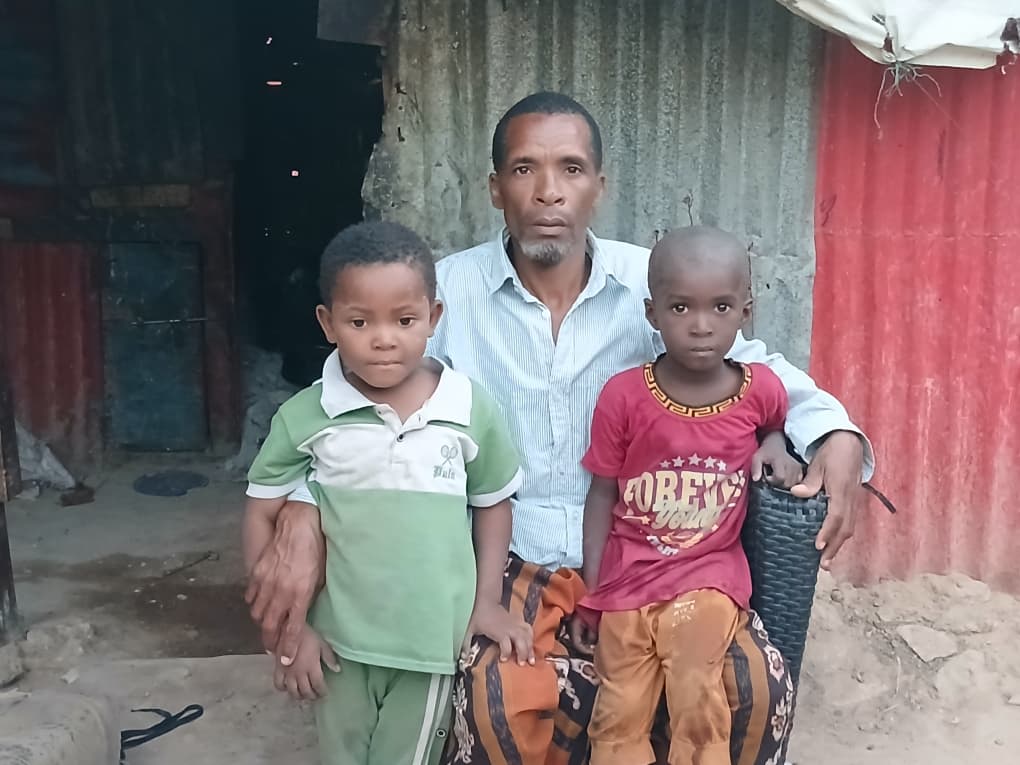
Hassan Hussein Noor lost his job as a community worker in Samawade 1 camp in January, when the aid organisation he worked for suspended its activities. For four years, he earned a monthly salary of $200 carrying out hygiene promotion and other vital community awareness campaigns, and data collection activities in the camp.
His family, who are themselves displaced, now lives off the small earnings made by his wife collecting and selling scrap metal. She sells what she collects twice a week, making $3 to $5. They can afford to cook two meals a day only twice a week. For the rest of the week, they need to ask for food on credit from local shops.
“The $200 I used to earn was enough for my children. We could provide three meals a day. Now we have nothing. There are no jobs in the town and the organisations I worked for have stopped operating,” Hassan told Radio Ergo.
“The truth is we can no longer provide enough food for our children. Three meals a day are no longer possible. We survive on credit. We keep hoping the organisations will return so that we can repay our debts.”
He was trained by the organisation he worked for to carry out community outreach independently in the IDP camps. Returning to construction work that he had done prior to that has proved difficult after several years away from the trade.
“I’ve almost forgotten the construction work I used to do. The clients I worked for now employ other people. I could try calling some of them, but the work has moved on. The organisation gave me work without me having to search for it, and I gradually left my old trade behind. Now there is very little work available in the town,” he said.
The closure of humanitarian programmes has also reduced food aid reaching his camp. Food distributions are now irregular, increasing hardship for displaced families.
Hassan owes $350 to local shops for food since January and $120 in unpaid school fees for his four children. He is doing all he can to prevent them from dropping out of education.
The chairman of another Galkayo camp, Danwadaag, said the loss of humanitarian programmes and outreach workers had affected all camp residents.
“These people need support and someone to speak on their behalf. They are poor and depended on humanitarian organisations. They need food assistance, shelter, healthcare and education. They lack even the most basic necessities. Any support with food, health or sanitation would make a real difference to these families,” Danwadaag camp leader Hirsi Jama Badi told Radio Ergo.
Single mother Sadiyo Abdi Ahmed also lost her job as a liaison between aid organisations, camp residents and the Danwadaag camp administration.
Her income covered food for her family and school costs for her children. Now she is struggling to make a living selling cups of tea for 20 cents.
“I survive by making tea and cleaning wherever I can find work. That is how I buy food for my family. There is nothing in our camp because it is a very poor settlement,” she said.
Sadiyo used to earn from $50 to $150 a month depending on her assignments from the aid groups she worked with. That income allowed her to support her household independently. She now owes $440 to local traders and schools attended by four of her children. The family’s meals have been reduced to one a day.
“The day that income stopped, my life became uncertain. I am displaced, and debt has overwhelmed me. Because of the financial hardship, my children have dropped out of school. Everything has declined -our livelihood, our wellbeing, every part of our lives,” she said.
Sadiyo fled Bursalah in Mudug in 2018 after drought wiped out her family’s livestock. After moving through several displacement camps, she settled in Danwadaag three years ago, where her humanitarian job became her family’s main source of income.
There used to be two community workers in each of the 45 IDP camps across Galkayo, engaged by international and national humanitarian organisations, including Danish Refugee Council, CARE International, Puntland Minority Women Development Organization, TAG International, and Galkayo Education and Development Center.
It is unclear how the gaps in community awareness and engagement, in the absence of these local community workers, are affecting the displaced communities’ welfare and wellbeing, nor what efforts are being made to fill the space.