

(ERGO) – Violent clan conflict that erupted in Madah-lagu Hoor in Somalia’s Sool region in early June has forced hundreds of families into displacement and wiped out the homes and livelihoods they had worked hard to build up.
Sahra Faah Ali owned a small café in Madah-lagu, where she cooked and sold meals and groceries, making $6 to $10 a day that covered food, water, her children’s education, and other household expenses.
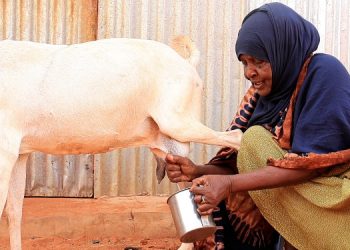
But the shop and her corrugated iron house with two rooms, a kitchen and latrine were all burnt down and destroyed in the violence. Her six goats, some of them milking animals that supplied milk for her children, also had to be abandoned as they fled.
Sahra said she started her business with an initial $100 loan. It had grown to hold around $300 worth of stock that constituted her modest savings.
Hundreds fled to nearby Ari-adeye, where Sahra and her eight children and dependent on occasional meals and other support shared by relatives.
“We cook only once a day, and sometimes we don’t cook at all because there is nothing,” Sahra told Radio Ergo. “The relatives hosting us help when they can, but they are struggling too. We arrived with nothing, and our needs are many.”
She can no longer afford basic necessities, including drinking water. Families in Ari-cadeeye buy water from privately owned wells, where a 20-litre jerrycan costs about $1. She asks for 20 litres a day from the household hosting them, which is enough for drinking and cooking, but not for bathing and washing clothes.
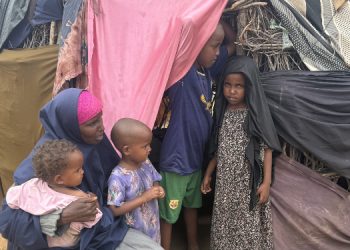
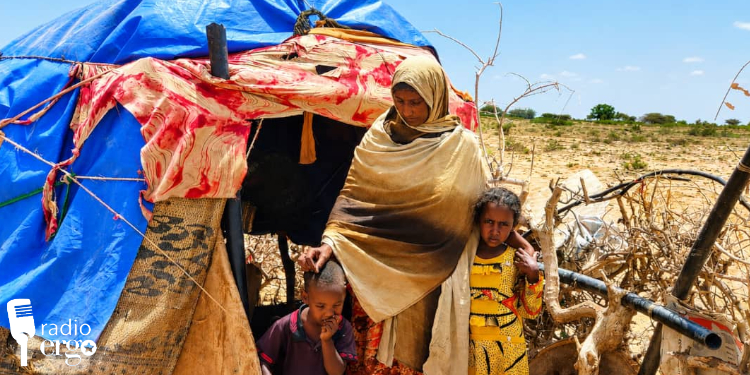
“We have no proper shelter. We built a hut from plastic sheets bought on credit and sticks we collected. The mats people gave us are not enough. The children sleep inside, while we sleep outside. During the day we stay under trees because there is nowhere else,” Sahra told Radio Ergo.
Widowed four years ago after her husband died from illness, Sahra, 41, is the family’s sole provider. Since arriving in Ari-adeye she has searched for washing jobs but hasn’t found any paid work.
Three of her children had to drop out of their Koranic school that cost $30 a month in fees. She has other debts too:
“I owe $300 now, including the vehicle that brought us here and the plastic sheets we bought for shelter. I had no choice but to borrow after losing everything in the conflict. I don’t know how I will ever repay it.”
Hinda Farah Jama also lost her home and grocery shop when the fighting spread through Madah-lagu Hoor. The shop that supported her family of seven was burned, destroying goods worth around $3,000.
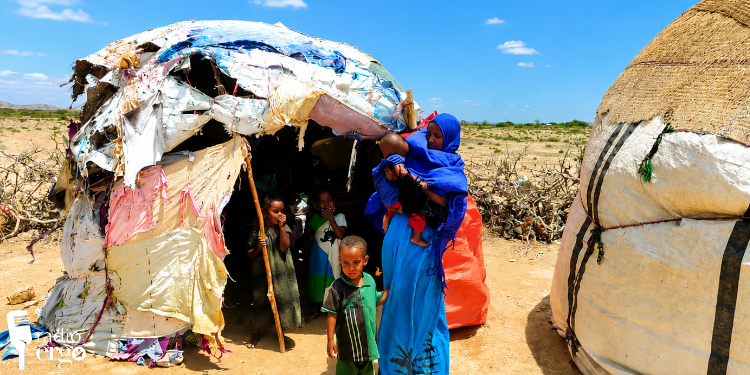
The family depends on irregular cooked meals shared by earlier arrivals in the displacement settlement.
“We cook only once a day,” Hinda said. “Sometimes we find food, sometimes we go hungry. Whatever we receive is never enough because we are a large family, but we have no alternative.”
There are no basic services in the settlement, forcing her to carry jerrycans from a well about one kilometre away. The water is salty, but she cannot afford cleaner water sold for $1 per container.
The conflict has also halted the education of four of her children, who were in primary school: “There are no schools here, and I could no longer pay the $8 monthly fee for each child.”
With her elderly husband unable to work, Hinda is responsible for supporting the family. After several weeks in the camp, they are still sleeping in the open at night and spending their days crowded into the small shelter of another displaced family.
The scale of displacement has overwhelmed the local community’s ability to cope.
The chairman of the Ari-adeye displacement settlement, Abdisalan Abshir Abdirahman, said local authorities had registered around 370 displaced families since the conflict began. The violence struck just as communities were beginning to recover from three consecutive years of drought.
“We have tried to mobilise assistance, but the needs are far beyond our capacity. People need food, shelter, healthcare and education. They have lost everything. Some are living in the displacement camp while others are crowded into relatives’ homes,” the chairman told Radio Ergo.
Having lost businesses, livestock and homes, these displaced households face an uncertain future with little means of rebuilding their lives once the conflict stops without external assistance.