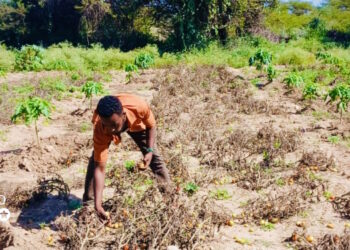


(ERGO) – Ahmed Abdi Ismail is used to the scorching temperatures of up to 34 degrees Celsius in Abdaal village in Somaliland’s Sahil region, where he is among a group of men and women employed on a sheep-fattening farm established by a Somaliland woman diaspora entrepreneur.
Ahmed joined the farm in February on a monthly salary of $100, allowing him to support his wife and three children after years of volatility.
“Covering our basic needs used to be very difficult. Sometimes we had food and sometimes we didn’t. There were days when we missed meals altogether. Getting this job brought us great happiness. There is a big difference between having work and having nothing,” Ahmed told Radio Ergo.
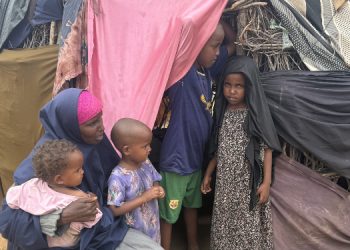
Drought and disease wiped out nearly 300 of Ahmed’s animals, including sheep and camels, over the past two years. This left the family without an income source and dependent on assistance from others. This job has restored some hope.
“Everything I earn goes towards buying food for my family, and it is enough for us. My family depends on me, and this work has helped us move beyond the difficult situation we were facing,” he said.
Additionally, Ahmed has been learning modern livestock management techniques that differ significantly from the traditional practices he inherited from his parents. He believes that if he is able to rebuild his own herd in future, the knowledge gained on this farm will help him raise healthier and more productive animals.
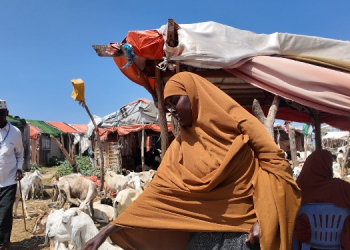
The livestock project was established by Faiza Farah Rage, whose aim is to create employment and also demonstrate modern methods of livestock production and fattening. The farm focuses on raising, fattening, and selling livestock while training workers and local pastoralists in improved animal husbandry practices.
“This project was designed to promote livestock trade and demonstrate modern livestock production methods. We fatten animals, raise them properly, and then sell them. We recruit workers based on their experience and knowledge of livestock care and management,” Faiza told Radio Ergo.
Her project has encouraged many local livestock owners to adopt new approaches to feeding and rearing their animals, helping them improve productivity despite harsh environmental conditions.
When she began, many people dismissed her ideas as impractical. However, training and awareness sessions alongside the evident results have gradually changed attitudes within the community.
“People have learned that they do not always have to move constantly with their animals. They can stay in one place and manage livestock more efficiently. We have shown that animals can remain productive with proper feeding and care, and that livestock farming can generate income even in challenging environments,” she said.
Faiza hopes to expand the initiative so that more drought-affected families can benefit from employment and training opportunities.
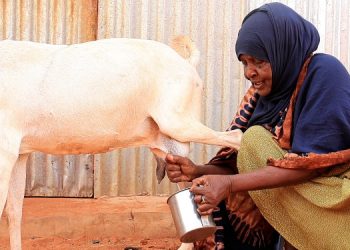
Among those who have found work at the farm is Amina Warsame Ali, who supports a family of 11. Employed since January, the job has given her financial independence. She is responsible for a range of tasks including preparing food for workers, milking sheep, cleaning livestock shelters, clearing the bushes, and ensuring animals have adequate feed and water.
“This work suits me because I already understood livestock management. Drought destroyed our animals and left us with almost nothing. Before this job, I relied on occasional support from relatives, but it was never enough for our large family,” she said.
The steady income has enabled Amina to provide food, water, and basic care for her children without constantly worrying about where the next meal will come from. She hopes she will eventually be able to send some of her children to school in a nearby town, as there are no schools in her village.
Livestock experts say improved animal husbandry practices such as those promoted at the Abdaal farm could play an important role in strengthening livelihoods across Somalia and Somaliland, where millions of people depend on livestock. Better feeding systems, animal health management, and commercial livestock production can increase productivity, improve market value, and help pastoralist families become more resilient to recurring droughts.