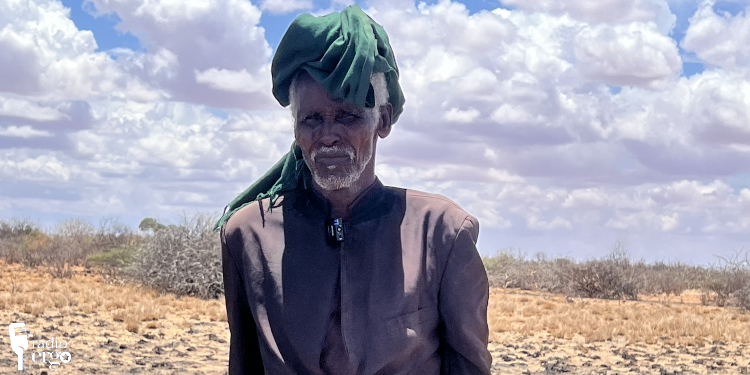
(ERGO) – Ali Hassan Malin lost one of his wives and his one-year-old daughter to malnutrition in March after months of struggling to feed his family of 18. Poverty prevented him from seeking medical treatment for them in time.
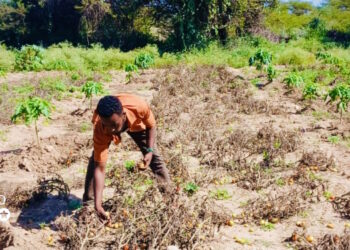
His family is among around 50 farming households whose farms were burned in February in Dab-dheer and Wabarka areas near Dusamareb in central Somalia’s Galgadud region. The destruction followed a decision by local traditional elders, who asked authorities to clear the farms in an attempt to resolve a long-running land dispute between farmers and pastoralists.
For Ali, a 77-year-old farmer, the consequences have been devastating. He had planted food crops and vegetables on his two-hectare farm in December and was preparing to harvest and sell the produce when the farm was destroyed.
“We cook only one meal a day. We survive on a small amount of rice and sugar that my wife begs from neighbouring families. We had nothing except that farm, and now it’s gone. We are living in very difficult conditions. At my age, I have nowhere else to turn. We need help,” Ali told Radio Ergo.
He fears more members of his family could succumb to hunger and illness. Two of his youngest children have been sick for two weeks, but he can’t afford to take them for treatment. Relatives who previously lent him $230 to cover medical costs hoping to save for his wife and daughter have refused further loans.
He says he has lost hope of finding money for medicine. There is no health facility in Wabarka. The nearest one is in Dusamareb, more than 30 kilometres away, and transport costs about $50.
Shopkeepers who previously provided food on credit have stopped lending to him as they know his farm was destroyed and he has no means to repay. He now owes a total of $530.
The family relies on a single communal water source shared with neighbours, which is insufficient for such a large household. Commercial water deliveries cost about $2 per jerrycan.
Ali had expected to earn about $800 from the harvest that would have set them straight after years of drought that wiped out his herd of 65 goats.
“That farm was all we had. We had no camels and no other source of income. I want those responsible for burning my farm to be held accountable under Islamic law and Somali customary law,” he said.
Dayib Ali Ahmed also saw his three-hectare farm burnt and his family of 10 has been living in severe hardship for the past three months. He invested $350 in maize, beans, sorghum, sesame and vegetables planted in January. Nothing survived.
“The farm supported everything in our lives. It provided food for the family and income from sales. Now nothing remains. I feel like a man who lost all his livestock and was left empty-handed in the wilderness,” he said.
His family gets some food assistance from relatives in Dusamareb, but not every day. The fire also destroyed their water storage tank on the farm, forcing the family to depend on neighbours for water.
As he couldn’t pay the $25 school fees, five of his children were expelled from primary and intermediate school in March.
“I used the farm income to pay for education, household expenses and debts,” he said. “Everything that depended on the farm has collapsed. We are starting over with nothing.”
Dayib invested about $1,500 in establishing the farm, using money raised from the sale of 50 goats and contributions from relatives. Rebuilding is currently impossible.
The destruction of the farms followed growing tensions between those involved in expanding agricultural activities and those living off pastoral grazing lands in the area.
One of the traditional elders who supported the decision to bur the farms, Salad Ali Awaale, said repeated disputes between farmers and pastoralists had become increasingly difficult to resolve.
“The community had been facing recurring conflicts. Some disputes involved damage to livestock and tensions that nearly led to direct violence. More people were fencing off land, and others were following the same practice. After consultations, we decided the farms should be cleared. The decision was coordinated with the Galmudug administration and police,” he said.
Officials at Dusamareb police station confirmed that the operation was carried out following a formal request signed by local elders. It is not clear what fate awaits the farming families who have lost their farms and source of livelihood