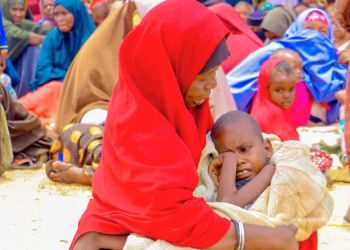
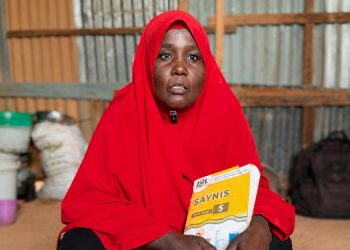
(ERGO) – A decent loan that refugee mum Hafsa Mursal Abdi received in February has enabled her ailing business in the refugee camps in Dadaab to revive and become the livelihood support for her seven children.
Hafsa, 28, received the loan from a local organisation and restocked her shop in Hagadera camp with popular food items. Having floundered for a year due to lack of capital, the shop is now thriving.
“The money helped me a lot. When I received the 100,000 shillings it transformed my business. I now sell rice, flour, sugar, oil, pasta, groundnuts and many other items. The income supports me and my children. I thank God for that,” she told Radio Ergo.
Hafsa earns a steady profit that covers her household expenses and enables her to repay the loan instalments. She has repaid half already and is confident of clearing the rest soon. She reinvests part of her earnings back into the business and uses the rest for food, school expenses, and other household needs. Before expanding her shop, life was difficult.
“Sometimes we ate and sometimes we did not. But now things are completely different. I can provide breakfast, lunch and dinner for my family – we have food every day,” she said.
It’s not the first loan she has had, as she opened her ship in March 2024 after borrowing just 10,000 Kenya shillings from the same organisation. Although the capital was limited, she says it gave her valuable experience.
Her father brought the family to Dadaab after fleeing insecurity in Jilib, southern Somalia’s Middle Juba region, in 2006. For years they relied heavily on food assistance, but Hafsa says her business now provides a level of financial independence.
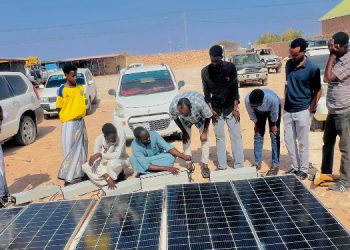
Another refugee mother, Maano Mohamud Gagaal, used a loan of 130,000 shillings to purchase solar equipment and refrigerators for her shop in Hagadera camp. Now she sells ice cream, ice blocks, and cold drinking water that are all in high demand in the camp.
Maano’s business generates around 1,000 Kenya shillings in profit each day. “The loan solved many problems for me. It allowed me to work and provide for my family of five. Today I earn enough from selling ice cream and ice. I repay the loan and still support my household,” she said.

Boosting her business with the loan has enabled her to provide food, clothing, healthcare, and other necessities for her children without depending on relatives or humanitarian assistance. “I am the only one supporting my children. Their food, clothing and healthcare depend on me. Now I can provide what they need through this business,” she said.
Maano’s family fled Mogadishu in 2008 because of insecurity and sought refuge in Dadaab, where they have lived ever since.
Inkomoko loans have become more significant as humanitarian assistance continues to decline. Business development adviser, Adan Mohamed Haji, said thousands of refugee households had benefited from the initiative.
Applicants must already operate a business or present a viable business idea. They are also required to attend at least two business development training sessions provided by the organisation and to contribute a modest profit-sharing fee as part of the programme.
“The aim is to help people become self-reliant. Many families previously depended entirely on humanitarian aid, but as assistance decreases, supporting businesses offers a pathway towards sustainable livelihoods,” Adan said.