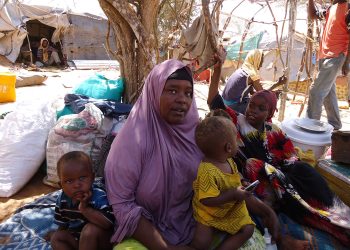


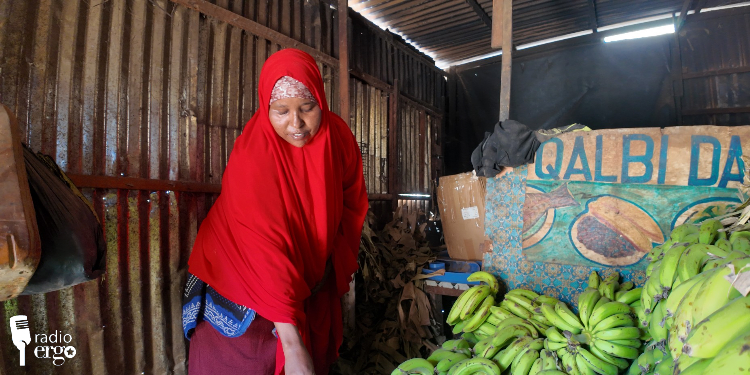
(ERGO) – Nurto Raage Tuur-yare is proud to be supporting her family of eight after receiving funding from a local aid group to start a shop selling bananas.
She is making $10-$15 a day, enabling her to meet her household’s basic needs after struggling for long to afford even one meal a day.
“The shop has changed our lives. We now cook three meals a day. We were only able to cook once, which wasn’t enough. The banana business covers all our household expenses – I now depend on my own work,” she said.
She was assisted by a livelihoods support programme in Lower Shabelle region for displaced and impoverished families to recover from hardship through small businesses, farming, and livestock support.
Nurto’s business was seeded with funds of $1,000 and has already doubled in value to $2,300.
Her family can now afford to buy a full barrel of water for $2, instead of borrowing small amounts from neighbours. She has repaid $100 of the debt she owes to shopkeepers for food. In February, she sent her children back to school after they had dropped out due to lack of fees.
“They were not studying at all. Now three are in school and three are in Koranic classes. I pay $6 per child for school and $5 for the others. Life is much better now,” she said.
In March, Nurto opened a second stall, employing two men to sell bananas. She has put her husband in charge of the new stall, so they manage the business together. Rental for the stalls is $50 and she pays the workers $2 a day each.
In addition to financial support, she received training on how to manage and grow her business. Having previously earned about a dollar a day hawking bananas, she has plans to expand her formal business.
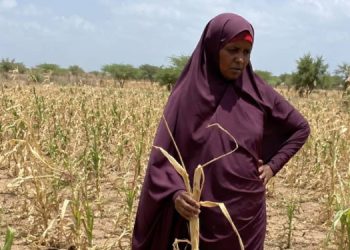
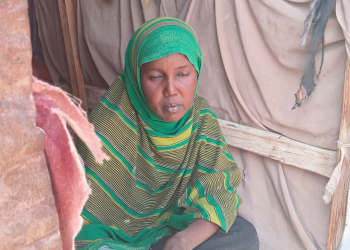
Fowsiya Bilal Tifow, a mother of eight, is part of a group of 15 people managing three greenhouse farms that were given land, seeds, and irrigation systems under the same livelihoods support programme.
They planted tomatoes and cucumbers last November and began harvesting in February. The produce is sold in Afgoye markets, and profits are shared among the group, with each member earning $27 to $30 a week.
“There has been a big change in our lives. Before, we had nothing. Now we can provide enough food and education for our children. We grow vegetables and sell them every few days. That income supports our daily needs,” she said.
Fowsiya had relied on casual farm work and selling fried snacks in Afgoye, earning about $2 a day. When she had no income, her children went hungry. She struggled to pay the $10 rent for her two-room house and sometimes had to ask relatives for temporary support. Now she pays her rent consistently and no longer faces the same level of financial stress.
Last month, she enrolled two of them in religious classes, paying a total of $4. She plans to start saving to open her own business in the future.
“I feel hopeful now. We work together as a group on the farm and want to increase our production. We are grateful for the support we received,” she said.
The initiative run by Aridlife aims to help families achieve financial independence by building on their existing skills. Programme manager at Aridlife, Ibrahim Mohamed Ibrahim, said they have supported 130 families in Afgoye and Balad districts since November 2025, with funding from Norwegian Aid through international NGO, SOS. They aim to reach a total of 640 families.
Households with experience in livestock were given animals, including milking animals to ensure a steady source of income. Others received business capital or agricultural support.
“The aim was to help people recover and generate sustainable income. We matched each person with what they already knew how to do. Farmers received greenhouses, traders were supported to expand businesses, and pastoralists received livestock,” Ibrahim said.