

(ERGO) – Several months after receiving livelihood regeneration support from an aid group, displaced farmer Ali Mohamoud Ali has managed to move his family of six out of a displacement camp in southern Somalia’s Middle Shabelle region, where they had lived for two tough years.
Ali and four other displaced farmers were each allocated a two-hectare farm along with seeds and irrigation equipment. They have harvested food crops and vegetables several times since then, making $900 in profit, which they shared between them.
“This work now fully supports my family,” he said. “I am happy. It has changed our lives greatly and for the better. We now eat two or three times a day. Before, even one meal was difficult. I used to rely on relatives, but that burden is now gone.”
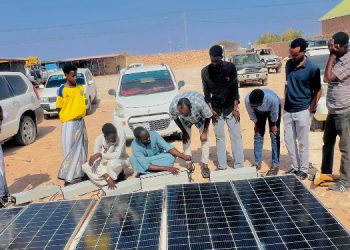
He had been relying on random help from relatives and odd farm jobs for $2 a week and borrowed food. With a solar powered well shared among local farmers, he uses a donkey cart owned by a relative to transport water home, meeting one of their most urgent needs.
Ali’s family was displaced in 2023 from their own three-hectare farm in Jiliyaale, Middle Shabelle, by drought and conflict. He feels he is back on his feet again since that time.
He stored some maize and sorghum from the farm in barrels for later use. He and the four other farmers in his group formed a rotating savings arrangement, where each member takes turns receiving pooled contributions. The scheme is currently on its third cycle.
“Each time we harvest, everyone takes $70, and one of us takes the full share,” Ali said. “That money is our savings. We hope to build houses and start businesses. We want to make use of this opportunity.”
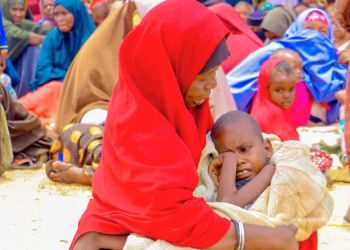
He accessed his share of the savings pool in March, using part of it to repay a long-standing $193 debt. He moved his family out of Jowhar-Bile camp into a rented two-room corrugated iron house with a kitchen and toilet for $30 a month. In March, he enrolled three of his children in Koranic and primary schools for $20 in total. fees.
“There is a big difference,” he said. “Before, we were displaced and surviving on begging. Now I can take care of my children. I no longer worry about food and daily needs.”
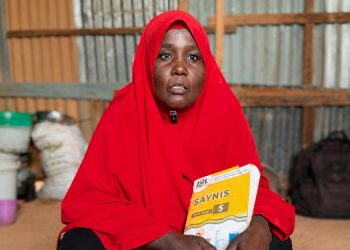
Maryan Mukhtar Nor has also built a modest income after receiving a livelihoods package of 10 goats, four of them lactating, a refrigerator and a solar system, provided last October.
She began selling frozen drinks and ice making about $50, which she combined with a $100 loan to open a small kiosk in February.
“This business now supports my family. I pay for food, water and my children’s education. I manage everything from what I earn. Some days we eat twice, some days once. On good days I save a dollar,” she told Radio Ergo.
Maryan, who is the sole provider for her eight-member household, previously did laundry jobs for about $2 a week, and relied on relatives for support.
She has also moved her family out of Alle-Suge IDP camp into a rented room in Jowhar’s Hanti-Wadaag neighborhood for $15 a month, and enrolled two of her children in primary school after nine months out of education.
“Now I can pay for school, food, rent and electricity. I hope to build a house and expand my business,” she said, having repaid $80 of her $200 debt s.
The project is supported by SOS Children’s Village, whose representative Suleiman Mohamed Hussein said they will provide follow-up support over a year to the 270 people they helped either farmland, livestock and small business equipment.
“These are extremely poor households with no means of survival,” he said. “We provided them with livelihoods so they can generate their own income. We continue to treat livestock, support farming inputs and repair equipment. If productivity improves, communities will eventually take full ownership.”