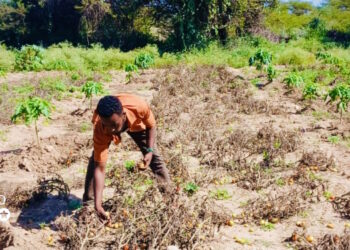


(ERGO ) – Around 100 farmers on the outskirts of Baidoa made good income from crops harvested and sold in March, marking their first successful cultivation in two years following repeated drought and climate-related losses.
The farmers say their recovery has been driven by climate adaptation training including the use of AI-based tools to monitor weather patterns, manage pests, and anticipate risks such as flooding, combined with water pipes provided for regular irrigation.
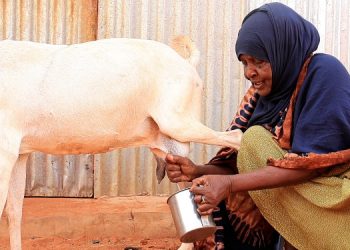
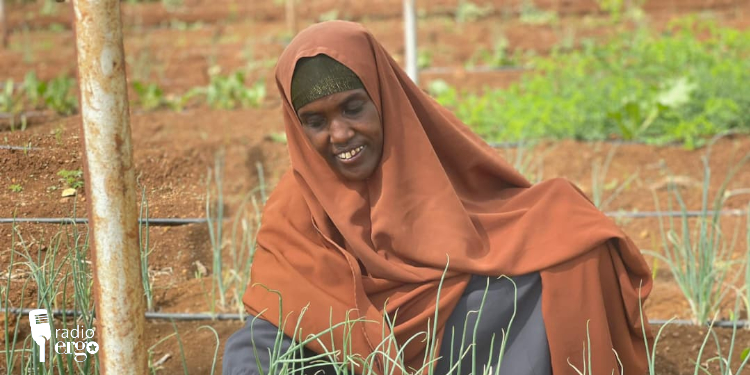
Fadumo Mayow Ali, a mother of 10 and the sole provider for her family, has been harvesting tomatoes, lemons, okra, beans, and maize from her farm and selling them in Baidoa markets making $8-10 a day.
“Life has improved for us now. We cook three meals a day using what we harvest. With the money I earned, I paid the house rent and supported my children’s education. I managed all the family’s needs. Before, we weren’t growing anything, we were farmers by name only,” she said.
Previously water shortages destroyed crops on her four-hectare farm, leaving her in debt. The training helped her, as she explained:
“The most important things we learned were about floods and the risks posed by strong winds to both crops and our homes. We were also trained on how to protect ourselves in advance. Many things we didn’t know before were explained to us. For example, if we know rains are coming, we now understand how to prepare and prevent damage.”
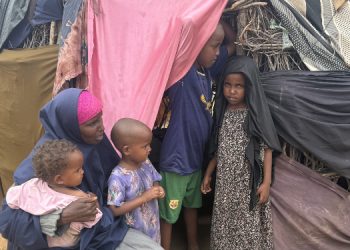
With her increased income, Fadumo has moved her family out of a hut in Madhaayte displacement camp, where they had lived for four years after drought forced them to flee El-dhun village in Bakool region. She now rents two iron-sheet rooms for $22 per month with access to piped water.
She has enrolled eight of her children in Koranic school for the first time, paying $30 in fees that she couldn’t afford when she was relying on odd labour jobs paying $4 at a time.
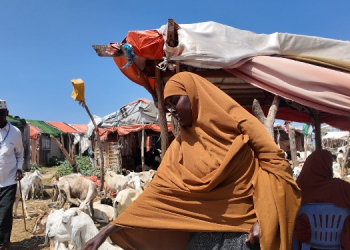
Nishey Ibrahim Salad, who supports a household of eight, says she has earned around $600 since the beginning of April selling fresh produce. She no longer has to rely on loans and help from relatives.
“Our life is much better now. Before, we could barely eat once or twice a day, but now we cook three times. The food we had before was not even nutritious. Now the difficult conditions we faced are behind us,” she said.
Nishey says the improvement came when her family was facing severe hardship. She works on her farm with the help of her young son, as her husband is elderly and unable to contribute. With her recent earnings, she has repaid her debts:
“I owed $350, and now I have cleared all of it. I am now relieved of the constant calls I used to receive from people asking for repayment when I had nothing to give. Now I have managed through my own effort.”
Her family was displaced three years ago from Oflow village near Baidoa after drought wiped out their three-hectare farm. She feels more confident in farming now, and has reinforced her water catchment.
The chairman of a cooperative group formed by 101 farmers, Hasan Mohamed Adan, said they were assisted by a programme implemented by NGOs, Shaqodoon and World Vision.
“We were taught how to monitor the weather, when to plant, and how to avoid floods while also making use of rainwater. We also learned about water quality and how to assess it. Many things that we didn’t understand before are now clear to us,” said Hasan. They are spreading their knowledge to nearby communities.