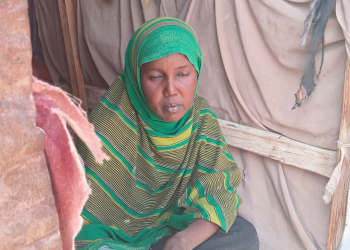


(ERGO) – Habibo Abdirahman Ali, a displaced mother of seven living in Hilaac camp in Mogadishu’s Garasbaley district, closed her small shop selling fresh produce on 17 April after traders refused to accept payment owed using the five million Somali shillings she had saved in notes.
For years, the business had been the family’s only source of income. She earned around 200,000 Somali shillings a day [about $7] that was enough to buy food, water, charcoal, and support her children.
But her savings suddenly became useless as bigger businessmen started to refuse to accept the notes.
“If someone owes me money and even the cash I have is rejected, I have no choice but to sit down helplessly. I took the money everywhere trying to exchange it, but nobody would accept it.”
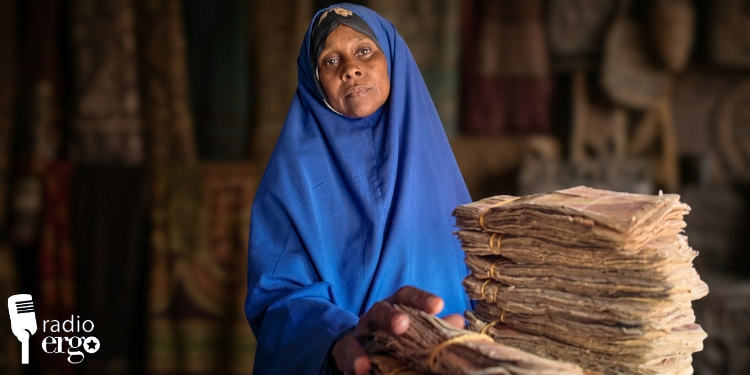
More than four million Somali shillings stored in her cash box came from sales she made over the past two months. None of her suppliers will accept this cash.
The closure of her shop has forced two of her daughters out of school as she failed to pay their fees. The girls were studying health sciences at a private school inside Hilaac displacement camp, where she paid $40 a month for their education from her shop profits.
“The children have stopped attending private school now. I told them I have no money left to pay for their education. My business was my only source of income. The Somali shilling was what people in the camp used every day. Now the money is rejected and we are left stranded,” Habibo told Radio Ergo.
Habibo has been engaged in small business for nearly 10 years, since she fled insecurity in Qoryoley in Lower Shabelle region in 2021 and rebuilt her life in Mogadishu camps. She hoped her shop would eventually help her family escape displacement and poverty – but the currency collapse has shattered everything she worked for.
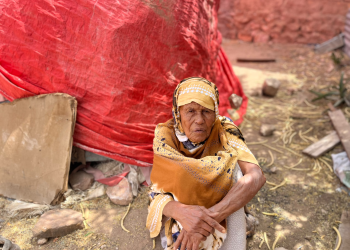
A similar situation faces Sokorey Osman Daud, another displaced mother living in Hilaac camp, whose grocery business also closed in May after customers stopped using Somali shillings.
Sokorey supports a family of 10, including her blind husband who depends entirely on her income for care and daily needs.
Her stock ran out and she couldn’t restock because traders rejected the Somali shillings she had saved as payment. She lived off $100 stored on her mobile phone account, but that money has now finished.
“The Somali shillings are still here in my house, but they are useless. I tried to exchange them in several places but nobody would take them,” she said.
“I built this business slowly with great hardship. I started in 2020 with just $50 earned from selling handmade brooms and baskets. By 2025, I had managed to improve my family’s life, but now we are back in an even worse situation.”
Sokorey said many displaced families in the camp did not understand or regularly use mobile money services such as EVC Plus, relying instead on paper Somali shilling notes for daily purchases.
More than seven million Somali shillings are lying unused in her home while her children struggle to find food. Sokorey and her family were displaced from Buulo Mareer in Lower Shabelle in 2019 after drought destroyed their two-hectare farm.
The impact of the Somali shilling crisis is not limited to shopkeepers. Money exchangers and labourers who depended on handling the currency are also losing livelihoods.
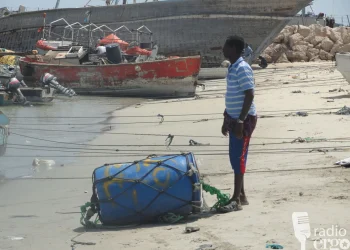
Suleyman Mohamed Mumin earned a living counting and exchanging Somali shillings for local money changers, but has been unable to provide food for his family of five since 11 April. He spends his days moving between relatives and friends asking for help.
“This crisis has hit us very hard. There is extreme hardship in my home. My children’s food is uncertain and I am surviving only on hope,” he said.
“I keep hoping the government will find a solution and bring the Somali shilling back into circulation because poor people depended on it. Without it, many families will collapse.”
Suleyman fears eviction from his family’s two-room house because he can no longer pay the $50 monthly rent. He used to earn 150,000 to 200,000 Somali shillings daily, enough to cover rent and food.
Banadir regional administration say efforts are ongoing to restore public confidence in the Somali shilling and reintroduce it into markets, although it is not clear when or how a solution will be reached.
The rejected 1,000 shilling note was the last widely circulating denomination of the Somali currency, whose use has steadily weakened over the past decade as mobile money transactions have taken over.