(ERGO) – Many farmers in southern Somalia’s Bay region are facing huge losses after an outbreak of crop pests and disease wiped out crops they hoped would provide a long-awaited recovery after successive poor rainy seasons.
Hassan Mahmoud Ibrahim, a farmer in Da’udow village, about 15 kilometres outside Baidoa, began the year with optimism. After three disappointing seasons, his two-hectare farm received enough rain during the ‘Gu season that started in March. He planted sorghum, maize, beans, and tomatoes, expecting a harvest that would transform his family’s dire situation.
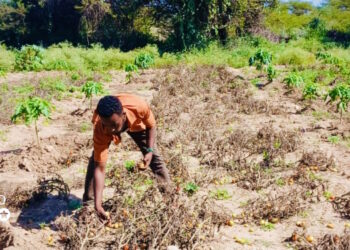
Instead, an unfamiliar worm-like pest spread rapidly through his crops, destroying most of the seedlings before they matured. Plants that survived the infestation were later affected by diseases that caused them to wither and dry up.
“The pests caused huge losses for us,” Hassan said. “They destroyed almost everything I planted. Sorghum, maize, beans, and tomatoes were all affected. The hopes I had for this season disappeared, and I have not found a way to stop the damage.”
Hassan has to repay a $300 debt for money he borrowed to clear the land, buy seeds, repair the farm, and hire labourers. He had agreed to settle the debt after the June harvest, but now has no income with which to pay it back.
“The debt is one of my biggest worries. I expected the harvest to cover my costs and help me repay what I borrowed. Instead, the crops have been destroyed and the debts remain.”
The 50-year-old farmer expected to earn between $1,000 and $1,200 from the harvest. Part of that money was for the education of four of his children, who are now out of school because of the financial setback.
Every morning, Hassan still travels to the farm hoping to find some surviving crops, but the situation offers little encouragement.
“I believed the farm would produce well and improve our lives. Seeing what has happened leaves me deeply saddened,” Hassan told Radio Ergo.
His family of 10, including seven children and his elderly mother, face growing food shortages. With no livestock or alternative source of income, they have few options for coping with the loss.
In the same village of Da’udow, Ibrahim Macalin Noor has watched a similar disaster unfold on his two-hectare farm. His sorghum, maize, beans, and tomato crops were also destroyed by pests, leaving behind just weeds and dry vegetation. The crop failure has destroyed the only source of income for his family.
“We are facing a situation I have never experienced. We used to eat three meals a day. Today, there are times when we struggle to find even one,” he said.
Like many farmers in the area, Ibrahim tried several crop pest treatments after seeking advice from others. None succeeded in controlling the infestation. He estimates spending about $500 in land
preparation, seeds, and other farming costs after borrowing money from local traders who expected repayment after harvest.
“I thought I would repay my debts when the crops matured,” he said. “Now I have nothing left to sell. The pests have taken everything.”
Shopkeepers who had allowed him to buy food on credit have stopped extending loans after learning that his crops had failed. At the same time, household his food reserves stored from previous harvests have been exhausted.
“What worries me most is food, debt, and the future,” he said. “I have no way to repay what I owe. The farm that was supposed to save us has been destroyed.”
Farmers across Da’udow say they have spent considerable effort trying to protect their crops, using different pesticides and treatments, but most reported little success.
Agricultural expert Ahmed Kerow Abdi said pest outbreaks had become more common after several seasons of below-average rainfall disrupted normal environmental conditions. Prolonged dry periods allowed many insects and pests to survive in the soil. When the rains finally arrived this year, pest populations expanded rapidly and spread across farms.
“Some of these pests feed on leaves, stems, and even plant waste,” Ahmed explained. “Keeping farms clean and removing crop residues can reduce their numbers. Farmers also need to use the correct treatment and monitor their fields closely.”
He added that some low-cost methods could help farmers manage infestations, including natural treatments made from locally available materials such as garlic solutions. Separating affected crops from healthy ones could also reduce the spread of pests between fields.
Despite those recommendations, hundreds of farmers in this region were not able to apply successful measures in time to save their current harvest and are left in ruin without any income.