

(ERGO) – Airstrikes on a farming village in southern Somalia’s Lower Shabelle region have displaced hundreds of families, leaving many without food, water, shelter, or any reliable means of survival.
The attacks, which began in late March, destroyed homes, farms, and small businesses that residents depended on in Bulo-Khalif. Some families fled to nearby districts including Barawe and Afgooye, while others remain trapped in the village, facing worsening hardship without any support.
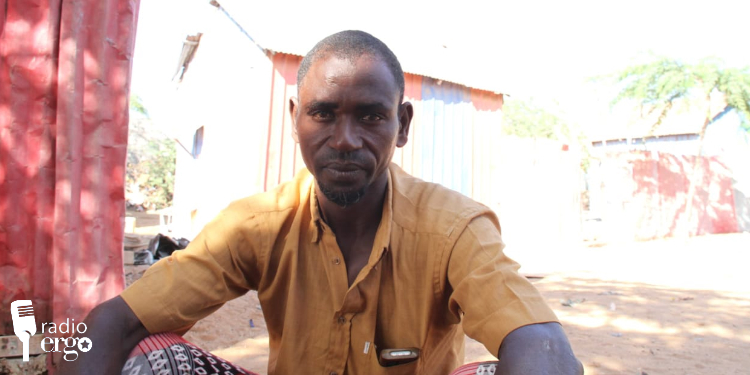
Among those affected is Aden Gedi Mohamed, whose family of seven has been impoverished overnight.
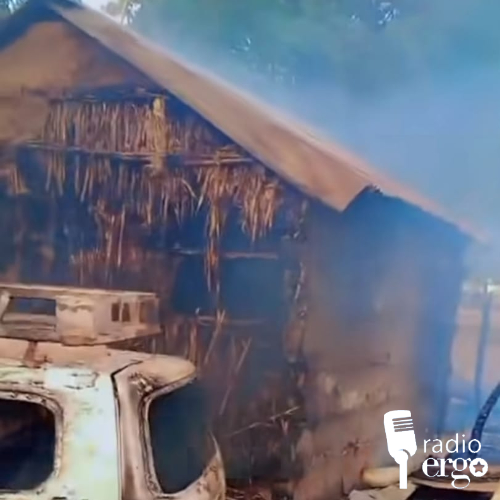
The airstrikes destroyed his two-room house, a vehicle he used to earn $300 to $400 a month, his water storage facilities, his four-hectare farm where he cultivated maize and vegetables – and his cash savings.
The family can no longer afford even their basic needs.
“We used to cook twice a day. Now even getting one meal is difficult. If we manage once, we are grateful,” he said.
“The bombing burned our house, our food, and my vehicle. Even the little money I had was lost. We survived by sleeping outside that night. No one was injured, but we lost everything.”
With no resources left, his family depends on occasional support from neighbours, although this assistance is unreliable as most people in the area are also struggling due to insecurity and economic strain.
Despite fears of further airstrikes, Aden says he has no option but to stay in the village.
“I don’t feel safe staying here, but I have no money to leave and no place to go where life would be better,” he said.
Getting enough water is a daily challenge, with the family having to ask neighbours to spare them 20 litres a day.
The crisis has disrupted education for Aden’s four children. They were attending a Koranic school, whose teacher fled the village because of the conflict.
Bulo-Khalif remains a contested area between Somali government forces and Al-Shabaab, with residents caught in the middle of ongoing conflict. Locals say they don’t know who carried out the airstrikes, as they receive no information from official sources.
Livelihoods in the area had already been weakened by drought, which reduced crop yields and livestock productivity, leaving families already vulnerable when the strikes occurred.
Some residents fled to safety in displacement camps. Among them is Mohamed Hajji Ahmed, who arrived with his family in Gegsow displacement camp on the outskirts of Barawe in late March.
His nine children are facing severe hardship in the camp, where basic services such as water, healthcare, and education are lacking.
“We only escaped with our lives. Here, we have no relatives and no support. The children sleep hungry most nights,” he said.
Mohamed and his wife survive by begging for cooked food, which is never enough. Access to water is one of their biggest challenges.
“We cannot afford to buy water. Sometimes we fetch from wells, but even that depends on help from others. A small jerry can costs $0.25, and we don’t have that,” he added.
Mohamed had already lost 40 goats during the drought and was unable to cultivate his eight-hectare farm due to lack of rain. He had taken loans from local traders to support his family and now owes around $200.
“I borrowed money to feed my children in the last two months before we left. Now I am displaced and cannot pay it back. That debt is a heavy burden on me,” he said.
He also lost his house in the airstrikes and says he does not know when it would be safe to return.
The chairman of Gegsow camp, Ibrahim Osman, said that more than 50 families had arrived in recent weeks, many having walked distances of 110 to 120 kilometres. Many of the new arrivals were in poor condition and included vulnerable groups such as women, children, the elderly, and people with disabilities.
“They fled heavy bombardment they had never experienced before. Some walked long distances because they had no transport. Their situation is very bad,” the camp chairman told Radio Ergo.
The new arrivals have joined over 450 families already living in the camp, most of whom were displaced by insecurity across Lower Shabelle.
Ibrahim said neither local authorities nor aid agencies had provided assistance to the newly displaced families, leaving camp leaders with limited capacity to respond.
“If they do not receive help soon, their situation will deteriorate,” he warned.
There are no official figures available on the total number of families displaced from Bulo-Khalif since March.