

(ERGO) – Local traders in central Somalia have stopped extending credit to customers buying food and other necessities from their shops, revealing the stark impact of prolonged drought on pastoralist livelihoods and the overall economy.
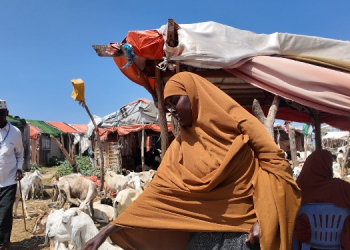
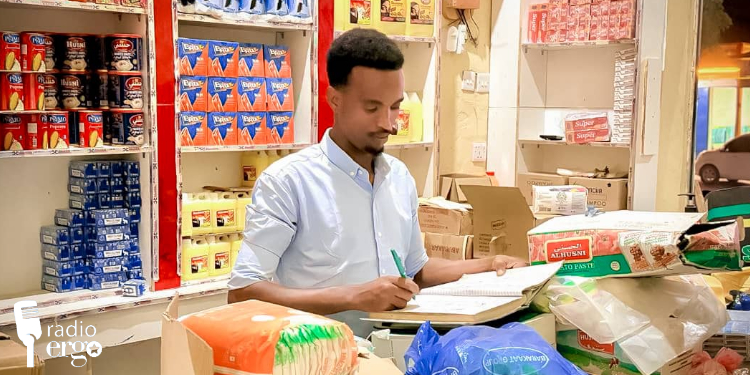
Mohamed Ali Farah, a shop owner in Adado in Galgadud region, told Radio Ergo that he has credit accounts with more than 90 pastoralist families, who have all increasingly been relying on his store for food on credit.
Most have not made any repayments for the past 20 months.
“Credit was always part of our business, and people used to repay. But after several failed rainy seasons, nothing has been returned. Our capital has been tied up, and our business has started to decline. To survive, we had to stop giving credit,” Mohamed said.
He calculates being owed more than $5,000 in total that he is unlikely to recover, as many of his customers have lost their livestock and livelihoods to drought and have been totally impoverished.
His difficult decision to stop extending credit was necessary to prevent his business from collapse – and many other shopkeepers in the area have had to do the same.
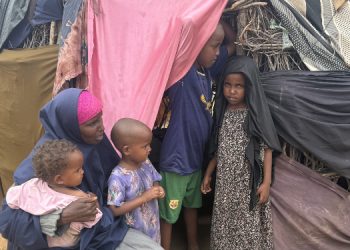
However, Halima Farah Barre, who lives in the rural area of Hog-dugaag, has been unable to feed her family of 10 since the shop she relied on closed her credit account in early March.
“Our situation is very difficult,” she said. “We depend on whatever small help we can get from relatives. Sometimes we cook a little, sometimes nothing at all. Before we were getting food on credit, but now every shop has closed its account to us. The drought took our goats, and we have nothing left to sell,” Halima said.
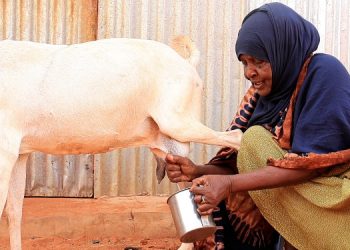
Her family lost 80 goats over the past year due to drought and disease, leaving them with 20 animals that are too weak to provide any income.
Halima estimates that she owes around $3,000 accumulated over several years that she has no means to repay.
“I no longer even keep the credit record, but the debt remains,” she said. “People keep calling me, asking for their money. Sometimes I switch off my phone because I can’t answer them. If the rains come and the animals recover, maybe I can repay, but right now I have nothing.”
Water shortages have added to their hardship. There are no functional water sources in her area, and a barrel of water costs around $5. They rely on small contributions from relatives in Adado or occasional help from neighbours, often managing only a couple of jerrycans a day.
“We have a water reservoir, but it is dry. We used to buy water from trucks, but now we cannot afford it. Sometimes we beg for a few containers, but it is not enough for a family this size,” she said.
Four of her children, who were attending a free primary school in Hog-dugaag, are without education as the school closed earlier this year when families migrated and the teachers left.
Across rural parts of Galgadud region, including Hog-dugaag, Qansahley, Mirdisyale, Biyo-gadud, Qurdubanle, and Hinjilab, pastoralist families are facing similar challenges as credit has been cut off and drought continues to erode their remaining resources.
Gure Ahmed Mohamed, a father of eight in Biyo-gadud, said his family had been unable to cook regularly since early March after accumulating nearly $2,000 in debt at a local shop. The shopkeeper refused to extend further credit until they paid off the balance.
“In the past, we took food on credit, but now there is no credit and no assistance. My family needs everything a household requires, but I have no way to provide it. I spend my time thinking about how to get food for the night, but there is nowhere to turn,” Gure said.
He has 18 weak goats left from his herd of 60. He continues to lose goats due to lack of water and pasture.
With no nearby health facility, Gure recently had to pay for his sister to reach hospital in Adado after being in prolonged labour. It cost $60 for transport and $150 for medical care.
“There are no medicines here, not even basic ones,” he said. “People suffer without treatment. It is a large area with many people, but no services.”
His four school-age children are also out of school due to the lack of education facilities in the area.
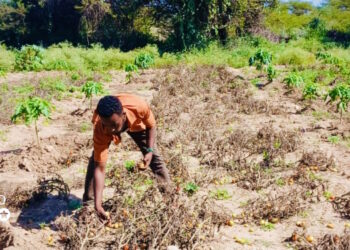
The situation reflects the broader impact of the recurring drought that has wiped out livestock, reduced incomes, and strained traditional coping mechanisms such as credit systems and community support.