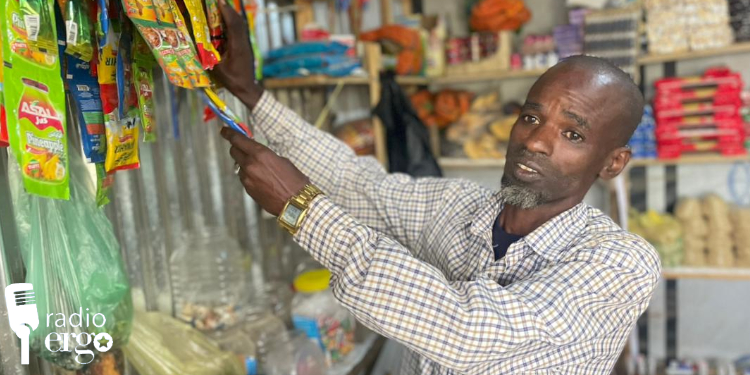
(ERGO) – Fifty displaced men living in a camp in Baidoa, southern Somalia’s Bay region, have set up thriving cooperative businesses after pooling their saving from cash aid and small loans.
The men in Idale IDP camps pooled their savings over six months and eventually collected enough capital to set up shops that are now supporting their families.
The cooperative – split into five groups of 10 men in each – raised a total of $16,500. Despite having urgent daily needs, they prioritised raising these funds to use as start-up capital.
Ahmed Osman Ali’s group raised $3,300 to open a small cooperative shop in September 2025, selling food and charcoal.
The business is jointly owned and run. Ahmed’s share of the monthly profit is around $100 that covers his household’s basic needs. “We couldn’t even cook two meals a day. Today, my children have food, clothes, and shoes,” he said.
Ahmed saved his contribution to the fund from humanitarian cash aid he had received plus taking out a $120 loan, which he has now repaid.
He takes turns running the shop one or two days a week, while spending the other days seeking casual labour in Baidoa to further boost his income. His wife and six children enjoy a far more stable life than before.
“We knew that aid would eventually end. Before it stopped, we decided to save what we could and start a business together,” he said.
Last November, Ahmed was able to enroll three of his children in primary school for the first time, paying $15 per month in school fees. He is planning to move his family out of the camp where they have lived for five years.
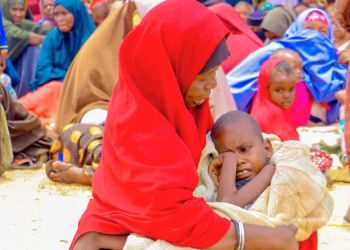
Ahmed’s family was displaced in 2022 from Labatan-Jirow village in Bay region after drought destroyed their five-hectare farm. He says life in the camps was harsher than expected, with constant food shortages. The cooperative business has given them renewed hope.
Maslah Ali Da’ud, 51, also joined a group of 10 to open a food and charcoal shop last September. Members also take on casual labour such as portering to reduce pressure on the business. Profits are shared monthly, while a portion is reinvested in the shop.
“Before the business, I was under constant pressure,” Maslah said. “Now I earn eight or nine dollars a day in profit. The business is good. Anyone who can should be encouraged to start one.”
Maslah says the harsh conditions in the IDP camp pushed him and others to embrace collective action.
“My life is good now, before, my children weren’t learning, and problems followed me everywhere. Now my situation is stable,” he said.
Maslah has cleared his $80 debt with shopkeepers and begun saving for the future, also hoping to leave Idale IDP camp in the coming months and rent a house in Baidoa.
His family has lived in the camp since 2019, after drought destroyed their three-hectare farm where they grew beans, maize, and sorghum.
The group appointed a leader to coordinate activities and ensure accountability, turning their cooperative into a model that is admired and being discussed by others in Baidoa’s camps.
The chairman of the cooperative, Abdirashid Adan Nur, told Radio Ergo that people had joined hands as a proactive way out of penury.
“We needed a solution that could reduce the pressure of daily life,” he said. “We realised that united effort is stronger than struggling alone.”
He says unity, trust, and transparency have been key to the group’s success. Their approach is spreading across displacement camps in Baidoa, where others have been discussing the possibilities of implementing a similar cooperative business model.
“Our goal is to recover from prolonged displacement and regain dignity. Anyone who wants to follow this path, we are ready to guide them,” Abdirashid said.