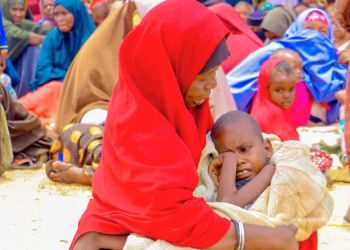
Rural women unable to feed their children in drought-hit villages in many parts of Somalia have been travelling to the capital Mogadishu to find work – leaving their children behind and living a life of destitution themselves.
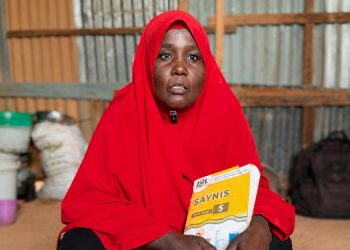
Maryan Mohamed Mahmoud walks through several districts of Mogadishu asking residents if they need help with cleaning or laundry. If she finds two days’ work a week she may be lucky to earn about four dollars.
She sends the pitiful sums of money home to her 11 children in Middle Shabelle region, where the family’s farm in Qalimow was destroyed after two years of failed rains.
“I don’t keep even a single dollar for myself. What I get is too little to divide. I send it all to the children,” Maryan told Radio Ergo.
Before leaving, she promised her children she would find work and support them. But the calls she receives from them fill her with anguish.
“They tell me they have nothing to eat and that they can’t stay there anymore. They cry and beg me to come back or bring them to Mogadishu,” she said.
Maryan squats with her relatives in Eldhere IDP camp in Kahda district, where they let her sleep on a mat laid outside the hut. But they are all poor and the host family often can’t give her any food. themselves.
“I feel helpless knowing my children are hungry and living in an insecure area,” she said. “If I manage to earn something, my plan is to return to them. If not, I will try to bring them here.”
Maryan walked for two days to reach Mogadishu, leaving her children with neighbours she trusted. Despite frequent disappointment while searching for jobs, she says she cannot give up.
She has debts of $300 from buying food for her children and purchasing farm inputs last year. As they made no harvest, she has no means to repay what she owes.
Maryan says she has lost hope of returning to farming and wants to reunite with her children but cannot afford the $50 for transport.
Camp leaders in Mogadishu speak of many lone women arriving in the city without their children, hoping to make money to send home.
Saido Ahmed Aden came to Mogadishu in December from her home in Abaal area of Bari region after drought wiped out the family’s herd of 150 goats that supported them.
A single mother, she left her seven children left behind in her village. Most days, despite walking till her feet ache, she finds little or no work at all.
“When I get two or four dollars, I send it to the children. They call me saying they have nothing to eat. I have nothing to give them now. I am leaving everything to God,” Saido said.
She sleeps in a makeshift shelter with relatives who arrived earlier on in Eldhere camp.
Saido does not even own a phone, so when she needs to contact her children, she borrows one from neighbours to make a quick call home.
She had planned to bring her children to Mogadishu once she found a source of income, but that now seems hopeless.
“With all our livestock gone, I have no option but to keep struggling here. But there is no real hope.”
She has asked relatives to help her start a small stall but they haven’t managed to give her any support so far.
According to community leaders, the intensifying drought across several regions has destroyed livelihoods for thousands of families, pushing many women to migrate to cities without preparation or support.
A leader in El-dhere camp, Abdalla Mohamed Abdi, told Radio Ergo that 245 women had arrived alone from rural areas in recent months under similar circumstances.
“They are living in extremely poor conditions,” he said. “We are unable to help them because there is no humanitarian aid in the camp.”