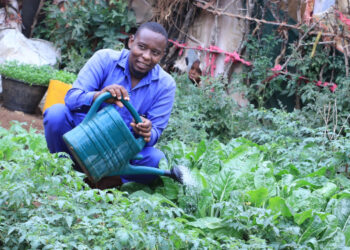


(ERGO) – Mahamud Abdirahman Abdullahi has spent the past few weeks harvesting maize and vegetables from his six-hectare farm that had remained almost barren since 2022 due to prolonged water shortage and lack of irrigation.
Thanks to a newly installed solar-powered system supplying water from the nearby Juba river, he made $1,500 from sales of his produce, cleared his $500 debts, and is comfortably supporting his family of six.
“We now eat three meals a day, and there is even food left over. School fees, medicine, food, and all the family’s needs are covered now. Before, many things were bought on credit, even the children’s schooling. Since the solar system came, many things have changed. Life is now comfortable,” Mahamud told Radio Ergo.
More than 1,400 farming families like Mahamud’s in Bulo-Gadud, 30 kilometres from Kismayo, are now linked to the irrigation system of 72 solar panels, water pumps, and pipes installed by The Lutheran World Federation (LWF) with support from Jubbaland’s Ministry of Agriculture.
Many of these farmers have had no harvests for almost three years due to the drought. High fuel prices and repeated breakdowns of existing water pumps meant they couldn’t access water from the river although it is nearby.
Mahamud’s maize is selling well in local markets. He has stored two barrels of maize and another barrel of beans for future use, while continuing to harvest pumpkins, tomatoes, onions, lettuce, and peppers from the farm.
Mahamud, 45, says he has started reinvesting some of his earnings to protect his family from future shocks. He spent $300 to buy five goats, hoping to diversify his income beyond farming to avoid exposure again to severe hardship before.
He added that the solar system had removed the stress caused by unreliable irrigation that had made farming unpredictable.
“Every day I irrigate different sections of the farm. One day I water onions, another day lettuce, papaya, or pumpkins. After two or three days we irrigate again or prepare the land. Water is no longer the problem it used to be,” he said.
Some of the farmers in Bulo-Gadud had abandoned their farms due to lack of water, despite being just 500 metres from the river.
Amina Abdullahi Bule, who farms nine hectares of land, said she earned around $2,300 from crops harvested over the past two months. She built a permanent two-room house with a kitchen and toilet for her family of 12 and is supporting the household.
“I harvested 30 sacks of maize. When maize prices increased, I sold it for around $1,000. I also planted peppers and earned about $900 from them. Tomatoes brought in another $400,” she recounted.
Amina had not cultivated her farm since 2022. Although her land lies only a short distance from the river, she hadn’t been able to access water for irrigation.
She turned to casual construction work in Bulo-Gadud, earning around $3 every other day, which was never enough to support her family. Those years were extremely difficult, with hard labour for little reward.
“We now have food three times a day,” she said. “The children cook maize and beans from the farm, and we are also able to buy rice, pasta, and meat. Alhamdulillah, life has improved.”
The solar powered irrigation pumps operate for around five hours daily. According to Bulo-Gadud chairman, Mohamed Abdullahi Omar, the system conserves energy so that water can be supplied even during cloudy weather.
Wider economic benefits are being felt across the area. The increased harvests have generated casual jobs opportunities for local workers, while more produce in the markets has improved trade in food and vegetables.
“Farmers had to bring fuel themselves and repair broken engines. Now they are simply told to come and irrigate their farms. It has encouraged many people, who had lost interest in farming, to return to their land and work again every morning,” he said.
The solar irrigation project cost around $80,000, according to Jubbaland’s Ministry of Agriculture, and is helping families restore food production and household incomes.