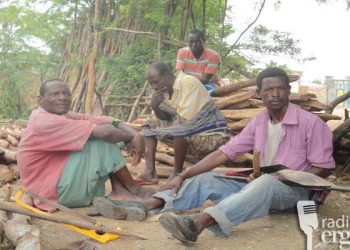


(ERGO) – Hundreds of pastoralist families displaced by prolonged drought are struggling to survive in and around Lasanod town in Somalia’s Sool region, facing acute shortages of water and food.
The families migrated from their villages in December after two consecutive poor rainy seasons wiped out livestock – the backbone of their livelihoods – leaving them with no option but to seek refuge in Lasanod. Some are staying with relatives in the town, while others have settled in Gooja-ade displacement camp, where there are no basic services.
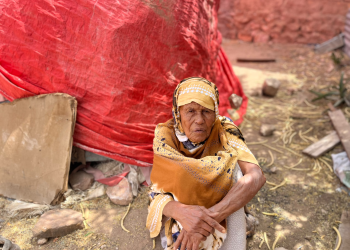
Asho Mohamud Jama, a mother of 12, says daily survival has become a constant struggle. With no source of income, she spends hours walking through neighbourhoods in Lasanod asking for help.
“Sometimes we get something, sometimes we don’t,” she said. “At best, I can find one kilogram of food, which is not enough for my children. We depend on what kind people give us and on small debts from shops that allow us. We were pastoralists who relied entirely on our livestock. When they died, we had nowhere else to turn.”
Asho’s youngest child is just 10 months old. Her husband is unemployed and has failed to secure casual labour, despite searching for portering jobs around the town.
Even getting water is hard. Asho says her family relies on a single jerrycan of water per day, which she carries on her back from a privately owned borehole about seven kilometres from Gooja-ade camp.
“The distance is exhausting, but we have no alternative,” she said.
The family’s shelter is a dilapidated former military structure made of sheet metal, which provides no relief from the scorching daytime heat or the cold at night.
Her children are still suffering from fatigue after a two-day journey on foot from Bo’ame village, about 30 kilometres from Lasanod.
The displacement disrupted their education, as four of her children were attending Koranic school, which cost the family a total of $60 per month. There is no school for them in the camp.
Formal schooling in Lasanod costs $15 per child per month, which is beyond Asho’s reach. She worries deeply about her children’s future, but can only deal with survival.
Her family is also burdened by debt accumulated before displacement. Shopkeepers are demanding $500 for food, fodder, and supplies she bought on credit while still living in her village.
“We used to have animals, milk, and meat, and we were self-sufficient,” she said. “Now we are living a very hard life with no water, no food, and no education. There is nowhere for us to return to – the animals are gone, and the drought is still there.”
Asho says her family lost 180 of their 200 goats last year due to lack of water and pasture. The 20 remaining animals were brought to Lasanod by her husband after a four-day journey, but they are weak and unproductive.

They can’t afford water or fodder to keep them going and Asho fears the last goats will die.
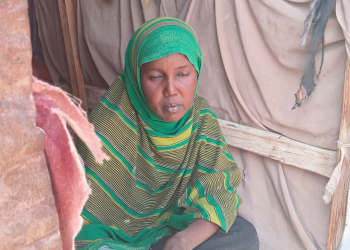
Similar hardships are faced by Ibado Jama Guled, who was displaced from Qura-dhere village with her family of seven. The loss of livestock has stripped them of their only source of income.
“We only manage to cook once a day, and sometimes we don’t get anything,” Ibado said. “We’d like to cook three times a day, but we can’t. We have no water, no food, no education – we have nothing.”
Ibado has searched for manual work in Lasanod, but being new to the area and lacking connections has made it difficult to find opportunities.
Her family depends on borrowing small amounts of water from earlier settlers in Gooja-ade camp, as they cannot afford the $4 charged for a barrel of water delivered by donkey carts.
Three of her children, who previously attended Koranic lessons, are now out of education and staying at home.
The pressure of debt weighs heavily on her, as she owes about $1,000 to shopkeepers for food, fodder, and water bought on credit before displacement.
“Debt is a heavy burden. If you owe money, you don’t sleep well, and you don’t know how you will repay it. I have no solution except turning to God,” she told Radio Ergo.
Ibado’s family lost 36 of their 50 goats to drought, disease, and lack of pasture. The remaining 14 animals are still in the rural area with her husband. She doubts they will survive without water or feed.
Local authorities say the scale of displacement is overwhelming. The mayor of Lasanod, Boos Dubad Boos, told Radio Ergo’s local reporter that displaced families were living in extremely harsh conditions.
“The most urgent needs are water, food, shelter, and health services. These families lack all basic services. Poor sanitation and the absence of latrines are creating serious health risks. Unfortunately, we do not have the resources to assist them,” the mayor said.
He stated that nearly 200 families displaced by drought had been registered in Lasanod since December. The situation has been shared with government institutions and humanitarian agencies, but no assistance has yet been received.