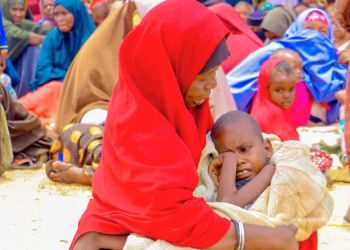
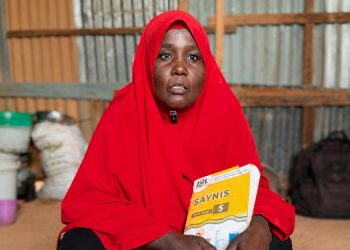
(ERGO) – Since the $110 cash aid she was receiving was cut, Fadumo Ahmed Abdi has been unable to provide regular meals for her seven children, living in a forlorn displacement camp outside Dusamareb in central Somalia’s Galgadud region.
“Severe hunger is affecting us,” Fadumo told Radio Ergo. “My children’s daily life is very bad. We are in need – and we need help. Right now, we have nothing to rely on.”
Sometimes she mixes water and sugar that she begs from neighbours to give her children to try to induce them to sleep. When neighbours are unable to help, the family goes without food.
More than 100 families living in Shabelle IDP camp lost the cash support they had been receiving from international NGO, Save the Children in November 2025.
Fadumo’s family was displaced in 2021 from rural Middle Shabelle after drought destroyed their two-hectare farm and killed their 30 goats. Like the others in the camp, she has no other source of income to rely on.
She has searched for cleaning or laundry work in town, but says fewer households hire hand-washing services as washing machines are common and jobs are few. Her husband is also unemployed and can’t find portering jobs, partly because employers favour people they know.
Last December, their household water connection was cut after they failed to pay the monthly fee of $5 over two months. They now beg neighbours for a jerrycan of water a day.
“If you don’t pay the monthly bill, they disconnect it,” she said. “Even if the metre shows just five or two dollars and you can’t pay, you are not allowed to continue using the water.”
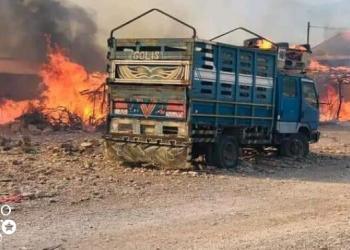
Further distress was caused by strong winds in December that destroyed two huts belonging to about 30 families in the camp, including Fadumo’s. With no money to rebuild, they moved in with relatives, but the single hut they share is overcrowded and offers no privacy or comfort.
“You can imagine two families living in one small shelter,” she said. “The children suffer at night. We had no strength to rebuild, and that is how we ended up in this situation.”
Three of her children have been forced out of primary school and Koranic classes as she defaulted on $66 in fees over three months.
The aid cuts and lack of job opportunities are affecting everyone in the camp. Sahro Hassan Muhiyadin says she can’t provide even one meal a day for her eight-member family.
The $110 monthly cash had been all they depended on for the past two years.
Now nine months pregnant, Sahro searches for cleaning work but usually gets a job a week earning up to two dollars, which barely pays for a family meal.
“When people see that I am pregnant, they say they cannot give me work,” she said. “Our situation has become worse.”
She also cares for her 70-year-old father, who has diabetes and needs more than the meagre food they manage to obtain. She can’t afford to buy milk or nutritious food for him or the children.
Sahro was first displaced in 2018 by floods in Beledweyne, Hiran region. She later moved to Dhusamareb but was forced into the camps three years ago when she could no longer afford rent.
She shoulders the family’s responsibilities alone, as her husband has been bedridden for five years after sustaining a head injury in a road accident.
Shabelle camp has no health facility, and she can’t afford transport or treatment at private clinics elsewhere.
Everything has fallen apart, she says, since the aid was cut.
“We are living without water – we beg from neighbours, but if they fail to pay their bills, they are disconnected too. This is a very painful situation.”
Two of her children were expelled from primary and Koranic school in December after she failed to pay $17 in monthly fees.
The deputy chairperson of Shabelle camp, Saynab Farah Mohamed, told Radio Ergo that the families had nowhere to turn for income.
“If urgent assistance does not arrive, their condition will worsen, especially with Ramadan approaching,” she said.
“There are pregnant women who cannot afford to go to hospital, children with bellies swollen from malnutrition, and families who cannot light a cooking fire. There is no education, poor shelter, and no health services. These people are living in very bad conditions.”
Saynab said the camp leaders had repeatedly raised the situation with local authorities and humanitarian agencies, but there hasn’t been any help or redress.