(ERGO) – The collapse of Bardera bridge during heavy flooding in November 2023 has brought stagnation to the economy of this town in southern Somalia’s Gedo region, leaving many families dependent on casual labour unable to earn an income.
After more than two years – with no moves to repair the key bridge across the river – construction projects have halted, and many forms of manual work that low-income families relied on, including stone-crushing and portering, have declined.
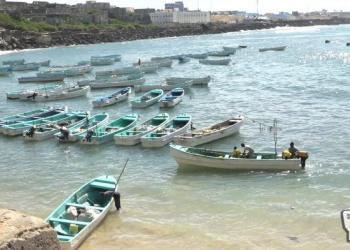
Residents must now use small boats to cross between the two sides of the town, paying 10,000 Somali shillings per trip that many poor families cannot afford.
Adan Ali Hassan, who worked for 10 years in construction and supported his family of seven, says they are now facing severe food shortages. For the past six months, he has had no income.
“For two nights my children were fed by neighbours,” he told Radio Ergo. “I have completely lost my job. The children get food from neighbours, and us adults sleep hungry. The two sides of the bridge have become two separate markets, and people are divided.”
He says building contractors have postponed projects because transporting materials across the river by boat has become expensive and complex.
Adan has tried repeatedly to find any type of work to provide food for his family, but he is faced by the shortage of available jobs and the cost of crossing the river to job hunt. On several occasions, he borrowed money just to pay for boat fares while looking for employment, adding to his debts.
“Before, no one paid to cross the bridge. We moved freely at any time,” he said. “Now if you don’t have 10,000 shillings you can’t cross, and even that amount is hard to find. Since the bridge collapsed, it has brought us great hardship.”
Over the past two years, Adan has accumulated $1,800 in debts to buy food for his family. He struggles to pay the $10 monthly rent for their two-room home. In addition, he has fallen behind on school fees for his four children.
“I owe five months to the Koranic school and eight months to the formal school,” he said. “Before, I used to pay regularly.”
The Bardera bridge allowed the town to thrive economically and residents say without it they are trapped in poverty.
Sidow Adan Mahmoud, who has worked for more than 20 years in stone-crushing and construction, is among those whose income has disappeared. He supports a family of four and has relied on relatives for cooked and uncooked food assistance since mid-last year when his work stopped.
He worries that the support from relatives may not continue much longer, as they too face economic pressure.
“There is nowhere to find work. Everywhere you go, people say there are no jobs. The work we used to do was good work, building houses. Now everything has stopped.”
Sidow used to earn at least $10 a day, but now he has no steady income and can’t cover food or education costs for his family. He owes five months of Koranic school fees and seven months of formal school fees for his son and daughter.
The prices of food staples, vegetables, and other goods have also risen as small boats have to transport commodities between the two sides of the town, passing on the costs to consumers.
The boats themselves pose serious safety risks. Two people, including a construction worker, have died after boats capsized in the river. In one incident, a small boat overturned midstream, causing a death and injuries. In another case, students were thrown into the river when their boat capsized and all except one were able to swim and were later rescued.
Abdullahi Abdisamad, a local youth engaged in community awareness activities, told Radio Ergo that inexperience among boat operators and overloading are major causes of river accidents.
“For the people of Gedo, losing this bridge is like losing a lifeline,” Abdullahi said. “Living costs have increased, education has declined, and one manual worker has already died because of the bridge’s absence.”
He said community awareness campaigns have improved safety practices to some extent, but risks remain and economic activity continues to be slow.
Residents say there have been no visible efforts to repair the collapsed bridge. Wage-earning families, transport operators, and businesspeople in Bardera are calling for urgent action to rebuild it and restore the town’s economy.
Currently, this part of Gedo region has been badly affected by drought, further damaging livelihoods.