

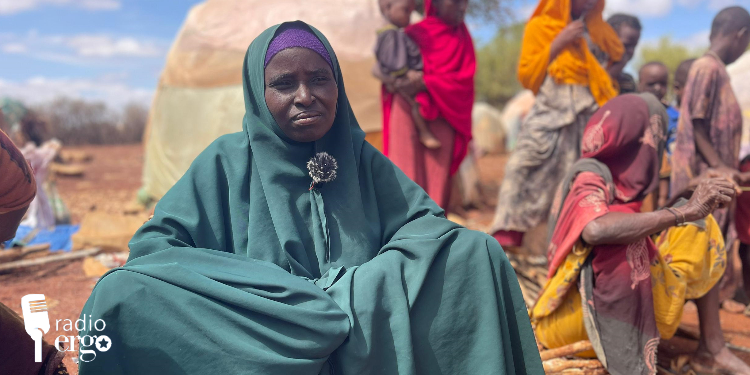
(ERGO) – Thousands of farming families displaced by inter-clan conflict in parts of southern Somalia’s Bay region are facing worsening living conditions in camps around Baidoa and Bardale, after losing their farms, food stores, and homes.
The families fled from Kurji, Kuusow, Duugsoy, Darab-Ajuuso, Moora-Qasaale and Buulo-Bilaan villages near Bardale in March, when fighting spread through their areas. Many say their crops, houses, and food reserves were deliberately burned, destroying their only means of survival.
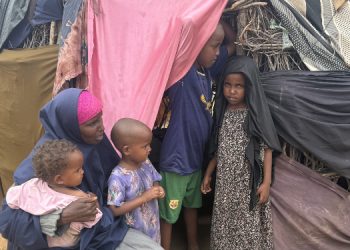
Qasido Nur Hassan is among those now struggling in Kuusow camp on the outskirts of Baidoa, where she cannot provide adequate food, water, and shelter for her nine children.
She told Radio Ergo that since arriving, they have received little assistance. She depends on receiving small portions of cooked food from any other families that manage to light a cooking fire.
“We are facing the worst situation. We have no proper tents, no blankets. Everything we owned was burned. Before the conflict, life was better. We survived on what we harvested and stored from our farm,” Qasido said.
They are staying out in the open at a time when seasonal rains have started in the region. Qasido said three of her children have developed fever, but she had no access to medical care nor money to seek treatment.
She believes the illnesses are linked to exposure and mosquitoes, as they have no protection at night. Health services nearby require payment that she cannot afford.
Before the conflict, Qasido relied on a three-hectare farm in Kurji, along with three food storage facilities – all of them burnt down.
The fighting erupted just as she had planted crops after several years of poor rainfall. The return of rain had given her hope for a good harvest, but then she was forced to flee.
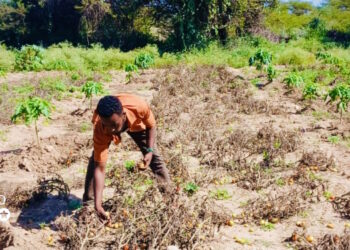
“My biggest worry is the farm. The crops are still there in the open with no fencing, and the conflict is ongoing. I have no way to go back or protect it. My children depended on that farm. I keep asking myself how we will survive now,” she said.
She had planted a mix of vegetables and staple crops and expected to earn nearly $3,000 at harvest. Instead, she is left with debts of $600 incurred during planting, plus $1,200 she owes local traders for food taken on credit over the past two years.
Qasido, who is raising her children alone after separation from her husband, said the conflict had compounded hardships already caused by repeated drought. She sees no clear way out of her current situation.
Others in the camp are facing similar conditions, like Hawo Ali Adan, a 43-year-old mother of 12, who walked about 40 kilometres from Kuusow to reach the camp in March.
For the first time in her life, she has been forced to beg to feed her children.
“When the fighting started, we lost everything. Now we cook only what we receive from others, and it is never enough. Life here is very difficult,” she said.
Her home, belongings, and four-hectare farm were all burned during the conflict. In the camp, the borehole located three kilometres away sells one jerrycan for 5,000 Somali shillings, forcing her to beg others who can afford the water. She usually gets about 10 litres for her large family.
“The biggest problems are water and food. We cannot live without them. We also need shelter and containers to carry water. I have nothing left. Even the clothes I wore were burned,” she said.
She had spent $1,500 on planting crops and expected to earn at least $3,000 if rains were good. Even if it became sage to return, rebuilding their farm would require labour and resources, especially as her husband is elderly and unable to work.
A committee set up by the Bardale district administration has recorded more than 2,500 families displaced by the conflict so far. The chairman of the committee, Mohamed Malin Mintan, said the clashes had continued for two months, spreading to more areas and forcing more families to flee.
He warned that conditions in the camps were deteriorating, with no aid reaching those affected, who had already been diminished by the last two years of poor rainfall.
“The situation is getting worse. People have lost everything and have not received any aid so far, based on what we have seen during our assessments,” he said.