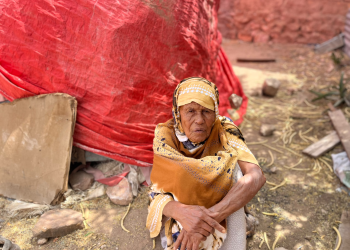


(ERGO) – Abdifatah Mohamed Dhaqane, 39, walked out of Mogadishu Central Prison in October last year after serving three and a half years for failure to pay a debt defaulting. In his time away, his wife and four children had fallen into deep poverty.
After being robbed of seven mobile phones on the road in June 2022, he had been unable to repay the $590 he owed the suppliers of his small-scale phone business. The suppliers took him to court in Afgoye, which ruled in their favour and sent Abdifatah to jail until the debt was paid.
Hundreds of people fall foul of civil law in Somalia, where individuals take people to court over unpaid debts – some of them very small – or compensation claims. Detention may be ordered by the court until the debt is cleared, so that some spend years in prison despite not being convicted of criminal offences.
Luckily for Abdifatah, a young Mogadishu resident, Abdullahi Mohamed Ali, paid off his debt to secure his release from prison.
Abdullahi says many of those jailed are not criminals but victims of poverty, insecurity, and informal credit systems that leave vulnerable small traders exposed. He presents the cases online to raise money from well-wishers.
“Some of the most shocking stories I encountered were those of mothers, whose only working son was imprisoned, leaving her unable to secure his release or make a living,” Abdullahi told Radio Ergo.
“There are many painful stories I’ve come across. There are many others still imprisoned with no money to secure their freedom.
I started this initiative in 2024. So far, I’ve raised and spent about $15,000 from members of the Somali community. I present the cases to them saying we can help someone who’s been imprisoned by contributing to restore their freedom because that person can’t pay their debt.”
Those who have been assisted in this way are in Mogadishu and Lower Shabelle.
Now back in Afgoye, Abdifatah is attempting to rebuild his business doing mobile phone repair work, which is poorly paid and sometimes earns him a mere $3 a day.
The family rents a one-room iron sheet house that he can’t pay for. His wife took up cleaning jobs, but had to beg from neighbours for food whilst her husband was in prison.
“Today the house rent is being demanded from me. The landlord came to the house, and I owe two months’ rent. The electricity has been cut off,” he said. “I swear today I have nowhere to turn – I am completely stuck.”
Abdifatah prioritised his children’s education and since his release from prison has enrolled his two eldest children in school, committing to a $14 monthly fee – but he has already fallen behind and owes the Koranic teacher $7.
Meanwhile, Abdullahi Maslah Idris spent five years in prison for failing to pay compensation to another man whom he had unintentionally injured in a workplace accident. Afgoye district court ordered Abdullahi to pay $1,000 in compensation to the other man, whose teeth had been broken. However, his poor family could not raise the money so he went to jail.
He was the sole breadwinner for his household, supporting his mother and seven younger siblings doing car-washing jobs earning between $5 and $15 a day.
His imprisonment plunged the family into deep hardship, forcing them to rely on relatives for help.
“While I was in prison, the things that worried me most and hurt me deeply were my mother, my younger siblings, their lives, and what would become of them. I kept telling myself that one day God would take me out. Thank god, today I am free. Thanks to the man who secured my release! Now I want to create work for myself, I am trying to restart the work I used to do,” he said.
In prison, however, Abdullahi developed a serious leg infection that prevents him from doing hard physical labour. He recently tried to take up construction work, but lifting cement blocks caused his wound to rupture.
According to Abdullahi, there is much more that needs to be done to support such unfortunate victims of the justice system. He says he plans to expand his initiative by raising funds to free more detainees and support them with livelihood opportunities they need to help them rebuild their lives with dignity.