Radio Ergo - Somali Humanitarian News and Information
  • Home
  • Topics
    • Latest Stories
    • IDPS/Refugees
    • Natural Disasters
    • Health
    • Social
    • Food Security
    • Education
    • Agriculture & Livestock
  • Programmes
    • Locust Programme
    • Farming Programme
    • Radio Doctor Programme
    • Women Programme
    • Entertainment Programme
  • About Radio Ergo
  • Contact Us
  • blankSomali
  • blankEnglish
No Result
View All Result
Radio Ergo - Somali Humanitarian News and Information
  • Home
  • Topics
    • Latest Stories
    • IDPS/Refugees
    • Natural Disasters
    • Health
    • Social
    • Food Security
    • Education
    • Agriculture & Livestock
  • Programmes
    • Locust Programme
    • Farming Programme
    • Radio Doctor Programme
    • Women Programme
    • Entertainment Programme
  • About Radio Ergo
  • Contact Us
  • blankSomali
  • blankEnglish
No Result
View All Result
Radio Ergo - Somali Humanitarian News and Information
Home FOOD SECURITY

Economic stresses in Dadaab lead to refugee family breakups

Radio Ergo by Radio Ergo
January 5, 2026
in FOOD SECURITY, IDPS/REFUGEES, LATEST STORIES
0
Economic stresses in Dadaab lead to refugee family breakups

Single refugee mum, Fartun Mohamed washes clothes trying to cover her children's basic needs/Ahmed Abdullahi/Ergo

0
SHARES
Share on FacebookShare on Twitter

(ERGO) – Financial stress due to aid cuts and economic collapse are causing the break-up of Somali refugee families in Kenya’s Dadaab camps, leaving many women with children abandoned by their husbands.

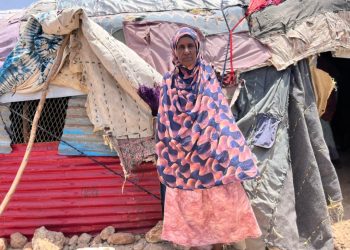
Khadijo Abdulqadir Adan, a mother of eight, separated from her husband recently and says she is having to face the harsh conditions of camp life entirely on her own. Although her children’s father lives in the same camp, he provides no support.

“Me and my children are in the worst position among the refugees here,” Khadijo said. “I am suffering because the father who should be helping me raise these children has gone off. We are living in misery. Some nights we eat, and some nights we go hungry. The situation is very dangerous.”

Khadijo had been finding jobs washing clothes or cleaning up after construction, but most opportunities have vanished as the camp activity diminished along with the aid cuts.

Other refugee families have no cash to pay for laundry to be done. These days she has been making $2 to $3 a month and has to rely on the kindness of neighbours to share food whenever they can.

The impact on her children’s education is devastating. Four of her children, who were attending Koranic school, have been home for three months because she can’t afford the $23 monthly fee. The other four children enrolled in free primary school are also staying home because they are too hungry to walk to class.

“If I send them to school, they need to eat when they return. If I have nothing for them to eat, what can I do? As I speak to you now, I have nothing to put on the cooking fire. We went to bed hungry last night,” she said.

Khadijo has lived in Dadaab since fleeing with her family from Mogadishu back in 2004. She is also burdened by a $230 debt at a local shop that she can’t see how to repay.

Mother of seven, Fartun Mohamed Adan, 35, is facing a similar struggle. She separated from her husband two months ago following a long period of conflict. Her children now eat only once a day with the money she gets from odd laundry work. Her food aid rations stopped in August 2024.

She described the heartbreak of watching her children go to bed hungry.

“My children and I are suffering terribly,” Fartun said. “There is no one to give us anything. The father is in town [Dadaab], but doesn’t give us a single shilling. When we used to get rice and beans from the aid agencies, the children didn’t feel this hunger. Now we receive nothing.”

“Last night, I sent my children to bed hungry. I went to town to look for work and came back with nothing. They had to sleep on the breakfast I cooked yesterday morning. If a man wouldn’t help me while he lived with me, will he help me now?”

Fartun and her family arrived in Dadaab as refugees fleeing conflict in Jowhar, Middle Shabelle, in 2010.

According to the leaders of Hagadera camp in Dadaab, the scale of family collapse is significant. The camp chairman says that hundreds of families have divorced in the last four months.

Citing community elders and local courts, the camp leader attribute the rise in divorces to high unemployment and increased domestic tension caused by the reduction in aid and economic opportunities.

Abdullahi Mohamed Tifow, a construction worker, told Radio Ergo that he left his wife recently because of being pressured to build a family house. He said he could not raise the money needed.

“I’m a struggling man – the children need school fees, and I don’t have $10,000 to build a house. We are refugees struggling for our daily bread!” Abdullahi said.

He stated that he was still trying to fulfill his parental duties as much as his meagre income allowed.
Previous Post

Hundreds of villagers are driven out as war in Galgadud eclipses the vulnerable

Next Post

Long prison sentences for debtors cause ruin for families

Related Posts

Aid cuts and lack of jobs leave displaced mothers in Dusamareb camp unable to feed their children
FOOD SECURITY

Aid cuts and lack of jobs leave displaced mothers in Dusamareb camp unable to feed their children

February 11, 2026
Pastoralists with nothing left descend on Lasanod town and surroundings in Sool
AGRICULTURE & LIVESTOCK

Pastoralists with nothing left descend on Lasanod town and surroundings in Sool

February 10, 2026
Cooperative business brings steady income to IDPs in Baidoa camp
FOOD SECURITY

Cooperative business brings steady income to IDPs in Baidoa camp

February 9, 2026
Women leaving their children behind in drought-hit rural villages to seek jobs in Mogadishu
FOOD SECURITY

Women leaving their children behind in drought-hit rural villages to seek jobs in Mogadishu

February 7, 2026
Somalia live news, Somalia latest news, Mogadishu live news, Somali news
FF Feedback

Radio Ergo audience feedback report 29 Jan- 4 Feb 2026

February 6, 2026
Rising Cost of Living
FOOD SECURITY

Losses in market fire and aid cuts throw IDPs in Dollow into crisis

February 5, 2026
Next Post
Long prison sentences for debtors cause ruin for families

Long prison sentences for debtors cause ruin for families

FOLLOW US ON FACEBOOK

DAILY PROGRAMMES

IDAACADDA 13-FEB-2026

IDAACADDA 13-FEB-2026 by Radio Ergo

IDAACADDA 13-FEB-2026
Episode play icon
IDAACADDA 13-FEB-2026
February 13, 2026
Episode play icon
IDAACADDA 12-FEB-2026
February 12, 2026
Episode play icon
IDAACADDA 11-FEB-2026
February 11, 2026
Episode play icon
IDAACADDA 10-FEB-2026
February 10, 2026
Episode play icon
IDAACADDA 09 -FEB-2026
February 9, 2026
Search Results placeholder
Radio Ergo Weekly Newsletter
We respect your privacy.
blank
blank
blank

© Copyright 2014 - 2024 Radio Ergo

No Result
View All Result
  • Home
  • Topics
    • Latest Stories
    • IDPS/Refugees
    • Natural Disasters
    • Health
    • Social
    • Food Security
    • Education
    • Agriculture & Livestock
  • Programmes
    • Locust Programme
    • Farming Programme
    • Radio Doctor Programme
    • Women Programme
    • Entertainment Programme
  • About Radio Ergo
  • Contact Us
  • blankSomali
  • blankEnglish

© Copyright 2014 - 2024 Radio Ergo