

A shared, women-led cooking enterprise involving dozens of women living in internal displacement camps in central Somalia is providing income for families who were living on the edge.
The women work together, supporting each other with loans and ingredients, to make and sell simple cooked meals in Adado town.
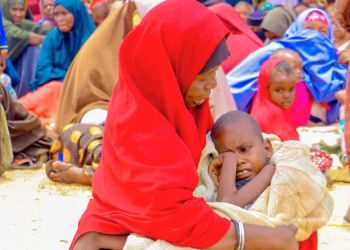
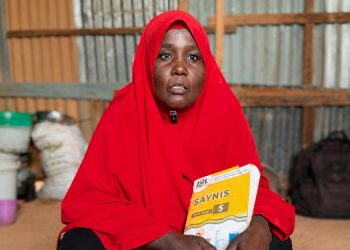
Halimo Ali Abukar, living in Badbaado camp on the outskirts of Adado, Galgadud region, joined the group in July. She is among 55 women from eight camps, cooking and selling their food in different neighbourhoods.
She delivers samosas, doughnuts, and pancakes to nearby schools, where students eagerly buy her snacks. She earns at least $4 in daily profit, which has raised her family’s living standards.
“We had no food, no water, and we were suffering in misery. But since I started this business, my life has changed so much. I have many customers, especially at that school where I’m well known!” she told Radio Ergo.
Many displaced women lost casual jobs such as laundry work and cooking for families in town, as households now have washing machines and gas cookers, or reduced income to hire domestic help. This situation inspired the women’s food initiative.
Halimo started off with food supplies worth $95 taken on credit from local shops. In the first month selling food, she repaid the debt and now buys her supplies upfront daily.
She says her life is better now than in the five years living in the camp. She has been able to send her children to school, which previously she had thought impossible, paying $20 a month for their fees.
“My four children, three girls and one boy, are all in school thanks to this business. From the pancakes, doughnuts, and small portions of rice and pasta I prepare and sell, I manage to pay for their education and meet our daily needs,” she said.
Halimo’s family was displaced from Middle Shabelle in 2020, when drought destroyed crops on their three-hectare farm and intensifying conflict threatened their lives. Her husband was later imprisoned due to clan-related disputes, leaving her to raise the children alone.
The women’s group operates cooperatively, sharing ingredients and helping each other sell any leftover food so that no member makes a loss.
Group member Khadijo Omar Ali says the support from the other women helped her stabilise her family of six after years of hardship.
“I started my business with just two kilos of flour. God blessed it and I moved from two kilos to six, and now more! Every day I make food and sell it,” she said. I buy from this market and sell there. I don’t worry about transport or anything else. I just focus on my children, this is how I raise them.”
Khadijo joined the group in August, at a time when her family was struggling on occasional support from relatives in town.
She is now making around $3 a day, enough to cover her household’s food needs. She has rented a small house for $25 a month, moving her family out of Daryeel camp, where they lived in a hut for four years.
The rental house gives her a space to cook food safely, which she didn’t have in the camp.
“The smoke from my cooking fire made some people complain, they said they didn’t want the smell or the smoke. That’s why I left and rented a place in town. Now I can cook freely and run my business in peace,” she said.
Khadijo’s family was displaced from Bay region in 2019, after years of drought destroyed their six-hectare farm of vegetables and grain. Her elderly husband looks for casual jobs in town but doesn’t get much work.
Khadijo feels optimistic about the future, however, and hopes to open a small restaurant if she can get financial support for rent and equipment.
Abdalla Mahmoud Ilmi, one of the IDP camp leaders, said that the women were generating a healthier social economy in the camps, with their income enabling them to support their own households as well as other struggling neighbours.
“Today, they are self-reliant and able to provide for their children. Many have paid for their children’s education and are living decent lives. They’re no different from other families in town. Before, they were among the poorest, but now they are among those who contribute to the community,” the camp leader said.