

(ERGO) – Thirty-five pastoralists who lost their livestock and livelihoods to drought in central Somalia’s Mudug region have secured jobs with a company running beehives for honey production.
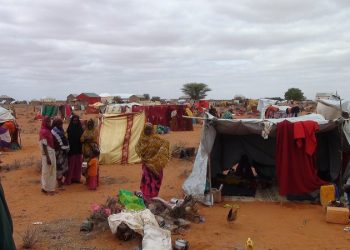
Mohamed Abdirahman Ali, 43, was a pastoralist whose family of seven relied entirely on their livestock. When drought wiped out his 100 goats earlier this year, they were left destitute and moved to a displacement camp in Kuweyd village in Galdogob.
“When I first came to town, I was a rural man who knew nothing about urban life. We lived in extreme poverty, and sometimes I couldn’t even afford to light a fire for my children,” he said. “I had nothing. My livestock were gone, and I owed money to several shops, about $500 in total.”
Since July, however, Mohamed has been earning $200 a month working for the company Malabsan. He was posted to a rural site where he guards and transports bee boxes among the flowering shrubs that will lead to honey production. Although he is away from the family for most of the month, he is pleased with the new source of livelihood.
“I brought my family to Kuweyd, rented a room, and enrolled my children in school and Koranic classes. I can even send food to my relatives still in the rural area. My life has really improved,” Mohamed told Radio Ergo. “I’ve already paid $100 of my debts and I’m managing the rest through my salary.”
He enrolled three of his children in school, paying $30 in monthly fees, in September.
He has learned much about beekeeping and hopes to start his own small honey business to secure his family’s future.
Another pastoralist, Abdishukri Ali Ahmed, joined the company in May after years of struggling to support his 11-member family following the loss of their livestock to drought.
They lived for a year in Bilcil displacement camp, in makeshift shelters, without any income.
“Now my family cooks three meals a day, the children go to school, and we live in a decent house. We used to cook once a day, and sometimes there was no food at all. Life in the camp was very hard. I lived there for eight months in a hut, with nothing to cover us at night. Things are very different now,” he said.
Earning $250 a month, Abdishukri rents a house for $25 and has enrolled five of his children in school, paying $50 in fees. He also managed to repay $200 of the $700 debt he accumulated while unemployed.
“This job came at the right time, when even my relatives had stopped supporting us. I had lost 80 goats to drought, and when I left the countryside, I gave my remaining 10 animals to some neighbours. Later I heard that only three survived,” he said.
Abdishukri began as a casual labourer earning $100 a month, but after two months was promoted to the honey processing section on a regular salary.
The head of operations at Malabsan, Abdulkadir Said Geelle, says the company was established two years ago by local entrepreneurs who saw potential in honey production.
This year, they expanded into rural areas including Galdogob, Bursaalah, and Harfo, taking on an additional 50 new employees.
Most of the new recruits are pastoralists, who lost their animals and source of living during drought. They were favoured by the company as they understand the rural terrain where the bees can thrive and local conditions.
“Since they were herders who lost everything, we trained them in this new skill. They’ve benefited greatly so they support their families, help their relatives, and contribute to their communities. The company also benefits, and as we grow, salaries will increase,” Abdikadir said.
Beekeeping, once an unfamiliar trade among Somali communities, is now gaining popularity in Mudug and other parts of central Somalia as a profitable living. In Galkayo, a kilogram of honey is currently sold for $25.