

(ERGO) – Hundreds of families caught in the centre of fresh conflict in Awdheegle, west of the Somali capital Mogadishu, are stranded in camps near the town of Marka without any access to food, water, and shelter.
Around 300 families, displaced for the first time, fled their homes and farms when fighting erupted between government forces and Al-Shabaab earlier in October in Awdheegle, Lower Shabelle region.
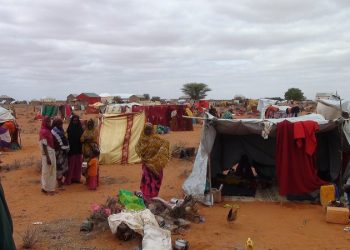
Many walked for days with nothing but the clothes they were wearing, leaving behind houses and farmland that were later destroyed. They are living in two already existing camps seven kilometres outside Marka.
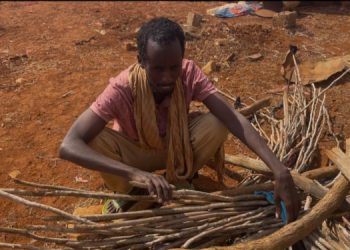
Hassan Nur Ali, 55, fled to Buulo-samow camp with his wife and seven children empty-handed. They sit during the day under a rough shelter made of tree branches tied together and covered with old cloth. Nighttime brings little sleep for them.
“We have no food, no water, and no protection from mosquitoes, we sleep under branches we gathered ourselves, without plastic sheets or bedding. Some days we go without food for two days,” Hassan told Radio Ergo’s local reporter.
Hassan’s family depends on cooked meals shared by other displaced families in the camp. The only water source is a single pipe connected to a borehole in Marka town. People wait in long queues to fetch water, and sometimes the supply stops before everyone gets a turn. Water is sold at 2,000 Somali shillings for 20 litres.
“It can take me several hours just to get two litres of water,” he said. “Some days my children go thirsty. We beg water from those who manage to fetch it.”
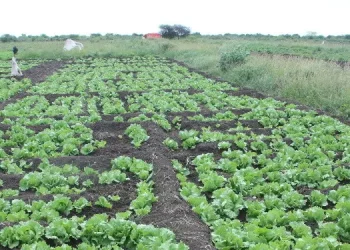
Hassan owned a four-hectare vegetable farm and a three-room house in Awdheegle. His crops were planted just weeks before the fighting began, but people who later returned told him his home and farm had been burned down.
“I had enough food and a proper home before, now everything is gone. Even my children’s schooling stopped. Two of them were studying in Awdheegle, now they just sit idle here,” he said.
Hassan spent two weeks walking to and from Marka town in search of casual labour, but he found that most jobs are given through personal connections, leaving him without work or income.
The 50 kilometre journey from Awdheegle to Marka took him and his family five days on foot: “We suffered from hunger and thirst the whole way, it was the hardest thing I have ever faced.”
Buulo-samow camp already housed more than 1,000 displaced families from previous conflicts. The recent influx from Awdheegle has worsened the fragile situation.
Muridi Hassan Ookar, the camp leader, said the earlier residents are sharing what little they have with the newcomers, offering cooked food and small amounts of water.
“Families here survive by helping each other, those who can afford a little rice or beans share it with those who have nothing. It’s not enough, but it saves lives for now,” the camp leader said.
A joint committee managing Buulo-samow and Awmacalin camps encourages the slightly better off families to assist the new arrivals. Most newcomers, however, lack even basic cooking utensils.
“People bring ready-cooked meals like rice, porridge, or beans with oil, sometimes they also give small jerrycans of water. That’s how they manage to survive each day,” said the camp leader.
Among the helpers is Ahado Amin Muudey, a 61-year-old widow who fled from Johara village after her eldest son was killed in the fighting. He was 31 and a father of four children, whose care now rests on Ahado’s shoulders.
“Their father died in the war. When he was alive, we never went hungry. The children went to school, and he worked hard on the farm, now there is no work and no food. We eat once or twice a day when we’re lucky,” she said.
Ahado joined Buulo-samow camp in early October. She shares the food she cooks with a neighbouring family even though her own household barely has enough to eat.
“My life depends on the kindness of neighbours, sometimes people bring us food, sometimes they don’t. Whatever I get is what I feed my children,” she added.
Ahado hopes that they can return home once peace is restored so she can cultivate her land again.
“I have a farm waiting for me, if only it was safe to go back,” she said.
Camp leaders say families in Buulo-samow and Awmalim need food, water, and shelter.
“The conditions have become much harder with the new influx. We appeal to international aid agencies to respond quickly. People are suffering from lack of water and proper housing,” said Muridi, the camp leader.