(ERGO) – Thousands of Somali families living in Dadaab refugee camps in northeastern Kenya are struggling to find enough to eat after the UN’s World Food Programme (WFP) suspended both food and cash assistance to them in August.
Families who were dependent on the aid now have nothing to cook even one meal a day
Radio Ergo’s local reporter met with Farhiya Aden Mohamed, said she hasn’t been able to cook a single meal since the aid was cut.
“I am heartbroken. I have nothing, and I’m sick on top of that. The aid that we were dependent on has been cut. We are people who have nothing and are just struggling with life,” she said.
“The [aid beneficiary] card we were living on, and which we couldn’t do without, has been cut off.”
Farhiya, 49, said this was the worst news she has had in the 25 years she has lived in the refugee camps, since fleeing Sakow in Somalia’s Middle Juba region in 1992.
Her monthly ration used to consist of 40 kg of rice, 8 kg of lentils, 5 litres of oil, and $25 in cash.
None of her family of four is able to work. Her husband, 70, has been bedridden for 10 years since he broke his back while building a house. Her son became disabled two years ago after a car he was fixing fell on him, and her daughter is also disabled. Farhiya herself suffers from a seizure disorder.
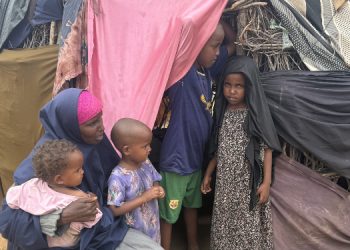
Isnino Aden Ilmi, a mother of seven, said her family has gone up to 24 hours without cooking a meal since their aid was cut.
She has been looking for work since she moved to Ifo-2 camp in 2023 but hasn’t found any. Her husband, who has a mental illness, has been moved to live with his relatives in Dagahley camp.
“As a woman, when I fail to find something for my family, I am now forced to tell them to drink water and go to sleep,” she said.
Isnino said her shelter is in a poor condition. She has to walk to fetch and carry water for up to three kilometres.
She fled to the Dadaab camps because of insecurity in Salagle, Middle Juba, in 2023, where her family depended on farming.
The camp chairwoman, Habibo Nuur Khalif, told Radio Ergo that the decision to cut off aid for 150,000 people was made without consulting the refugee community.
She said those who had been cut off included the most vulnerable, including the disabled and sick.
“The people who have been cut off from aid are those who have no other source of income, and we are the ones who are in charge of the camps,” she said.
“The people who are most in need have been left behind. People are suffering. What will the children’s stomachs be like if they eat dinner tonight but nothing tomorrow? We ask donors and aid agencies to come and help these people. I am worried that people will die of hunger and famine.”
The aid cuts come at a time when the cost of living and inflation have been rising since 2020. With little to no access to employment opportunities, aid is the only source of income for many refugees.
Dadaab camps, established in 1991, currently host over 400,000 refugees.