

(ERGO) – Somali women earning a living in traditional house plastering have been put out of work by the shrinking of the overall social economy in Dadaab refugee camps in Kenya.
Khadija Hassan Mohamed earned a living plastering the exterior of houses using a mixture of soil and cow dung for the 14 years she has lived in Dadaab.
It’s a skill she knew from back home in Jamame, Somalia’s Lower Juba region, where they lived off their 12-hectare farm until being forced to flee due to conflict and drought.
However, as fewer houses are being built in the refugee camps due to a general lack of finance, her last job was in April.
Khadija, mother of 11, noted that the few people building preferred to use corrugated iron sheets. She used to earn 10-15,000 Kenya shillings a month, which was sufficient for their basic needs.
“When the work stopped, the family’s situation significantly worsened. There’s no income and the situation is very complicated. I just sit at home; I can’t afford the food we used to cook, and we can’t sustain ourselves. It’s like a heavy burden has fallen on us. When I can’t afford anything and can’t provide, I just sit alone and talk to myself,” Khadja told Radio Ergo’s local reporter.
The 9,000 Kenya shillings cash aid she received monthly from the UN’s World Food Programme (WFP) ended in May. Food rations have also been reduced and the 30 kgs of food she received from WFP barely lasts for two weeks.
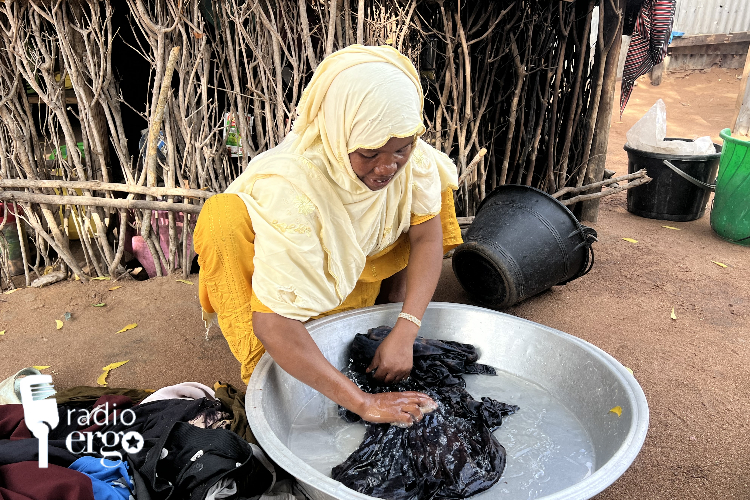
Economic hardship in Dadaab means that few people can hire women like Khadija for domestic chores, although she tries to make the odd 3-400 Kenya shillings doing laundry jobs.
“I just wander around the town. If I find laundry work, I do it, and in the evening that’s how I cook for them. If I don’t find any, I rely on God. That’s how we live. Sometimes, after bathing the children, I just put them to sleep. In the morning, without having cooked anything for them, I go look for work again.”
Her husband worked on construction sites but has had no work since the beginning of the year as building is frozen. They are allowed five jerrycans of water daily from a well three kilometres away, where she walks to carry the water back.
Five of her children were expelled from school in June because they could not pay the 400 shillings per child for school supplies.
“The children are without education. They’re just sitting at home. We couldn’t afford it when the children told us, Mum, I don’t have a pen, I don’t have a bag. When we had money, we used to buy those pens, books, and bags for them including uniforms, and everything they needed for their schooling,” Khadija said.
Faduma Abdiqadir Khamis, another traditional house plasterer, was also the main breadwinner for her family of 15, including her five children and six siblings.
“Since my work stopped, my life has severely declined. It was good before but now we have nothing. My children and I just look at each other! We live on cooked food that our relatives give us. Last night and the night before, I didn’t cook anything, and even now I have nothing to cook. They go to bed hungry and wake up hungry,” she told Radio Ergo.
Faduma explained that she had fallen ill due to strenuous work and anxiety. In May, whilst washing clothes for a family one afternoon, she fainted and was taken to the camp hospital. She was diagnosed with high blood pressure and diabetes.
Since then, she has been confined to home, feeling sad when her children cry and she can’t do anything for them.
“I became sick with high blood pressure. I fell sick doing the laundry work. When my sickness worsened, I gave up have to and stay at home,” she said. “My blood pressure is very high. My children and I have given up hope and we have a big problem on that front – no food, no clothes, and no schooling for the children.”
Fadumo’s husband, who worked with a handcart, is also unemployed. Their last food ration from WFP ran out on 9 July, and they have nothing else to cook.
Fadumo’s family also came from Jamame, where they lived off their eight-hectare farm in Bardhere-yarey village. In the three years they’ve been in the refugee camps, the quality of life has been on a downward slide.
They live in an area far from Hagadera camp where the closest well, which has low water levels, is five kilometres away. Her husband fetches three 20-litre jerrycans daily, which is not enough.
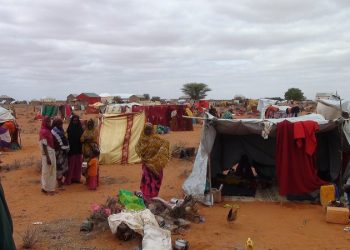
Their own makeshift shelter they were helped to build by other camp residents when they arrived in 2022 is in dire need of repair after damaging strong winds, but they lack money for materials.
According to Amina Abdiqadir Ali, head of women’s empowerment with local organisation, Women Lead Steering Committee, 200 women house plasterers had been out of work since the beginning of the year.
She said refugee women and youth were currently facing the worst level of unemployment ever in Dadaab, as contracts with aid organisations had ended, and casual labour jobs had shrunk.
“Women who used to go out at dawn and do manual labour, washing laundry, plastering houses, sweeping yards, or running restaurants, have all stopped. The women who used to plaster houses and wash clothes, their work has stopped as such jobs are no longer found in the camps,” she said.
Amina added that the youth finishing school were jobless, and the cuts in humanitarian aid meant that many families were going without cooking meals.