(ERGO) – Families in central Somalia’s Dusamareb, who not long ago turned to farming after losing their pastoralist livelihoods to drought, have had their recent harvests blighted by insects they haven’t encountered before.
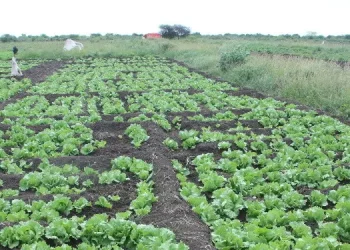
Ali Dahir Hashi said all the beans, tomatoes, kale, peppers, and watermelons he had planted on his three-hectare farm in Faragoy were destroyed by an insect infestation in April.
This situation has left Ali, 52, unable to support his family of 10, who are relying on relatives to share whatever food they can to help them out.
“We used to cook twice a day but now, we barely manage to get one meal. The situation is very, very bad for us, as the farms we’ve been relying on for so long have been devastated by insects. We have absolutely no other source of income, except from God. This pest has really had an impact on us,” Ali told Radio Ergo.
The farm was his only source of income and he doesn’t have funds to plant again. He had invested $700 in paying for seeds, pesticides, and labour, and needed to sell his produce to move ahead.
“Before the insects infested our farms, we had a good market for our harvested crops. The vegetables we transported sold very well, and we had no problems, but now it’s all gone,” he said, adding that they hadn’t experienced these insects before and didn’t know how to control them.
Ali began farming in 2022, when drought killed 70 of his goats in the rural area. He sold the remaining 30 goats for $900 to start his farm in Faragoy, 20 kilometres from Dusamareb, and used the rest of the money to support his family until their first successful harvest came in.
Now he says he feels hopeless about the farm and doesn’t know what to do. They have access to water from a well that was dug for local farmers by Norwegian Refugee council (NRC) four years ago – but with no cash reserves there is nothing to irrigate.
His four children in middle school missed the end-of-year exams in June when he defaulted on the $24 school fees he owed.
An estimated 150 farmers living in Faragoy, Abudwaq, and Bahdo in Dusamareb district have been affected by the invasion of insects that locals are calling dure that apparently came in from the north. Agricultural experts have not yet identified the insects.
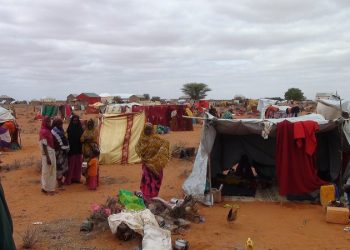
Asli Hashi Abdi Asli took up farming in 2023, and was among dispossessed pastoralists given seeds and farming equipment in an alternative livelihoods project run by NRC. She had lost her 10 camels and 40 goats to drought.
However, she lost all the watermelons, bell peppers, chilli peppers, and tomatoes planted on her two-hectare farm to these unidentified pests just before they were going to be harvested.
She had spent her last reserve of $500 buying seeds and fencing, expecting to earn over $600 when she sold the produce in Dusamareb.
“Absolutely nothing was saved, there are just dried-up stems that are harvested for livestock, but they have no other benefit. We have experienced a decline. Now we have nothing new to plant,” she said.
She added that after the insects ate the first vegetables, they planted again, but in April everything was devoured.
She has been asking for loans and assistance from others. Her husband started odd day jobs but the most he makes is three dollars that can’t solve their food shortage with seven children to feed.
“Family life is hard; if we cook once, we don’t get the other two meals. We get that one meal occasionally, either when the head of the family gets some labour work, or when other kind people give us something, or when we take credit. That’s the kind of life we are in,” Asli said.
Her two children in fifth and sixth grades were expelled from middle school when she was unable to pay the monthly fee of $15.
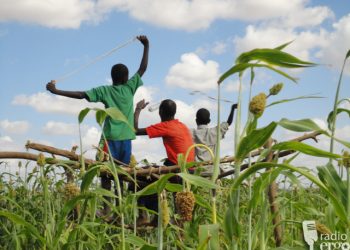
According to Duran Abdi Nur, a farmer in Bahdo, the insects consume the leaves and fruits of plants and trees within a few days, making them wither from the roots. Since losing maize, millet, pumpkins, and papayas in March, he has been buying food on credit and owes $300 to shops in Bahdo.
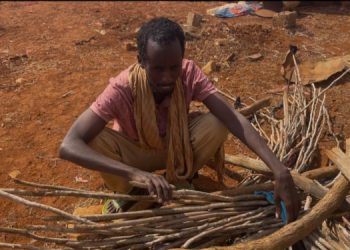
“We need to get something to eat,” he said. “We were eating what we produced with our own hands, but not anymore. The whole family has become unemployed. The farm is typically cultivated for six months and harvested for the other six, and when it’s time for harvest we get a good amount of money, up to $2-3,000, but now there’s nothing much on the farms.”
Four of his children in middle school also missed the end-of-year exams in June as he couldn’t pay the fees.
Duran’s family began farming on their five-hectare plot in 2024, after migrating from the rural area of Bahdo, having lost 30 goats and two camels due to lack of pasture and water.