

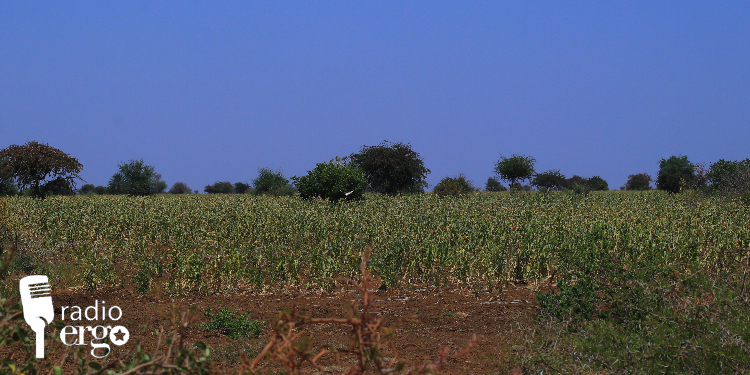
(ERGO) – Growing vegetables on small plots to eat and sell has given displaced families a new stable source of income in camps in Mudug region.
Seventy displaced households from 11 camps in Harhar, north of the city were selected by Galkayo local government in February to participate in home-gardening skills training.
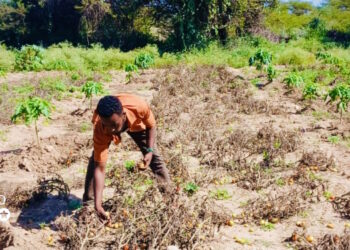
In May, they began harvesting cucumbers, tomatoes, peppers, watermelons, bananas and cabbages from plots beside their shelters. Most are now making $5-10 a day from local sales, covering their food, education costs, and enabling them to pay off debts.
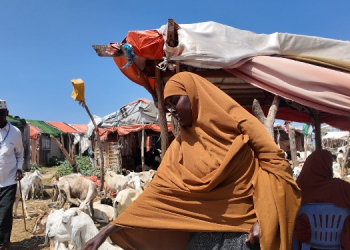
Darajo Abdi Ali, who lives in Bulonotayo camp with her husband and eight children, is selling vegetables from a small corrugated‑iron stall. Camp dwellers find her prices better than those further away in the city.
“Lunch and breakfast are regular for us now, and in the evening, we cook a light dinner. The family’s life is going well because I used to be a mother who wasn’t with her children most of the time, but now I’m a mother staying at home and cultivating a garden whilst giving full time to my children,” Darajo told Radio Ergo.
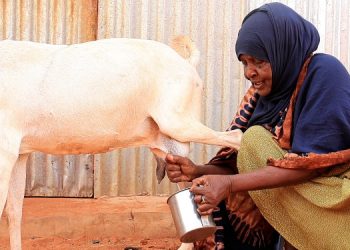
Her 30‑square‑metre plot is the first income source the former pastoralist family has controlled since drought killed their herd of 70 goats and 10 cows in Bay Region in 2021.
She has cleared half of an $800 grocery debt and now pays her eldest daughter’s secondary school fees.
“My daughter attends high school; thankfully I can pay for her. Whatever she asks me for, I pay for, like expensive books that teachers require, school uniforms, and transportation fees. I cover those things. Before, when she used to ask me for something, I would feel distressed, but now I don’t worry.”
Darajo hopes to expand the plot and become a full‑time businesswoman. Her husband can’t work because of a chronic illness.
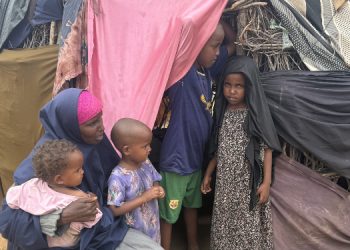
In Mahad‑Alle camp, Maryama Mohamed Ali supports a family of five. She had been travelling eight kilometres into Galkayo to wash clothes and sweep yards, earning small amounts on the days she found work. Ethiopian migrants willing to accept lower pay often took the jobs ahead of her.
The home gardening training has given her new prospects.
“It’s like our eyes were closed and now opened. We have benefited so much from the home gardens. I cook tomatoes and spinach that I picked from my house and watermelon that I picked from my house to eat or make into juice. We have joy, we are feeling blessed! By God, the neighbourhood, the neighbours, and my children are blessed.”
A daily profit of $5-10 allows Maryama to light the cooking fire three times a day, send four children to free primary school meeting costs of uniforms and books, and repay shopkeepers. She has repaid half her $600 debt and bought four goats for $20 each to supply breakfast milk.
“I used to take the bus to town to sweep and wash clothes for people. Now, I tend the garden and sell to whoever wants to buy. I’m sitting at home instead of going out every morning, sweeping and washing clothes for people, and constantly moving around to support the family,” she said. “I will never again think of washing clothes!”
Maryama’s family were pastoralists in Beletweyne in Hiran region, where their livestock died off in the drought in 2019, forcing them into the IDP camps.
The authority’s displacement coordinator, Haruse Osman Dahir, said the gardens were part of a government plan to replace relief hand‑outs with practical skills. They collaborated with Norwegian Refugee Council (NRC) and World Food Programme (WFP) to select the participants for the training.
“They were poor people who showed clear signs of hardship and were very vulnerable. They are people living in internally displaced people camps. Those who benefited were widows whose children were abandoned by their father, those whose relatives died, and those with special needs whose children can’t work,” he said.
NRC and WFP supplied training, tools, seedlings and monthly follow‑up visits. Harvests began in May and participants now rely on their own produce instead of erratic and poorly paid casual labour.
Agricultural officers involved in the scheme say small‑scale farming can free displaced families from chronic poverty if accompanied by knowledge and market access.