

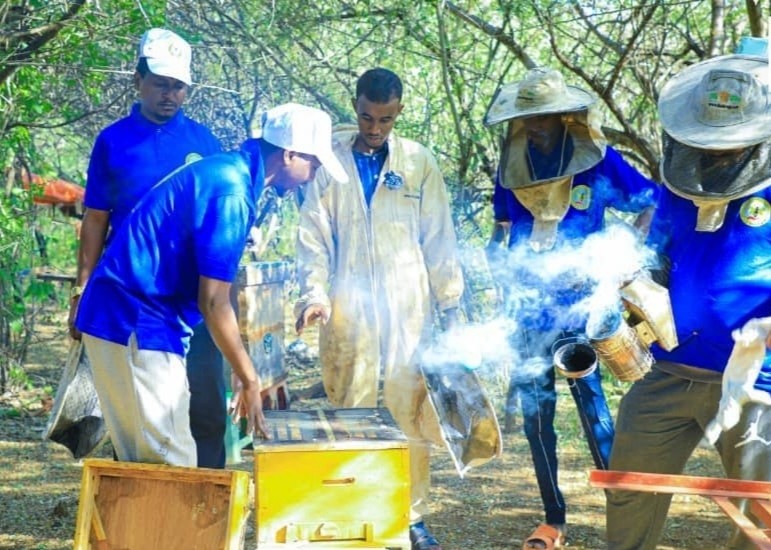
(ERGO) – A youth cooperative running honeybee farms on the outskirts of Baidoa in southern Somalia’s Bay region has become both a profitable business and a promising local employer.
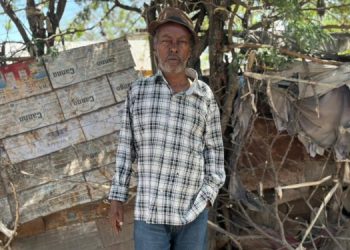
Mohamed Abdirahman Hassan works at one of the farms, on the western side of the city, earning $100 per month that supports his wife and four children.
“This job has helped me with my family’s life and made us self-sufficient. Now, the children get to cook three times a day,” he said. “Our family is managing and has an income. My daily life now is very good.”
Mohamed, 35, had been doing casual labour such as digging latrines and tilling farms that were not get regularly. On the days he worked, he would earn two dollars. He said it was a relief to have left the unpredictability of casual jobs that had made him lose sleep.
“The most difficult thing for me was that after the morning prayer, I would think, ‘Yesterday, the work finished, and you know that. Where should I go? Who will call me?’ I would make phone calls and ask the co-workers if there was work today. If there wasn’t, I would just stay put. Now the worry that used to greet every morning me has gone,” he shared with Radio Ergo.
He has paid off a $100 loan and started to save money for the first time and enrolled his eldest son, aged eight, in Koranic school for four dollars per month.
Mohamed said he was connected to the job by friends, as he had prior knowledge of beekeeping. Now, he is responsible for harvesting the honey from the boxes.
Another bee worker, Aden Mustaf Abdirahman, who was hired in January soon after the farms opened, has been able to provide for his family of 12 on the monthly salary of $100. He was also a labourer tilling farms for two dollars a day. During recent heavy rain and flooding he hadn’t had any work at all.
“One of the changes this job has brought me is that before I joined, my children had no education. Now they go to school. Before, they and their mother didn’t even have enough to get by. Now, thank God, they have enough,” he said.
Aden, 41, said he got this job because of his previous experience and noted that it meant a great deal to him to achieve one of his dreams to educate his children. He has enrolled three of them in Koranic school for $12 a month.
“My earnings used to be small, just 100-200 thousand shillings for a 12-hour day, and we couldn’t cook every day. But now the three meals are fine. My daily life now, thanks to God, is very good when I compare.”
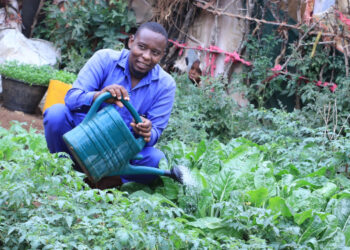
Now he works only in the morning, jointly responsible for watering the bees, and hopes his salary will be increased.
The founder and chairman of Danwadaag Cooperative, Abdullahi Mohamed Sheikh, said they started the bee farms with a commitment to increasing youth employment. He and nine other youth started with $30,000 they collected among themselves. They opened one honeybee farm at first at the end of 2024 and had expanded now to three farms.
The bees produce 300 litres of honey every three months, from which they make a profit of $6,000. So far, they have employed 53 people living in the area, mostly youth who had been struggling on low erratic sources of income.
Profits depend on the season, he said, with a decline in dry times. He hopes further investment will enable greater production.
“The bees need fresh water, which isn’t available in the area around Baidoa. Among the things we need is a concrete water basin to be built for them to drink from the surface water that helps them produce honey. We don’t have access to surface water, nor a well dug for them. We also don’t have a vehicle to transport them,” Abdullahi said.
The cooperative has already weathered some tough time. The bees have been affected by drought in the area, and during recent floods 50 beehives were washed away.