

(ERGO) – A municipal sewage system project in Garowe has created jobs for more than 130 impoverished out-of-work people, who were previously unemployed.
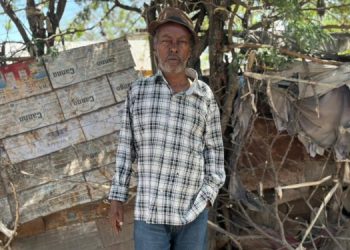
Abdirahman Abukar Sidow, a father of nine, was among those hired on the project in July, earning $8 a day for work in the concrete mixing section. His new job has allowed him to provide his family with a reliable income after having been unable to afford even a meal a day.
The job has allowed his pregnant wife to stop seeking laundry work and stay home for her health and wellbeing. Abdirahman has also been able to pay off a $80 debt for food items and make some house repairs.
“I was able to fix up our shelter, which was just a shack. I’ve also been able to send my children to school. I didn’t have these things before. Now, I am able to bring home sacks of food,” he said.
Two of his children are enrolled again in Jowle Primary and Secondary School after dropping out due to unpaid fees.
For years, Abdirahman struggled to find work in Garowe as a porter, which is a declining area of work. He said the constant daily struggle to feed his family led to quarrels with his wife.
“Unemployment affected many men. Some men left and went to the south. Some became drivers, others took other jobs. I was mostly destitute. Whenever I came home, I had nothing. My family and I often clashed. I worried about paying the rent as everyone wants their money,” he said.
Abdirahman, who was displaced from Bay region 17 years ago due to drought, plans to save $3 a day to start a small business, which he hopes will allow him to continue supporting his family after the current project ends.
Osman Garane Abdi, 37, said his job on the project provides his family of eight children with three meals a day. He was among a number of men laid off from a construction company two months ago because they lacked skills in modern construction methods.
He now works eight hours a day for $8.50. This income has helped his family move out of a relative’s house, where they lived for six months after being evicted from their home due to rent arrears.
He has also been able to send four of his children back to school after they dropped out last year due to financial hardship.
“I can provide for my family’s expenses, food, and my children’s school fees. Before, I used to sit around like a destitute person. We lived on debt. We even got to the point of selling our phones to buy food for my family,” he said.
Osman remembers the difficult jobless times when the value of the Somali shilling dropped, the cost of living went up, and manual labour jobs became scarcer.
“The life of a construction worker has become difficult. There is no job security. When you pass by the sites, they are all sitting around,” he said. “A hundred people rush to a car that stops to find workers for jobs. They are all running for their daily bread. Your young children will tell you they want milk – they need everything from you.”
Garowe Municipality, which is implementing the World Bank funded sewage project, said it would benefit poor and displaced people with a steady income for nearly a year.
Engineer Ahmed Yusuf Nur, 45, works in the technical supervision and equipment planning section, earning $16 a day. As a father of 11, he told Radio Ergo that the job had helped him rebuild his corrugated iron home, which was destroyed by rain in June leaving the family homeless.
“I provide for my children and pay my small debts. Before, I used to sit by the wall with nothing. There were a lot of unemployed people in the city and we didn’t earn anything. You would get five dollars once a week, and that’s not enough for a family. You and your family will just be in a constant struggle. The troubles increase, and you get evicted from your rented home. We were in trouble and pain, but now that we have started this work, we are doing well,” he said.
Ahmed has also been able to pay for four of his children’s school fees of $40. His wife has started a local savings group with others, saving two dollars a day planning to open a small shop when the project ends to continue supporting the family.