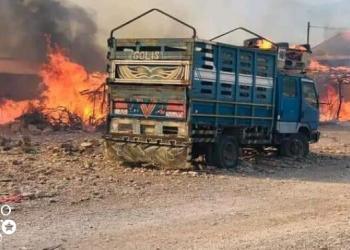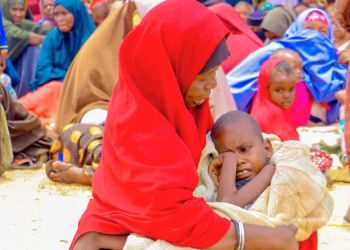


(ERGO) – Over 150 businesses in Dadaab’s refugee camps in Kenya have closed since June, after the UN’s World Food Programme (WFP) stopped its cash assistance programme.
The small shops, which depended on the Somali refugees’ spending power, have collapsed. One of them is Yaqub Ali Osman’s shop, which sold vegetables and other goods to 50 families on his customer list.
Yaqub, a father of 12, has resorted for income to driving a donkey cart to transport water making about 200 Kenya shillings (about $1.50) per trip, with customers only appearing twice a week.
“I had to get food on credit this morning to cook. One shop refused me credit, so I went to the next one and got it. For tomorrow, my family has nothing, and I leave it up to God. We used to cook two meals a day, now it’s tough to make even one meal,” he said.
Yaqub’s shop brought in a monthly profit of 40,000 Kenyan shillings (about $310) for five years that supported his family. He also benefited from the cash stipend of 9,800 shillings (about $76) per month from WFP, which was the main driver of the local economy.
“I have no business running now, no income coming in. I have become just a regular person in the neighbourhood. The hardship of life starts at home if you can’t even buy your children a notebook or a pen. A child who has been expelled from school knows nothing. If you ask a person for help today, they will cook for you, but they won’t do it for you tomorrow,” he said.
Yaqub, 38, arrived in Dadaab’s Hagadera camp in 2019 after fleeing insecurity and a lack of work in Mogadishu. He said he was caught off guard by the sudden aid cuts. He tried to collect money his customers owed him, but they too are in the same cash-crisis predicament after the aid has been cut.
“There are many people in the town who owe me money. Everyone is in the same situation as me. If I try to get my money from them, they are also going hungry. They haven’t been given food or cash assistance for two months. I have a lot of debt, and I can’t even go outside. A man brought a policeman to arrest me for a debt – I owe him 70,000 Kenyan shillings.”
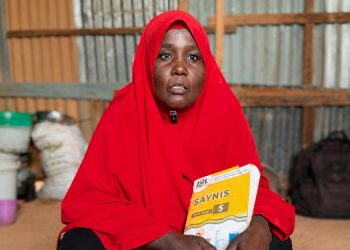
Another business woman, Amina Hassan Hussein, has had to close her shop selling vegetables and other goods, as her customers have no cash to spend.
“It’s a big change for us, life is not what it used to be,” she said. “We used to be able to buy what we needed for the children, but now I can’t. I feel a great burden with the food insecurity and economic hardship that we now live with. The food given to us for a month is not enough. If it lasts for 15 or 20 days, we are lucky.”
Amina, who was displaced from Mogadishu in 2018, established her business four years ago with $240 she earned working as a porter in Dadaab. Her customers owe her a total of 80,000 Kenya shillings (about $625). Four of her children have had to drop out of school because she has not been able to pay the 7,000 shillings in fees for the last three months.
“I sold vegetables, flour, rice, and products like hair oil. I used to sell all the tomatoes, spinach, cabbage, and peppers I had in stock, but it’s all closed down. I can’t buy supplies with my debts and without cash aid there are no customers.”
A member of the Dadaab business community committee, Mursal Mohamed Abdulle, told Radio Ergo that the livelihoods of refugees had plummeted with the aid cuts and many businesses had been forced to close.
“WFP has stopped the cash assistance and reduced the food aid by half. Therefore, business has gone down. There are a lot of closed shops, mostly in the neighbourhoods. Many shops are closing. Either a refugee goes back to Somalia, or if they are legal, they go further into Kenya – but they can’t continue surviving in the camps like this,” Mursal said.