(ERGO) – Hundreds of children in Jana Abdalle, an area west of Kismayo city, are out of school due to a lack of educational facilities and the poverty of their families.
Parents in this part of Jubaland, whose livelihoods have been devastated by repeated droughts and conflict, cannot afford to send them to schools in bigger towns. Jana Abdalle itself doesn’t have a school.
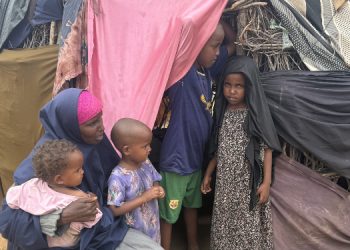
Abdirahim Jamaal Hassan, a father of 10, is worried about the future of his eight school-aged children. While wealthier families can send their children to bigger towns for school, he cannot afford to do so.
Jana Abdalle lacks a formal education system due to conflict between Al-Shabaab and Jubaland state forces, which has prevented education organisations from operating there.
“There has never been a formal education system in this village. The closest places are Kismayo or Afmadow. The only way for children to study is to send them to a relative or go there yourself. There is no other education nearby,” Abdirahman told Radio Ergo.
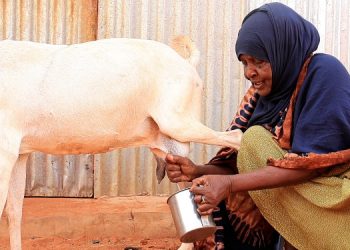
Once a well-off pastoralist, he said he feels deeply saddened by his situation. He longs for his children to have an opportunity to be educated and build a better life for themselves. His family relies on a herd of 50 goats that survived successive droughts, but the animals provide a meagre income and the family often goes to sleep without eating enough.
“My children are not getting an education, and I don’t have any power or enough money to send them somewhere. You know how that makes you feel. When you see a child who has been educated passing by, I say to myself if I wasn’t in this situation, my son would have been educated too,” he rued.
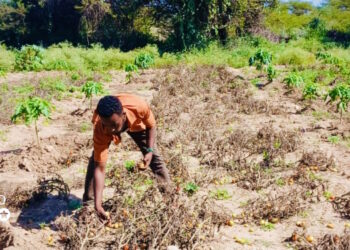
Bulugo Faysal Mohamed, a mother of nine living in Jana Abdalle, is also concerned about the future of her children. Her family’s five-hectare farm was affected by floods, which reduced its output.
She said the parents in Jana Abdalle had met several times to discuss the problem of the lack of schools, but their collective financial hardship has prevented them from raising the funds to build a school or hire teachers.
“People have a great problem because there is no education and no school. There is no school that has been built here. There is no one helping us. We are just farmers, and we cannot afford the money,” Bulugo said.
Abdullahi Sheikh Dahir, a local administrator, confirmed that the area was a conflict zone two years ago, which is why there were no schools. He said the administration was now working with the community to establish a school.
He confirmed that they had registered over 200 school-aged children and had shared the data with the Jubaland State Ministry of Education, but had not yet received a response.
He said the parents in the community, who have been impacted by droughts and conflict that destroyed their livelihoods, wanted n education for their children to secure their future.