

(ERGO) – A critical lack of healthcare services due to funding cuts has left large numbers of people living in remote parts of Somalia’s Lower Juba region unable to access the urgent medical treatment they need.
Three health centres in Badhadhe, Kulbiyow and Kudhaa villages that were supported by USAID funding have almost ceased functioning as they lack medicines and support to pay the health workers.
Dahabo Cumar Ali told Radio Ergo she took her son to the health centre in Kulbiyow, after he suffered a nail puncture wound in his foot a week ago. He needed a tetanus jab but she was unable to get him treated.
The health centre they had relied on for years ran out of supplies at the start of May. She is not able to travel elsewhere to seek treatment.
“My son was at school playing with other children when a nail pierced through his shoe. His leg swelled up to the knee. I haven’t slept for four nights as I was massaging and applying compresses to his leg, sometimes buying painkillers from town. Eventually, I took him to hospital for a tetanus shot. When I got there, there was nothing,” Dahabo said.
She has been checking back at the health centre every morning to see if any medicine supplies have arrived, as her son’s condition is getting worse. He is now bedridden and can’t go to school.
Dahabo, 47, also needed to get her own medication for bronchitis at the clinic but that too was unavailable.
“I don’t have money to buy medicine and there is no medicine here at the health centre. I asked for my bronchitis medication but they told me it’s out of stock,” she said.
The nearest functioning health centre is in Dhobley, a border town close to Kenya, more than 180 kilometres away. Recent rains have flooded many roads, making travel impossible for many even when they have money.
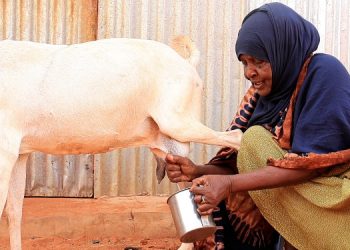
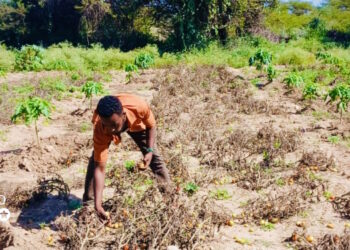
Dahabo is poor, and her husband makes about $2 a day working breaking stones. The family has only 10 goats that survived their larger herd due to drought. They didn’t plant on their two-hectare farm this season due to a lack of seeds.
The head of Kudhaa health centre, Abdullahi Mohamed Isman, said the facility was open but unable to deliver many services at all.
“This mirrors what many rural people are going through,” he told Radio Ergo.
“The good hope and morale of the people has been cut but people keep coming to the place where they used to get medicine. There are severe illnesses spreading around here such as flu, slightly less severe than Corona virus but heavier than the usual flu.
People are suffering greatly from that flu. There is also acute watery diarrhoea affecting adults and children. Among our neighbours, there is a lot of trouble with serious skin conditions that many people are suffering from. These diseases are spreading at a time when health centres have no medicine or funds.”
Bashir Said Diriye, a father of eight living in Kulbiyow, was forced to take his four children across the border to Haluqo in neighbouring Kenya, after they contracted malaria.
He said the trip cost him $112, which he borrowed because he could not bear to see his children suffer.
“The children all got malaria and were malnourished. They wasted away and became weak. There was no proper medicine available where I lived. Later, I took them to Haluqo and had them treated there in the middle of last month. Now the children are not suffering, they are well,” Bashir told Radio Ergo.
Despite their improvement, Bashir fears new illnesses may arise from contaminated water around and rising mosquito activity in his area after the rain.
Bashir’s family are also struggling to make ends meet. They were displaced from the rural areas of Kulbiyow in October 2023, when most of their herd of 100 goats and 30 camels died or had to be sold off. They have only 15 goats left.
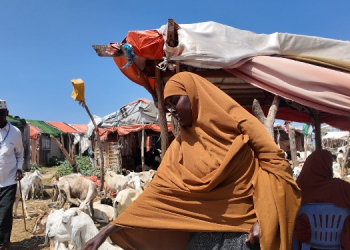
His income comes from a meat stall at the Kulbiyow slaughterhouse bringing in $5 to $6 daily, though some days he gets only bones with no meat to sell.
“That’s where I get money for the children’s expenses, but sometimes we earn and sometimes we don’t it varies,” he said.
The Kulbiyow health centre, which opened in 2019, has been a lifeline in the provision of free healthcare for the community.
Local people, including those interviewed for this report, hope that the Federal Government of Somalia and the Jubbaland administration will step in to support their healthcare services.