

(ERGO) – Three hundred vulnerable displaced families living in an internal displacement camp in Merka, Somalia’s Lower Shabelle region, are appealing for support following the cutting of cash aid in January.
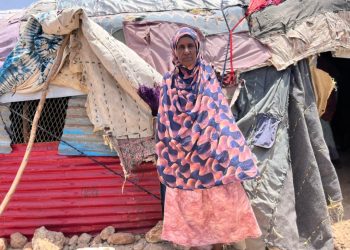
Among those in most need in Aailow camp is single disabled mother of five, Maryan Isman Ali, who had depended on the monthly cash assistance of $70 from Somali organisation, Marginalized Communities Advocacy Network (MCAN).
Maryan’s family cannot even afford to light a fire for cooking. She can’t work due to her severe disability, having lost two both legs and an arm as a child when playing with unexploded ordnance.
“Sometimes we get food to cook, sometimes we don’t. It’s a huge worry. I wake up in the morning and have nothing to cook. If you are a mother, you can feel the pain of me as a mother whose children are crying because of hunger and I have nothing to cook for them,” she told Radio Ergo.
A jerrycan of water costs two thousand Somali shillings from a well, but Maryan can’t get there herself and most of her children are too young to walk to fetch water.
“Sometimes my young son, who is 10, fetches it for me. Sometimes my relatives do. We have a water problem. We also don’t have electricity and food — those are our specific needs. We don’t have a place to sleep; rain falls on us. We need everything. We need a lot of help.”
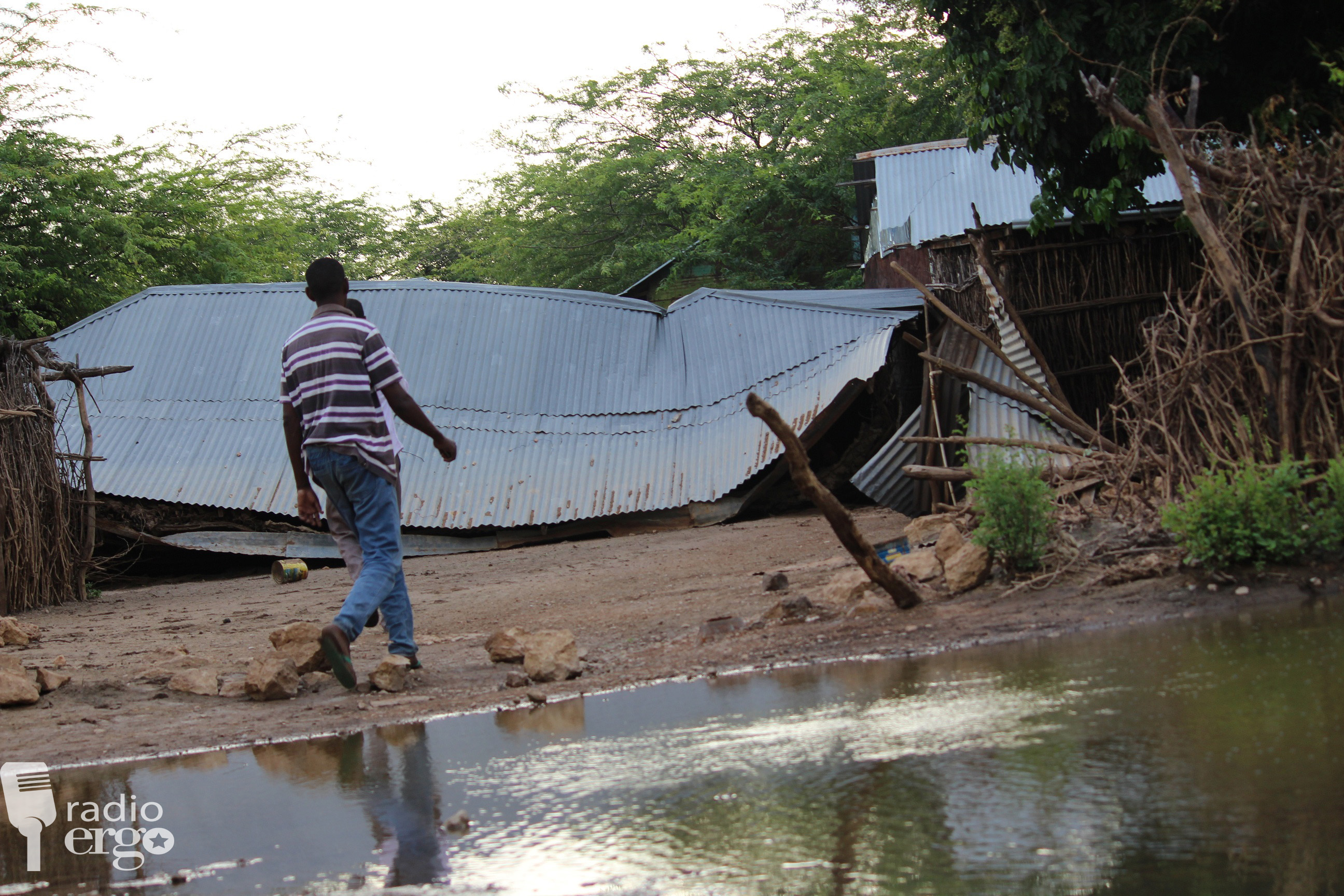
Their conditions in the camp are poor, living in a three-metre hut that does not keep the rain out. They share two latrines with over 10 other families and the facilities are not designed for those with disability.
Maryan also has unattended health needs.
“I don’t know what’s wrong with me. At night, I get a fever, my ribs hurt, and my condition is not good. Honestly, I need care, but I can’t afford medicine. When you go to the hospital, you have to pay to see the doctor, and medicines require money. We need everything,” she said.
Abandoned by the children’s father, Maryan has no hope of putting her children in school and worries about their future and her own.
“I wish my children could be students and attend school but I can’t afford to send them. I can’t even manage Koranic classes. I can’t even afford the teacher’s salary for the school. I don’t even have food to eat so where would I get money for school? What I request is for my children to be sent to school so they can help me tomorrow.”
The family was displaced from Buulo-Mareer, some 40 kilometres from Marka, by conflict between Al-Shabaab and Somali government forces. They had to abandon their 40 goats, some of which were lost or killed, and arrived in the camp on foot in 2022.
Also raising six children alone in the IDP camp is Maido Abdinur Hasan She says she doesn’t know why the cash stopped, but it means she can’t feed her children.
“I don’t have anything to give my children – I can’t even cook once a day. The children always cry for me, and I have nothing for them. I am really struggling to get them food. We are eating less than half what we used to eat. The children and I are in hardship together. When the children cry too much, the neighbours bring them a bowl of food, that’s how they survive,” she said.
Maido washes clothes bringing in only two dollars on days when she finds a job. They live in a pitiful shelter strung together with scraps of cloth and sticks.
“The shelter I live in is a makeshift hut made from trees we cut and gathered. It’s old, rotten, and we collected it from the neighbourhood. We use it to pray, but it doesn’t protect us from the rain, only the sun. If rain comes, we are in the worst situation.”
Maido was displaced from Janale in Lower Shabelle region in late 2023 when flooding from the Shabelle river destroyed her home and the grocery store she owned, with $1,500 of supplies.
Abdi Osman Hasan, a data collection worker with MCAN, said that they had conveyed the needs of these families to ACTED, the international NGO that had been providing the funding for the monthly cash assistance.
He mentioned that they had registered many urgent cases in the camp, including children suffering from malnutrition after the aid stopped.
“We are pursuing it and following up with the organisation. We hope that something will reach these displaced people living in the camps soon,” Abdi said.