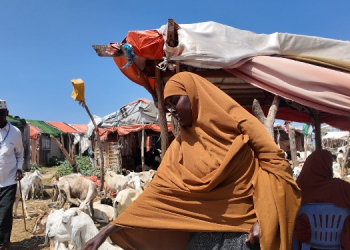


1,500 Somali families who have arrived in Dadaab refugee camp in northern Kenya over the past three years are facing severe shortages of food, water, and shelter. They settled in an uninhabited area on the outskirts of Hagadera camp and do not receive any basic services.
Madina Mohamed Adan and her nine children have endured uncertain living conditions since March 2022, when she arrived in Dadaab from Lower Juba region, southern Somalia.
“The 28-kilogram ration of rice, millet, corn, and oil provided by WFP on February 1st lasted only until the 13th of the month,” Madina said. “Our living conditions are very poor. We suffer from hunger daily. The small food ration we receive is sufficient for just 8 to 9 days. Bad toilets, inadequate shelter, water scarcity, and sleepless nights due to hunger are our biggest problems.”
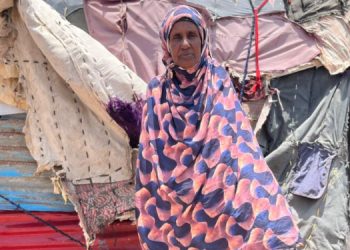
Madina, a widow, often seeks casual jobs within the camps to feed her children but few camp dwellers have any money to hire other people. With help from people living around here, she constructed a hut out of plastic, rags, and wood.
As there is no well nearby, she fetches 20 litres of water daily from Hagadera camp, located five kilometres from her hut.
“Fetching water is difficult because the well is far, and the sandy roads make walking arduous. The little water I bring isn’t enough for my large family. Some days, I return home empty-handed after being denied water, leaving my children thirsty and hungry,” she said.
The well authorities told her they had reduced water distribution and excluded her family from the designated beneficiaries.
Initially, Madina sent her children to a school in Hagadera. However, the long walk through insecure areas of bush made her fear for their safety. She decided to keep her six school-age children at home. If one of the children falls ill, she would need to raise money for transport to one of the nearest clinics 5-8 kilometres away.
Madina was displaced from Kun-barera in Jilib, Lower Juba, in 2022 due to drought that destroyed her family’s 4-hectare farm. After more than two years in Dadaab, she was finally registered in September 2024 year but did not receive the same rights as earlier arrivals.
New arrivals in Dadaab have not been properly settled and express disappointment at lacking the services they expected went along with registration.
Dhubo Hussein Bilal, whose family includes 18 people, described their struggles in all aspects of life. She has two huts made of plastic and tree branches, built with help from other refugees. The huts are deteriorating due to sun exposure and rain damage.
“The roof made of plastics and rags has been cut by the sun and doesn’t stop the rain from coming in. No one gave us this place, we simply settled here without permission. Initially, we stayed with my brother, but when we couldn’t find another suitable location, we returned to this remote area,” Dhubo told Radio Ergo.
Some of the family has to sleep outside as the huts are tiny anyway.
“We face numerous problems – lack of water, shelter, and food,” she said. “I am deeply concerned about our future.”
The area has no toilets, so they use the bush. She knows this poses health risks and fears diseases like cholera.
“I know diseases can spread through open defecation, but I cannot take my children to the forest for fear of harassment. Flies gather around the waste and inside our home, increasing the risk of illness. I am terrified of cholera outbreaks,” she said.
Dhubo carries 20 litres of water daily on her back from a neighbouring camp. When she feels exhausted, she sends her children, although they often face harassment and are refused access to the water. She is particularly worried about her young daughter who frequently faints and requires constant care at home.
The seven children in her care do not attend school and she is concerned that without education they will never have a future.
Dhubo fled her home in Bulo-Gadud, Lower Juba, in 2023 when conflict erupted between government forces and Al-Shabaab. She had been living off cleaning jobs in Kismayo. She hoped the refugee camp in Kenya would provide permanent assistance, including shelter, education, and healthcare, but her expectations remain unmet.
The chairman of Hagadera camp, Khalif Dhubow Jeelle, closely monitors the situation of new arrivals and noted that they rely on the generosity of others who themselves lack resources.
“These families came empty-handed and now live among others who are also struggling. The areas outside the camps offer no social services, worsening their plight,” Khalif said. “If it rains tonight, they will have nowhere to go or seek shelter. These problems persist.”
He mentioned that in discussions with UNHCR and Kenya’s Refugee Agency (RAS), funding shortages were given as reasons for denying aid. Only the poorest receive minimal food rations. The camp authorities admit they have failed to secure adequate support for these families.