(ERGO) – About 270 Somali families have been registered in Ifo-2 camp in the Dadaab refugee camp complex in northeastern Kenya since it was officially reopened on 1 June.
Most of these families had been living in different parts of the Dadaab complex without having been registered and refugees and gaining access to any aid.
Each family was given a registration card giving them access to food rations and monthly cash aid.
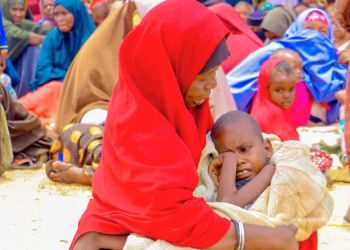
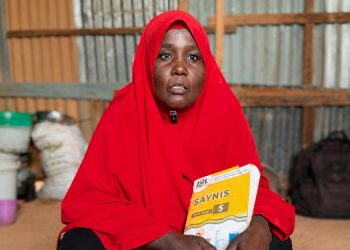
Nimo, a single mother of five, joined the camp on 2 June. She received maize, wheat, oil, a tent, utensils and other household items. She also got took her first monthly installment of $31 cash aid.
“We used to worry about being evicted from the place we were living because the UN had not registered us. I used to beg people to share their toilets, sometimes we would hold our urine in and it would be painful to walk,” Nimo told Radio Ergo’s local reporter.
Without any income, she had to beg for food for her family, walking around the camps all day and getting a meagre amount of money or food. She said the circumstances forced her to turn to begging as she has no relatives or people she knows in the camp.
“I can tell you that there was a time when we didn’t cook for seven days and we were hit by the cold,” said Nimo.
They had been living in the overcrowded Ifo-3 camp, also known as Hawo-jubey camp, within the same two kilometre radius as Ifo 1 and 2 camps. No registration had been taking place of new arrivals. Floods caused by heavy rain destroyed her flimsy shelter twice in April.
Nimo said she had to trek more than two kilometres every day to fetch and carry water on her back. She is happy to be getting free water now from a tap near her house in Ifo-2 camp.
“We get water early in the morning and it continues running until 2:00 pm daily,” she noted.
Nimo, 37, was brought up in SOS Children’s Village centre in Mogadishu and has never known her biological parents. She decided to join the refugee camp after her husband was killed in Mogadishu by armed militia last June. He was a porter on a small income that supported Nimo and their children.
She sold her gold jewelry for $80 and was given $150 by locals in Gedo region who organised a fundraising to help her travel to the refugee camp.
Another mother of nine, Ifrah Mohamed Abdi, was also registered in Ifo-2 camp in June. She was pleased to receive monthly cash aid of $56 and 45 kilos of wheat and maize among other items.
“I was a homeless person facing much hardship. Now our happiness can’t be contained. Water was an issue, we had to ask people in Ifo to give us water, sometimes we got it and other times we wouldn’t, but now we get water regularly,” she said.
They no longer worry about sleeping rough or going hungry.
Ifrah, who lived in Mogadishu, arrived in the Dadaab refugee complex last November. She said the main reason she crossed the border from Somalia was to get a better life and an education for her children. She and her husband separated and she was struggling to support her children alone.
The deputy chairman of the three Ifo camps, Abdullahi Osman Aden, said that the families had all been struggling to find water, food, health services, education, shelter and toilets. The reopening of Ifo-2 and the renewal of registration of refugees would improve their living conditions.
“The reason for opening this camp at this time is because the number of people living in Ifo, Hagardera, and Dhagahaley refugee camps has increased. More people can’t join the camps as they are full. So the main reason was to get a place to accommodate the new refugees joining the camp. These new people have now been moved to the Ifo-2 camp, where they are registered and given cash aid. Now, day by day, they are getting better,” he said.
Abdullahi added that the prolonged drought in recent years in Somalia had pushed thousands of families to join Dadaab as refugees because their livelihoods had been destroyed.