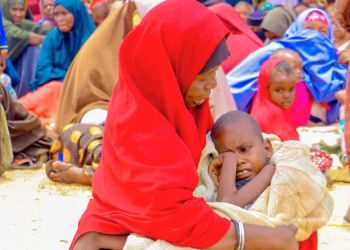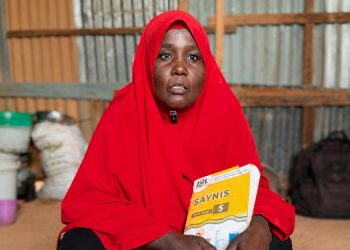


(ERGO) – Salado Tubbo Ali was glad to receive a package of food items distributed to around 100 families displaced to El-Jalle by this month’s river floods in the southern Somali town of Beletweyn, but what she most needs now is water.
“There is a big shortage of water here, we don’t get enough at all,” Salado, who has 12 children, told Radio Ergo.
She received half a kilo of flour, rice, sugar and cooking oil from the local authorities in Beletweyn, donated to the flood response by the government of Djibouti.
However, she cannot afford to buy water from the commercial tankers coming in to Ej-Jalle, which makes getting water for cooking a huge challenge, let alone her other needs.
“We have children who are under the sun all day, getting dirty, but we don’t have water to bathe them,” she complained.
According to the local authorities in Beletweyn, an estimated 10,000 families have been displaced by the floods. Only 6,000 of them benefited from a two-week, free water-trucking carried out in mid-September by the military in Hiran region.
It rained briefly in El-jalle earlier this month, but the IDPs could not harvest any water as they lack water storage containers.
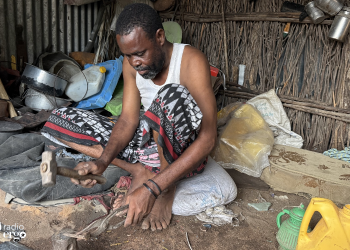
Salado used to earn her living selling fruit and vegetables at a market in Beletweyn. Now she has to trek to town to try to earn a few dollars washing clothes. She is hesitant to return home because of fears that the river may flood again. Her house was also extensively damaged.
“The flood waters destroyed the toilet and the entrance area of the house. I don’t have money to rebuild the house. I’m barely surviving,” she said.
Fadumo Mahdi Muse, a mother of seven also displaced in El-Jalle, treks the seven kilometres to Beletweyn three times a week to look for laundry jobs earning her up to $3. She leaves her children in the care of other IDP families, but when there is no one to do that she is forced to stay without income.
Her biggest complaint, however, is the lack of sufficient water at El-jalle.
“Sometimes we get water trucking and sometimes when we can afford it we buy water for $3 and when we can’t afford that we ask the neighbours. El-jalle is a very hot place, there is no shade or trees, we are really suffering,” Fadumo said.
Nadar Tabah Ma’alin, the mayor of Beletweyn, told Radio Ergo that the local authorities have paid several visits to the displaced families in Eljale to know more about their situation. The recent food aid, she said, was meant just for the most vulnerable.
“We selected those who were most in need for assistance. When those who were surviving on daily labour are displaced from their homes, you can imagine how desperate their situation would be,” she said.
More food would be distributed by the end of October, the mayor said, when the local authorities would assess whether conditions allowed for the safe return of the IDPs to their homes in Beletweyn.