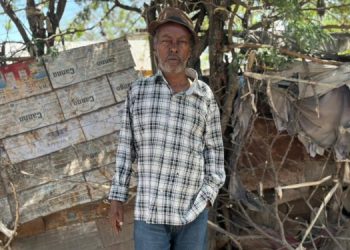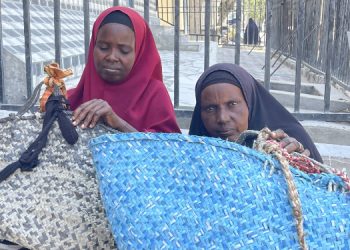


Hundreds of displaced people have been evicted from camps on government owned and private land in recent months by the Interim Juba authorities and landowners.
Some 328 families are reported to have been forced to move from their temporary shelters in various places.
In the past week, 84 families were told by landowners to vacate the Lafole camp.
The affected families were prevented from shifting temporarily to another plot in the town, and later camped at Dalhiska on the outskirts of town.
Siidi Muse Amina, 60, with 16 family members, told Radio Ergo he had lived in Lafole camp for two and half years. The landowner ordered them out saying he wanted to build on the land.
“We moved to a land near Qilmawaye hotel close to the beach, but we were also stopped from putting up huts there. We are currently at the Dalhiska, and we have not yet tried to build huts since we have not been officially allowed to do so.”
A further 180 families in Barawe camp have also been forced out. Ruqiya Mohamed Ahmed, 36, appealed to humanitarian organizations to intervene to help her and 12 family members.
“I have been outside since yesterday with no shelter for my children. We don’t have anywhere to keep our belongings, so we request the administration and the aid agencies to help us,” she said.
Similarly another group of 45 families in Daljir camp building have been ordered to vacate.
“We were moved out of Daljir camp in the former maize factory compound. The administration ordered us out and we were forced to carry our belongings on our heads. The government has the right to reclaim its land, we are not against that, but we don’t have alterative places to move to and make new houses,” said one of the displaced.
The Lower Jubba Governor, Dr Abdirashid Ali Gone, admitted that his administration was involved in the evictions.
“There is an ongoing plan to evict people, whether IDPs or individuals, who are squatting in government buildings. The administration needs these premises for its own use. For those people moved from the Caymiska building, we gave them some small financial assistance to help ease their relocation process,” he said.
However, he said there was no plan to compensate those evicted nor to give them alternative land and shelter.
He said he would send an appeal to the UN’s refugee agency (UNHCR) and Kismayo’s business committee to assist the evicted displaced people.